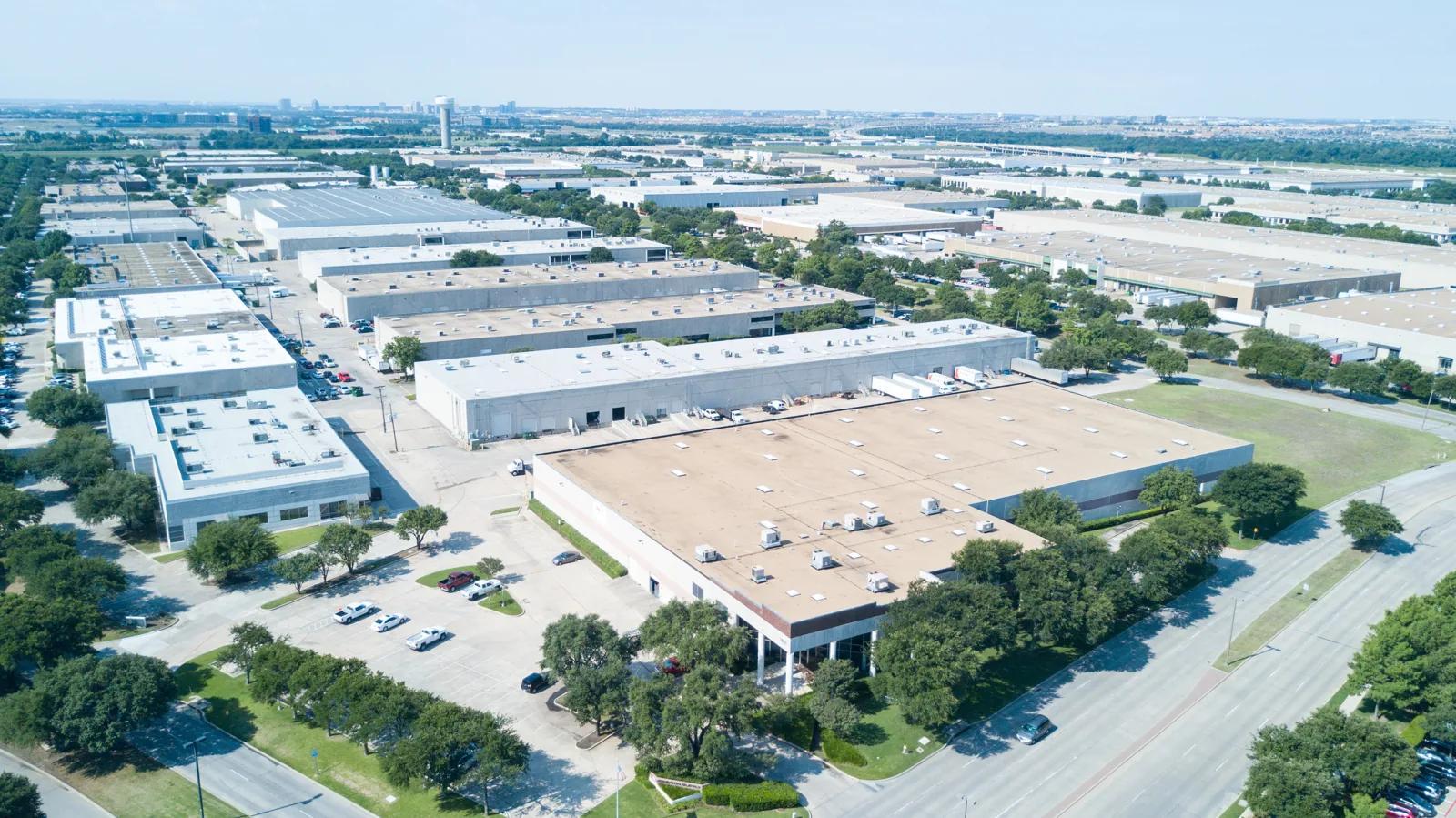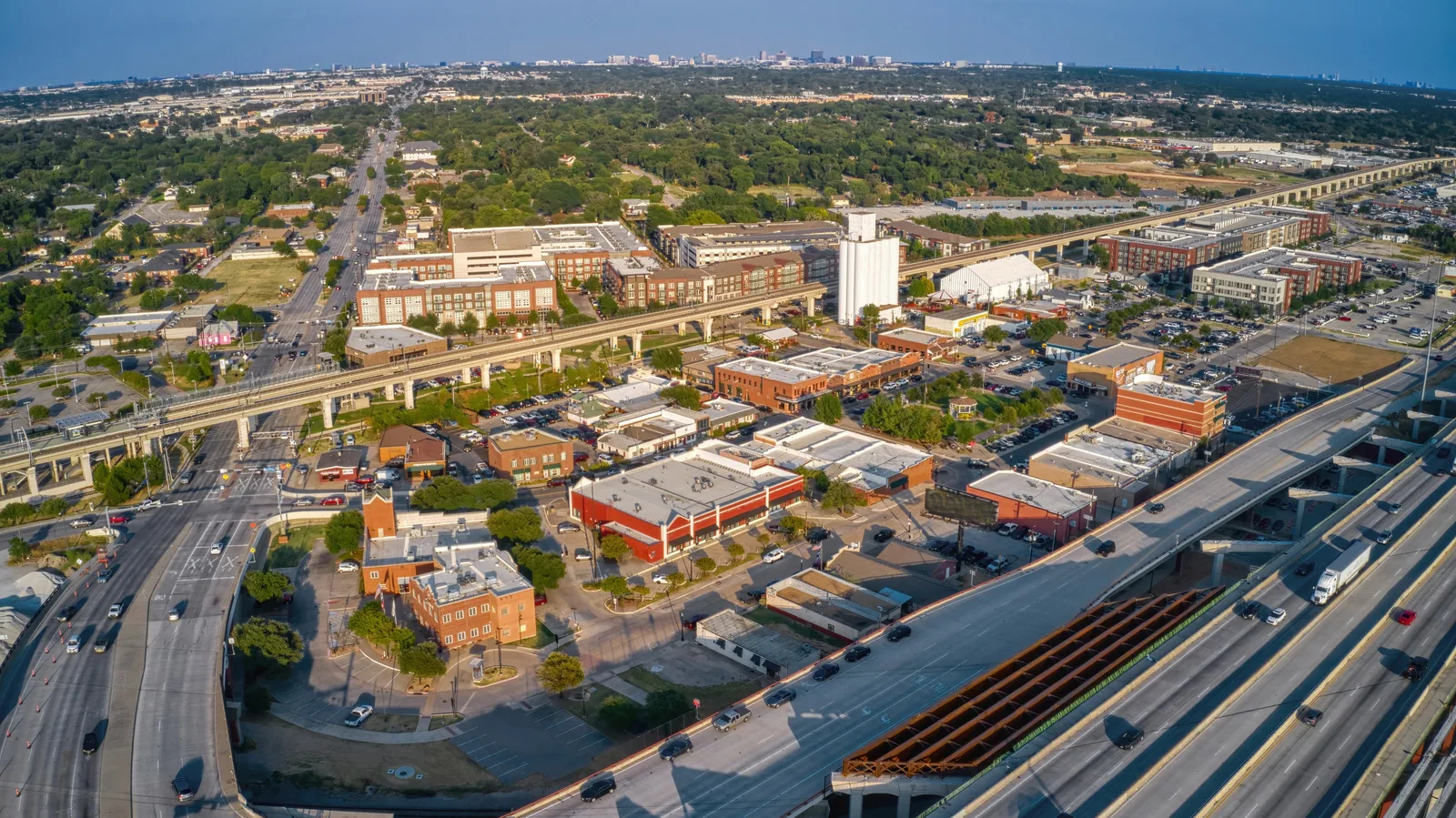
A blocked scupper can hold water against a seam until the next clear day reveals the leak inside. At East Belt Line Industrial Area, Carrollton's plan places industrial parcels between Belt Line Road and the Cotton Belt rail corridor, east of Josey Lane. The citywide freight network includes four Class I railroads and major highway connections. We confirm how a particular property operates, then inspect its drains, seams, penetrations, and perimeter details. The roof type and condition come from the building itself, not its position beside a rail corridor.
Rail and highway context can affect how a property manager plans deliveries and site access, but it does not describe the roof. We confirm the entrance, safety controls, loading periods, staging area, and route to the roof with the building contact. If the property has restricted areas or active equipment, those limits shape where the inspection can proceed and how materials can be moved. A marked roof plan gives the team a consistent path through the details.
We note drains, scuppers, seams, curbs, wall edges, and prior patches, then link each photograph to a roof zone. If water appears inside, we compare the stain with the roof slope, deck direction, and nearest penetrations. A commercial inspection records the likely entry point and distinguishes observed damage from a location that needs more testing. For larger or hard-to-reach surfaces, a drone roof overview can help establish the route for hands-on review.
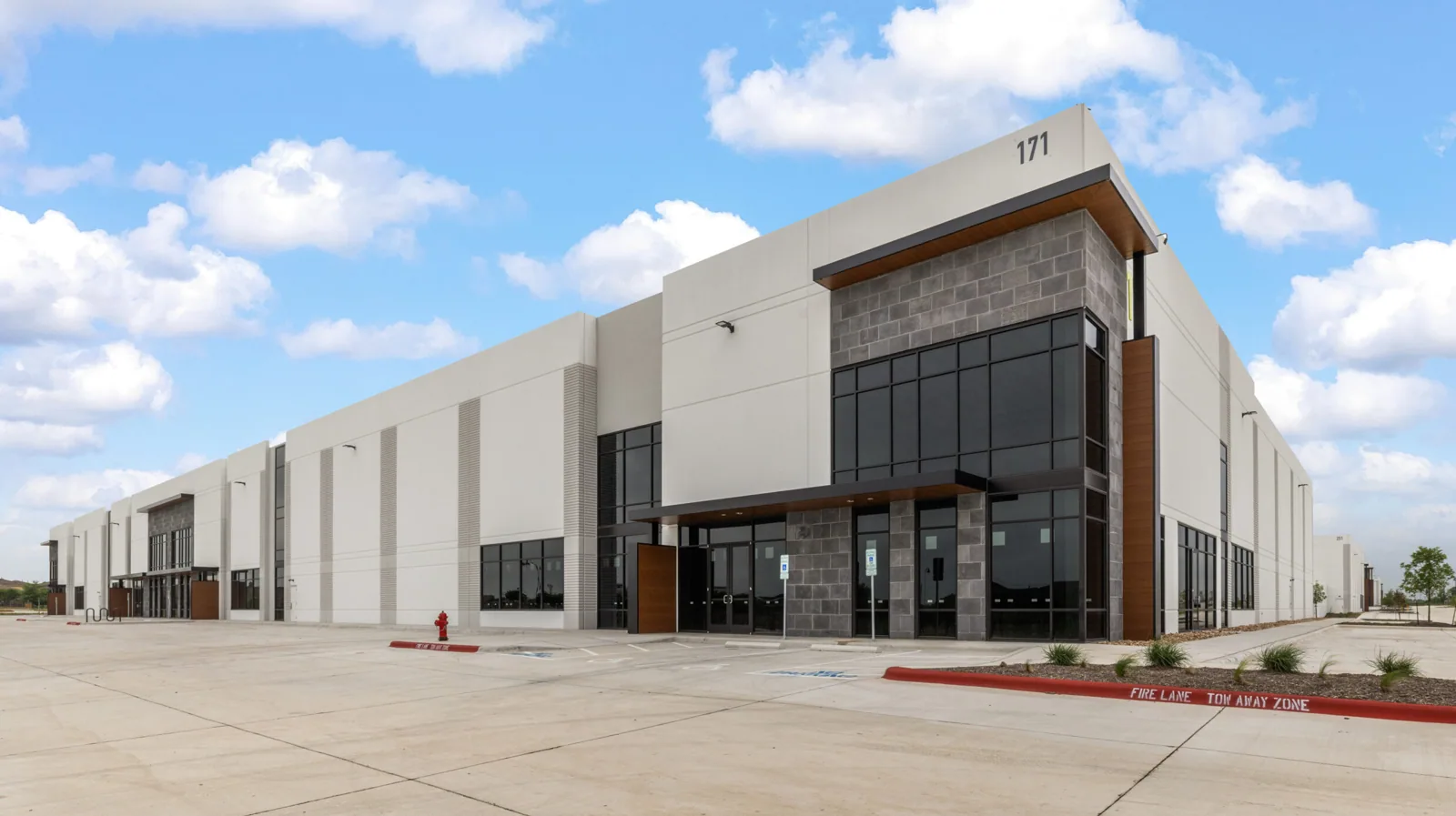

Roof water needs a clear route from the field to a drain, scupper, or gutter. We check the bowl, strainer, surrounding membrane, and visible slope for debris or a low area. A blocked outlet may keep water at a seam or flashing detail, but standing water can also point to deflection or insufficient drainage. The repair should address the reason water remains rather than only covering the wet surface.
At a wall or curb, we inspect the flashing turn-up, termination, and metal protection for gaps. Water may enter at one transition and travel beneath the roof before it appears at a ceiling. We mark the suspect area and check adjacent material to determine how far the condition extends. A drain and scupper service can document the outlet and surrounding roof, while ponding-water repair can address a low area after its cause is understood.
Carrollton's summer heat and spring storms put exposed roof details through repeated movement. Dallas-Fort Worth July and August daytime temperatures consistently fall in the 90s and often rise above 100 degrees. We look for brittle sealant, lifted membrane, loose edge metal, and splits where a sheet turns at a wall. A new coating over a loose termination will not restore its attachment. We inspect the underlying detail before recommending a surface treatment.
Spring is the busiest storm window locally, and metroplex-wide records include recurring hail, strong gusts, flood impacts, and tornado activity. After a storm, we check edges, curbs, penetrations, and seams for punctures or movement. A dent is recorded but not called a failure until the membrane's function has been checked. The inspection follows any displaced metal inward along the attachment path. Our wind damage review and storm roof response can document active damage and the permanent repair needed.
For an isolated puncture, we can restore the membrane when nearby material remains bonded and the substrate can take a repair. Surface preparation and a secure tie-in define the work; the patch stops at a verified sound edge. The closeout notes the roof zone and repair limits so the manager can inspect the same detail later. If the opening connects to a failed seam or flashing, the repair has to include that transition.
When the surface does not reveal the assembly, a targeted test cut can confirm layers, attachment, and insulation condition. We choose the opening to resolve a specific question and close it securely on the visit. A recover may be considered if the existing roof is dry, attached, and suitable under the project requirements. Replacement may be needed if moisture or deterioration is widespread. A recover assessment can compare those paths and note what remains unconfirmed before the owner selects a scope.
Industrial parcels near freight and highway connections may have delivery, production, or access rules that a roof crew needs to know before mobilizing. The property manager identifies loading routes, restricted areas, work hours, and any equipment that cannot be interrupted. We confirm the ladder or lift location and stage material so it does not block the ground route. If a work zone must remain open to vehicles or employees, we set the protection and access controls with the site contact.
Roof removal needs a weather window and a defined daily close-in point. We stage the replacement materials before opening the existing assembly and limit exposed area to what the crew can secure. Test openings and repairs are recorded before work moves on. Our occupied-building reroof plan can phase work around access restrictions. The manager gets a clear note at the end of each shift about what is secure and where the next section begins.
An industrial-area label does not reveal roof age or condition. The record should show the particular building, its roof zones, drainage, membrane details, prior repairs, and any moisture checks. We photograph marked locations, note whether the material is firm and dry, and separate maintenance findings from a repair scope. If an opening needs follow-up, the location and reason stay in the report so the next visit can verify the same point.
Maintenance attention goes to drains, scuppers, seam edges, metal terminations, and previous patches. We clear debris when included in the scope and note damaged components that require replacement. Owners with other properties at International Business Park or Downtown Carrollton can coordinate inspections while keeping each roof's history separate. A roof condition report makes that history available for maintenance and capital planning.
No. The plan locates industrial parcels near the corridor, but the installed roof must be checked at the property. We inspect its membrane, drainage, seams, flashing, and repair history before naming a system or recommending work.
Those connections are useful site context, but the property's own entry, delivery rules, and safety controls determine access. We confirm the crew route, staging area, and roof access point with the manager before the inspection.
We inspect the scupper opening, membrane connection, slope, and adjacent seams for debris or damage. We also look for a low area or another drainage constraint. The water path and roof details together determine the next repair step.
The work can be planned around active routes when the manager confirms access controls and a safe work zone. We stage materials, protect the area below, and set a close-in point based on the repair size and weather window.
Repeated leaks, wet insulation, multiple open seams, or movement at the roof edge can indicate a broader condition. We check nearby areas and use a test opening when needed to confirm what lies beneath the membrane.
RELATED WORK
CALL US
Leaks, storm damage, a failing membrane or a replacement on the calendar: tell us what is happening on the roof and we will set up a visit.
Service Areas
Identify the site entrance, delivery rules, roof access point, and any restricted work hours. We will inspect the drainage and roof details, then mark the repair boundary and next step.
Call 555-555-5555 or request a roof assessment online.