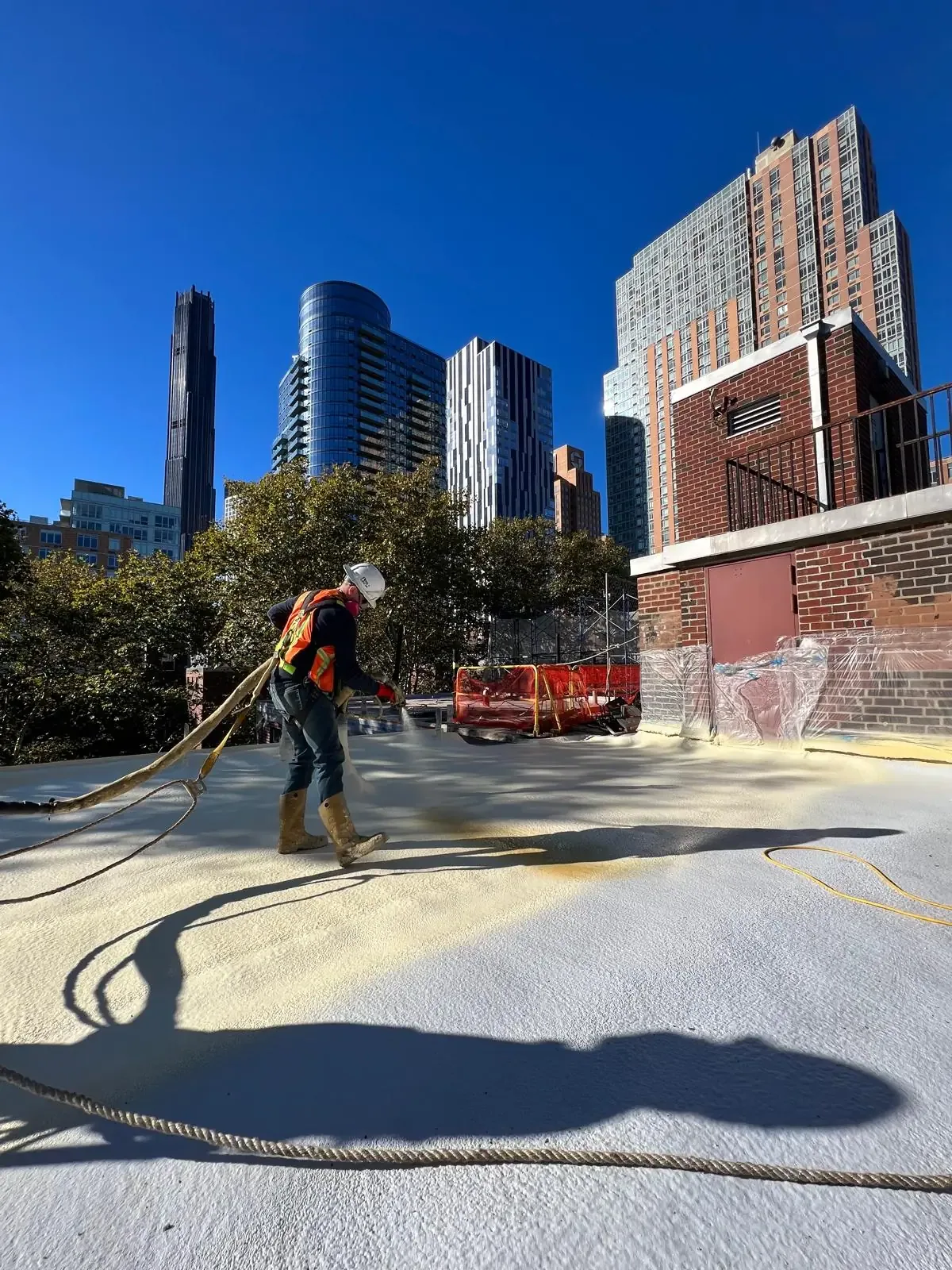
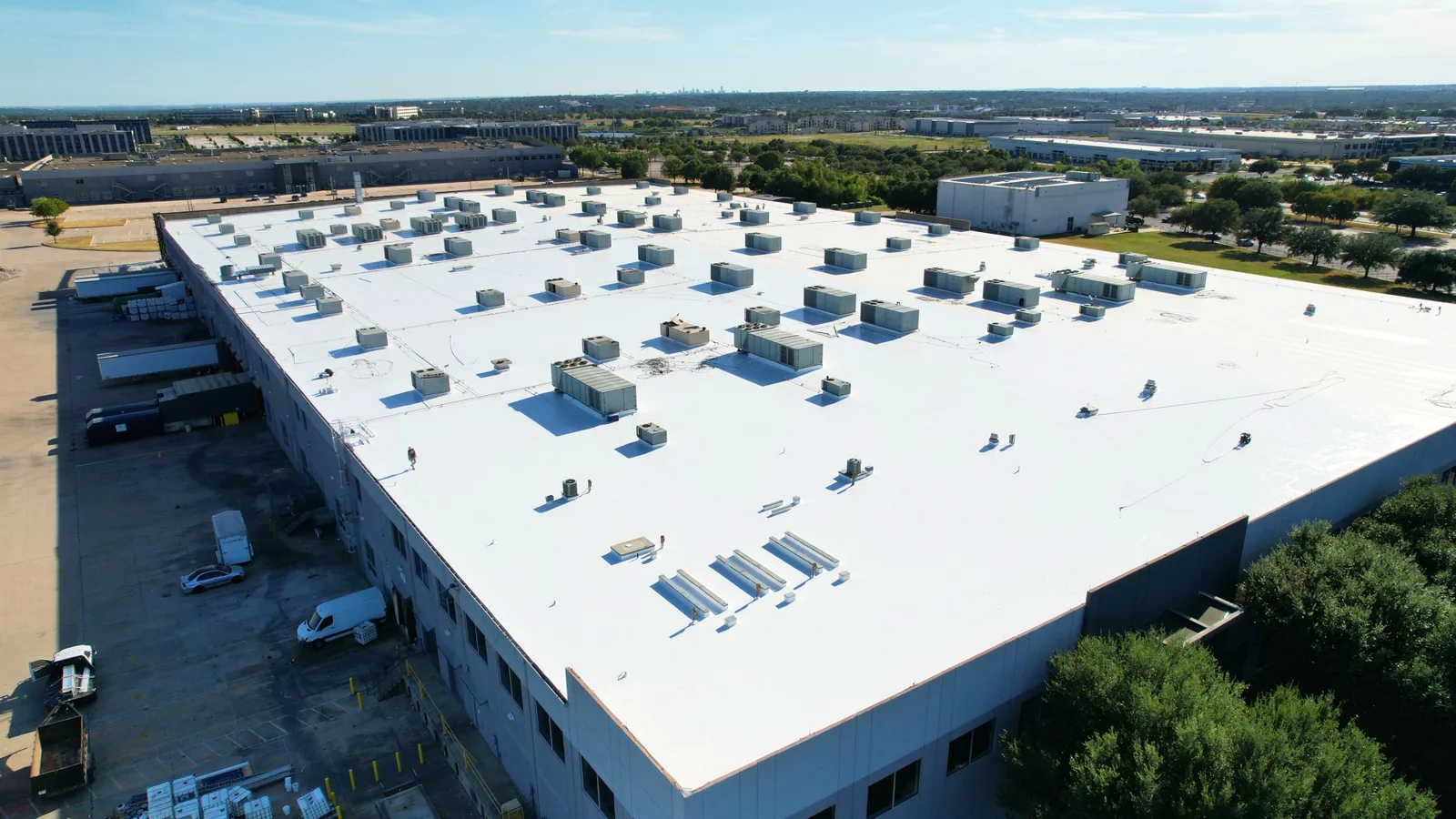
Granules washed into a drain can be the first visible sign that a modified bitumen cap sheet is wearing. In Carrollton, TX, hail, strong spring wind, and summer heat make it useful to inspect the full roof assembly before patching one spot. We check the cap sheet, laps, flashing, insulation, and deck, then mark the repair boundary. At Midway South Industrial Park, manufacturing and distribution properties have active operating schedules, so roof work needs a defined access and close-in plan.
Modified bitumen roofs use asphalt sheets reinforced with a carrier such as fiberglass or polyester. Multiple plies can form the assembly, with a cap sheet at the surface. SBS-modified material is formulated for flexibility, while APP systems have different heat and application characteristics. The project specification and the existing roof determine which system is appropriate. We identify the number of layers, attachment, surface finish, insulation, and deck before writing a repair or reroof scope.
A surface blemish can hide moisture between plies. We look for blisters, splits, exposed reinforcement, alligatoring, loose granules, and soft areas near drains or equipment. A test cut can confirm what the layers contain and whether the insulation is wet. We record each opening and close it before leaving the roof. A moisture survey may help identify areas for closer inspection, but suspect locations still need confirmation by a suitable field method.
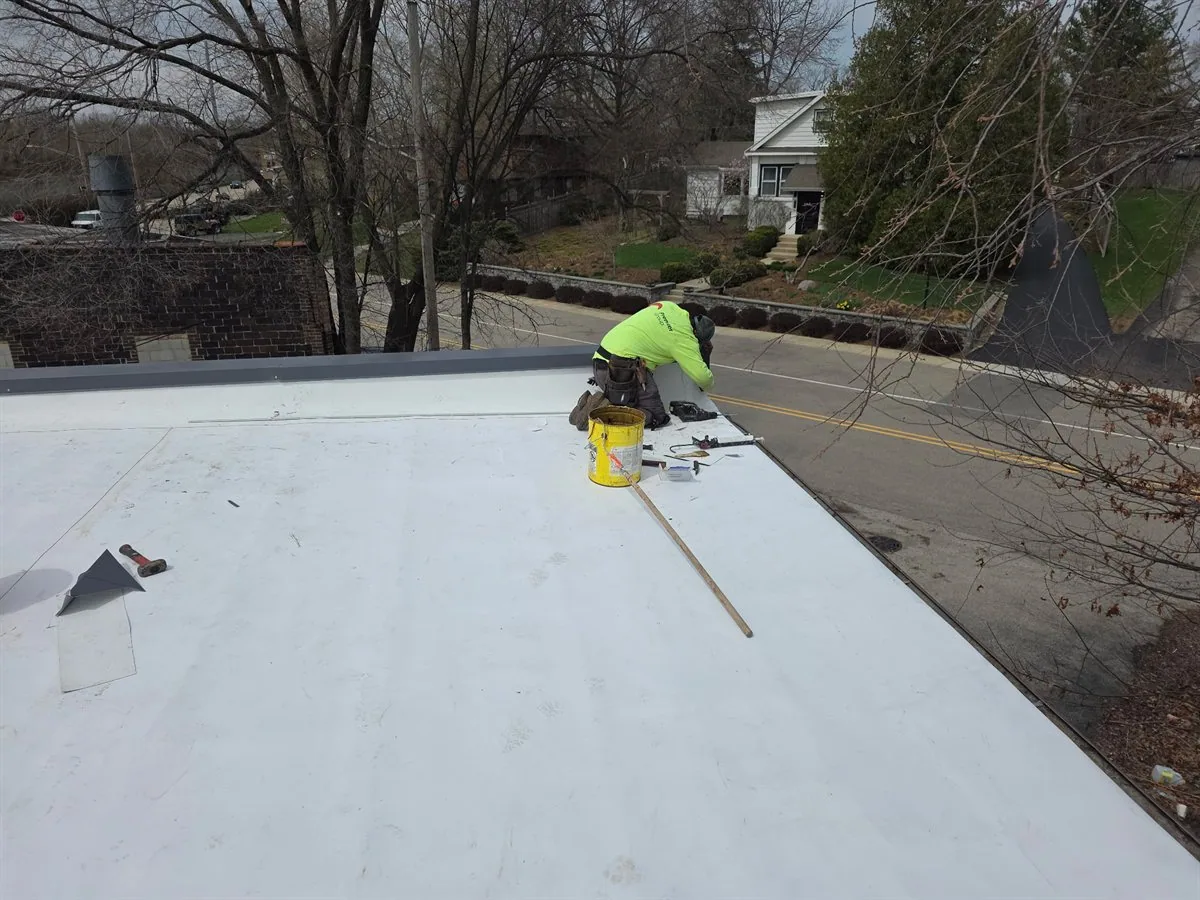
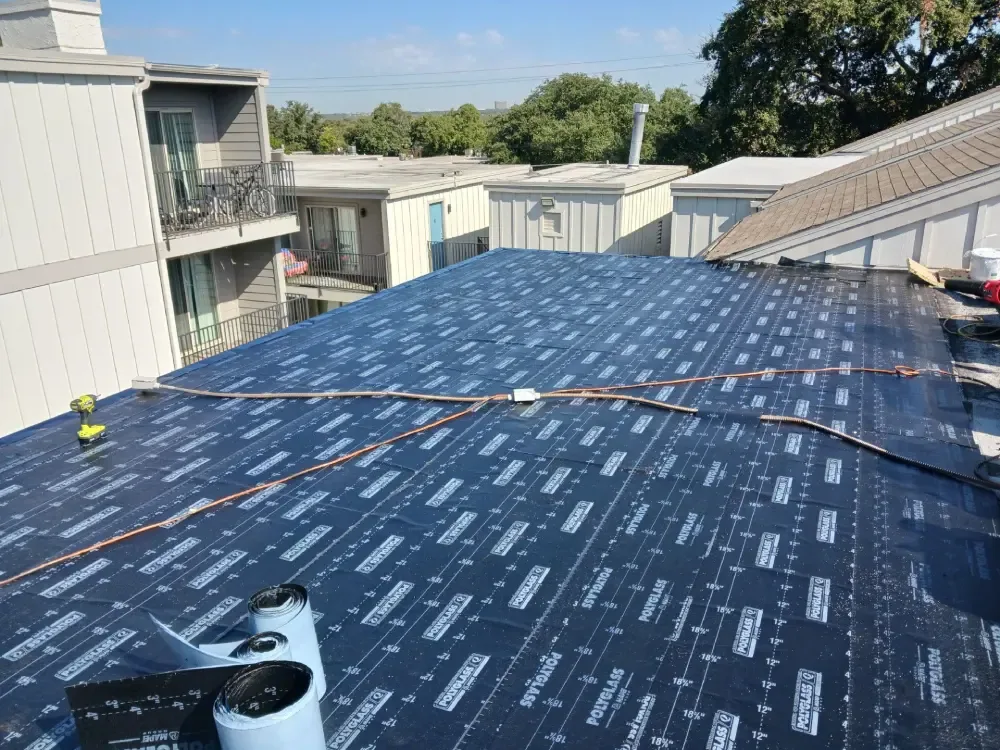
Water can move through an open lap or a poorly joined transition, then travel beneath the membrane before it reaches the ceiling. We inspect side laps, end laps, patches, and the base flashing where the roof turns up a wall. A raised edge may have lost bond or may be responding to movement below it. We mark the start and end of the condition, check whether the substrate is firm, and remove loose material before choosing a compatible repair. A wide smear of roof cement can hide the edge without restoring the layered bond.
Heat-applied work needs trained handling, safe staging, and protection of nearby materials. Cold-applied adhesive or self-adhering sheets have their own temperature and substrate requirements. The repair method should match the system and weather conditions. In Dallas-Fort Worth, July and August afternoons often run in the 90s and can exceed 100 degrees, while winter precipitation brings freeze-thaw cycles. We schedule exposed work when the roof can be prepared and sealed correctly. The forecast is part of the daily plan, not an afterthought.
Modified bitumen turns up at parapets and curbs, meets metal at the perimeter, and connects to the drain bowl. Each detail can open through movement, poor adhesion, trapped water, or damage from service work. We check the base flashing for splits, the counterflashing for secure attachment, and the metal edge for movement. At drains, we inspect the clamping ring and flow path, then look for a low spot that keeps the assembly wet. The leak mark inside does not always identify the place where the roof needs repair.
Equipment changes can leave unused supports or cuts in a roof that were covered with a different material. We ask which trade controls the unit, mark the location, and confirm whether the penetration is active. A edge-metal inspection can address perimeter details, while a drain and scupper review checks outlets and discharge. If a repair crosses several layers, we restore the assembly through the cap sheet instead of treating the top coating as the whole detail.
North Texas severe weather can bring hail, damaging wind, flooding, and tornadoes somewhere in the metroplex nearly every year, with the busiest period in spring. After a storm, we look for punctures, displaced edge metal, lifted flashings, and impact marks that break the cap sheet. We distinguish new openings from granule loss or splits that were present beforehand by checking repair history and field evidence. A location-marked photo set helps the owner review the condition without treating every blemish as a claim item.
At Valwood Industrial Park, roofs serve manufacturing, distribution, and service properties across a broad inventory. We organize the walk by building and roof area so repairs do not get transferred from one structure to another. For urgent leaks, a temporary emergency repair can limit water entry while the surface dries and the permanent assembly is planned. Follow-up should note the temporary material, the date, and what must be replaced or inspected next.
One isolated split may need a local repair. Repeated leaks, soft insulation, or separation across several laps may point to a larger section of the roof. We compare repairs with a recover or replacement after checking moisture, deck condition, existing layers, drainage, and height at walls and curbs. A recover is not suitable if the assembly is wet or attachment is failing. The decision should account for how the roof will be maintained after work, including safe routes to drains and mechanical equipment.
For a different low-slope assembly, a built-up roof system or TPO membrane can be compared when it fits the project requirements. We explain differences in seams, surface protection, and detail work using the actual roof condition. A replacement scope includes transitions, insulation, and perimeter metal, while a recover evaluation confirms whether the existing layers can remain. The property manager can then compare immediate repair with a planned capital project.
A temporary cover can limit water entry, but the permanent repair depends on the cap sheet, lower plies, and substrate condition. We mark the area and return when it is dry enough to prepare and seal the assembly.
They use different asphalt modifiers and have different handling and performance characteristics. We review the specified product and installation method, then match the repair material to the existing roof rather than mixing systems by assumption.
Granule loss can come from age, foot traffic, or weather exposure. We inspect the cap sheet around the area, check whether the drain is holding water, and distinguish normal surface wear from exposed reinforcement or a split.
A recover requires dry insulation, sound deck attachment, adequate drainage, and compliance with applicable requirements. We inspect the existing layers and use test cuts where useful before deciding whether a new assembly can remain over the current roof.
We identify units and access routes before staging materials. The property contact coordinates shutdowns or service limits, and the roofing sequence keeps each opened area protected and closed at the end of the work window.
RELATED WORK
CALL US
Leaks, storm damage, a failing membrane or a replacement on the calendar: tell us what is happening on the roof and we will set up a visit.
Roof Systems
Share the leak locations, operating hours, and roof access rules. We will examine the cap sheet and underlying assembly, mark the repair limit, and identify whether a local fix or broader scope is needed.
Call 555-555-5555 or request a roof assessment online.