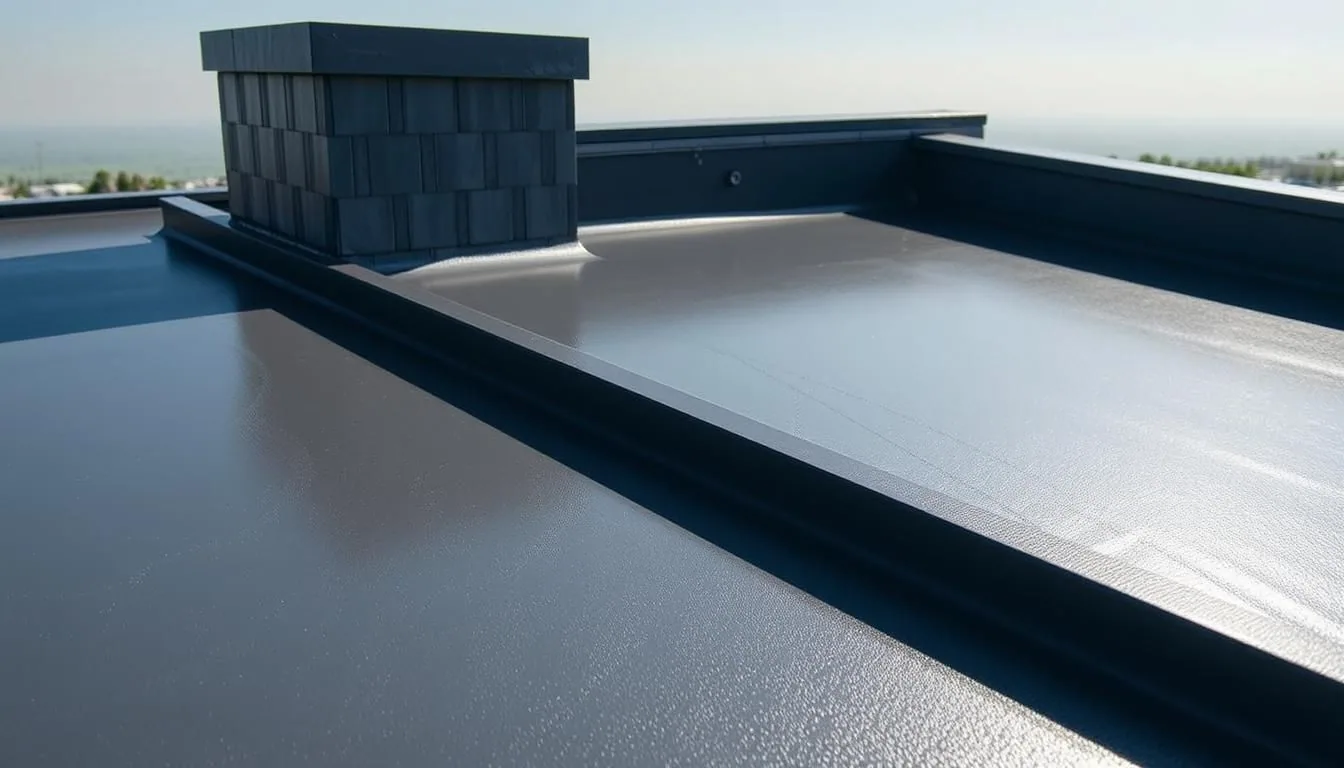
A heat-softened seam can open after years of rooftop movement, then admit water during a spring storm. For a TPO roof in Carrollton, TX, we check welds, terminations, drains, and the layers beneath the membrane before choosing a repair or replacement. The industrial inventory at Valwood Industrial Park includes distribution and manufacturing buildings, where roof access must account for loading and production. We mark the affected area, test questionable seams, and record whether the membrane, insulation, or deck is driving the leak.
TPO is a thermoplastic single-ply membrane with seams joined by heat welding. Its field sheet may look intact while the weak point sits at a corner, curb, drain bowl, or termination bar. We check for open welds, wrinkles, punctures, shrinkage, scuffs, and patches that have separated from the original surface. A probe can help locate a seam that did not fuse fully, but a test must not turn into a cut through sound material. The repair limit follows what we can verify on the roof, not the visible stain inside.
Color change or surface chalking deserves context. Sun exposure, foot traffic, rooftop work, and chemical contact can affect a membrane differently. Dallas-Fort Worth summers bring sustained heat, and July and August daytime readings often reach the 90s or exceed 100 degrees. That is regional weather, not a reading from a specific roof. We look at exposed sections and sheltered areas side by side, then note where the condition changes. A commercial roof inspection gives the owner a marked map of welds, penetrations, and repair areas to compare over time.
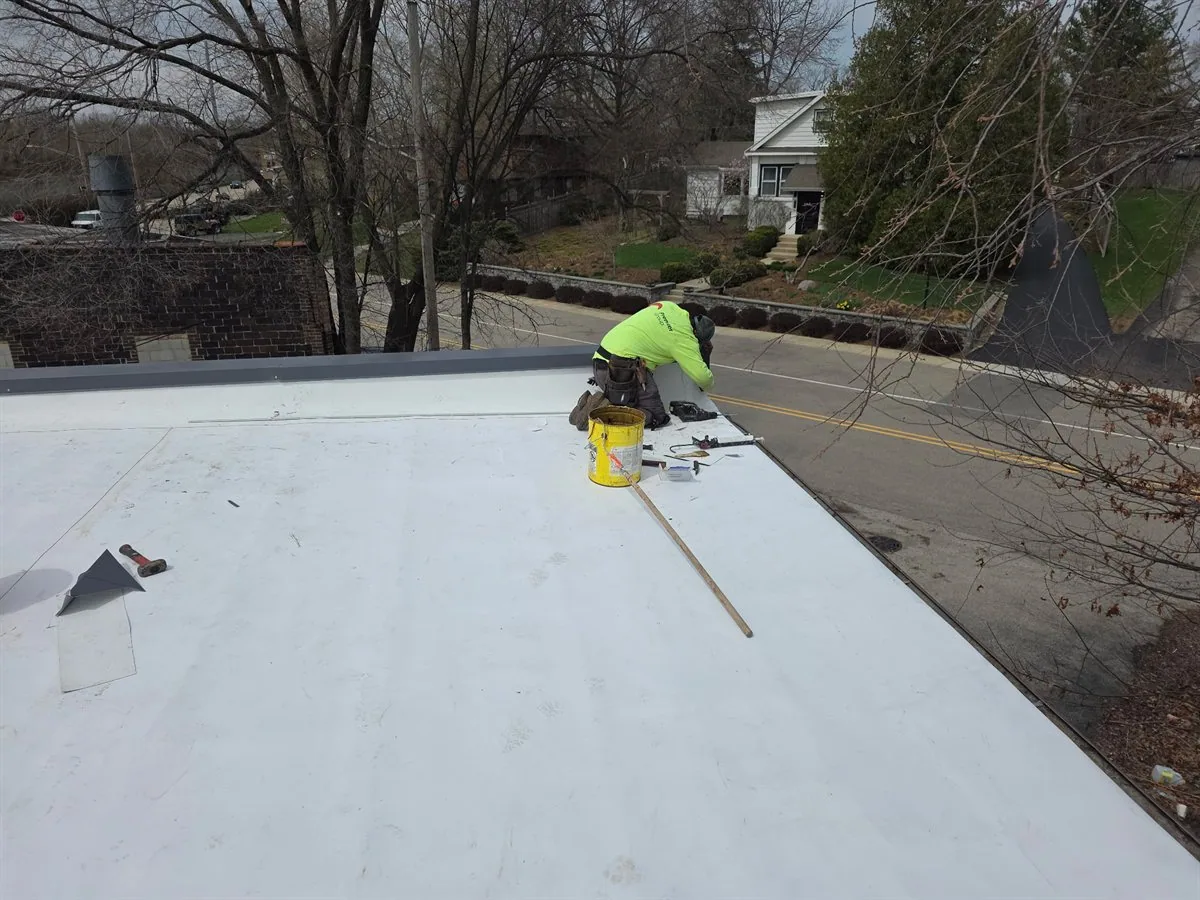
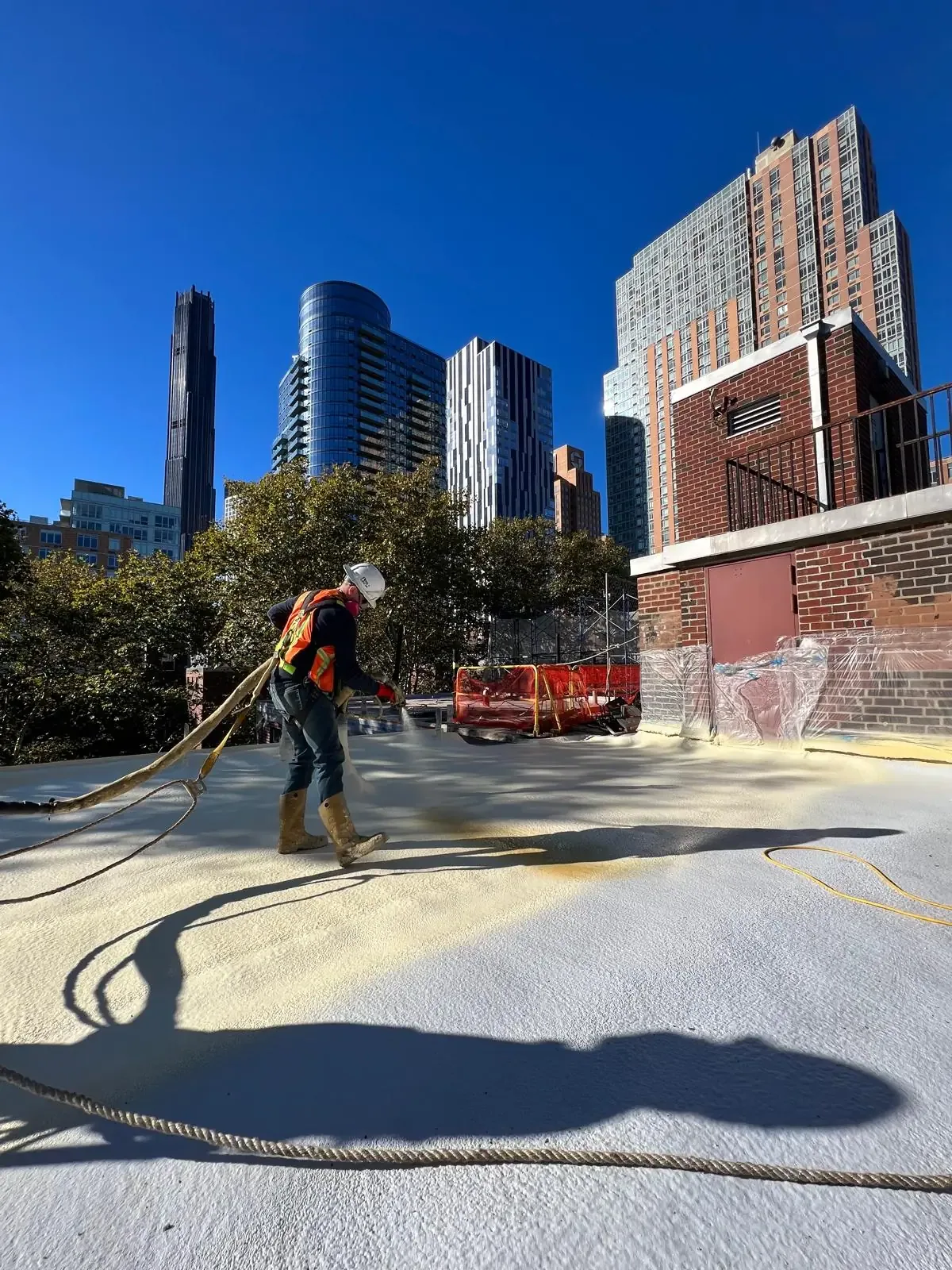
Seam quality depends on a clean, dry surface, suitable welding conditions, and consistent machine settings. A hand weld at a curb or pipe boot needs the same attention as a long field seam. We test the edge after it cools, inspect corners for fishmouths, and look for contaminants that can prevent a dependable bond. If an earlier patch crosses the seam, we check both sides of the repair and the membrane beneath it. A neat bead on top does not prove the sheet below is dry or firmly attached.
Roof movement can stress the membrane where a field sheet meets a wall, equipment curb, expansion joint, or metal edge. We trace the termination and look for fasteners that have backed out, flashing that has pulled away, and unsupported sheet edges. Wind events in the Dallas-Fort Worth area can damage roofs somewhere in the metroplex nearly every year, especially in spring. A recent storm still needs roof-level evidence before a repair scope is assigned. At Frankford Trade Center, large logistics operations make it useful to mark work zones and schedule safe access away from active deliveries.
A TPO membrane has to move water toward drains, scuppers, or gutters without leaving standing pools at transitions. We check whether debris is holding water, whether a drain bowl is clear, and whether the membrane sits correctly at the clamping ring. A blocked outlet can keep an otherwise sound field wet for days. Low areas may point to insulation compression, deck deflection, or an assembly that never had enough slope. We document the condition and compare the roof plan with actual flow paths before recommending a change.
Rooftop units add curb flashing, condensate lines, supports, and service paths. A repair near one unit should leave the technician enough room to reach adjacent equipment without dragging tools across the sheet. We protect the membrane during mechanical work and verify any trade-made penetration before the next rain. Where a drainage problem crosses several areas, a drain and scupper review can identify the outlet details separately from seam repairs. If insulation has absorbed water, surface welding alone will not correct the cause; the wet section may need to be opened and replaced.
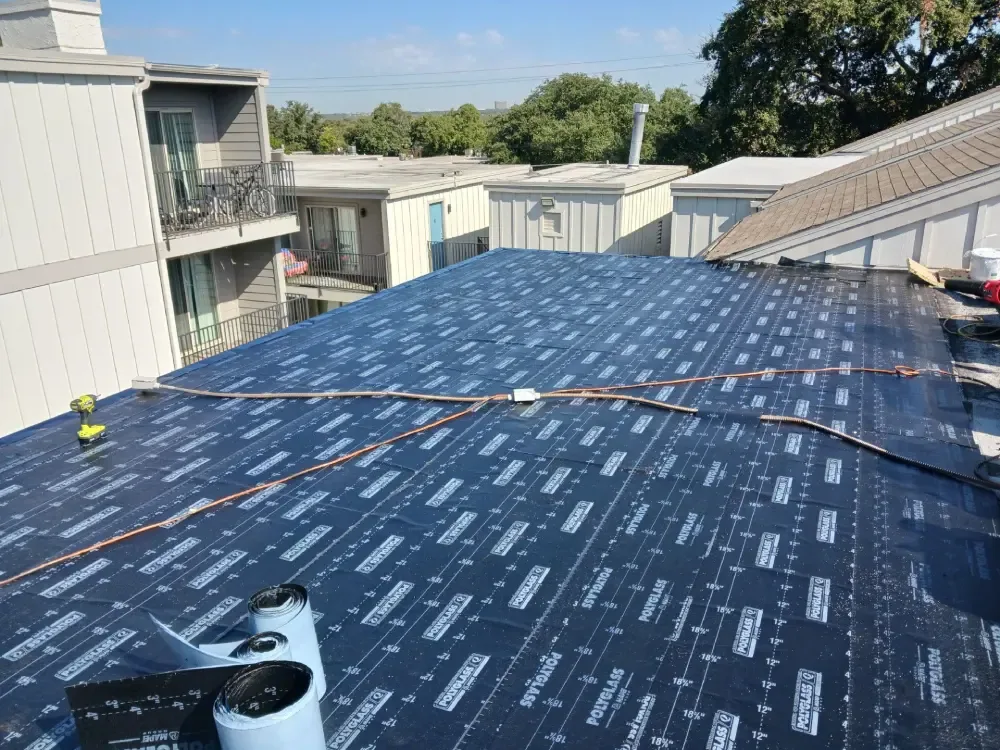
A localized TPO repair begins with removing only the material needed to reach a sound, dry surface. We prepare the membrane, fit compatible flashing, weld the patch, and probe the cooled edge. The patch must extend past the defect and turn cleanly at corners. A temporary cover can protect an active leak while the roof dries or the permanent material is assembled, but it needs a recorded location and a follow-up date. We also check the surrounding sheet because a pinhole can sit inside a larger area of wear or wet insulation.
Several separated leaks, open seams across long runs, or moisture under multiple roof sections may call for a broader plan. We compare the repair cost drivers with the remaining assembly condition, deck findings, drainage, and height changes at walls and curbs. A PVC membrane option may be considered when the project requirements and exposure fit that system, while an EPDM assembly has different seam and flashing details. We describe the actual tradeoffs rather than selecting a membrane by color or a single product claim. For an older assembly, a replacement scope should include insulation, attachment, edge metal, and the transition to adjacent roofs.
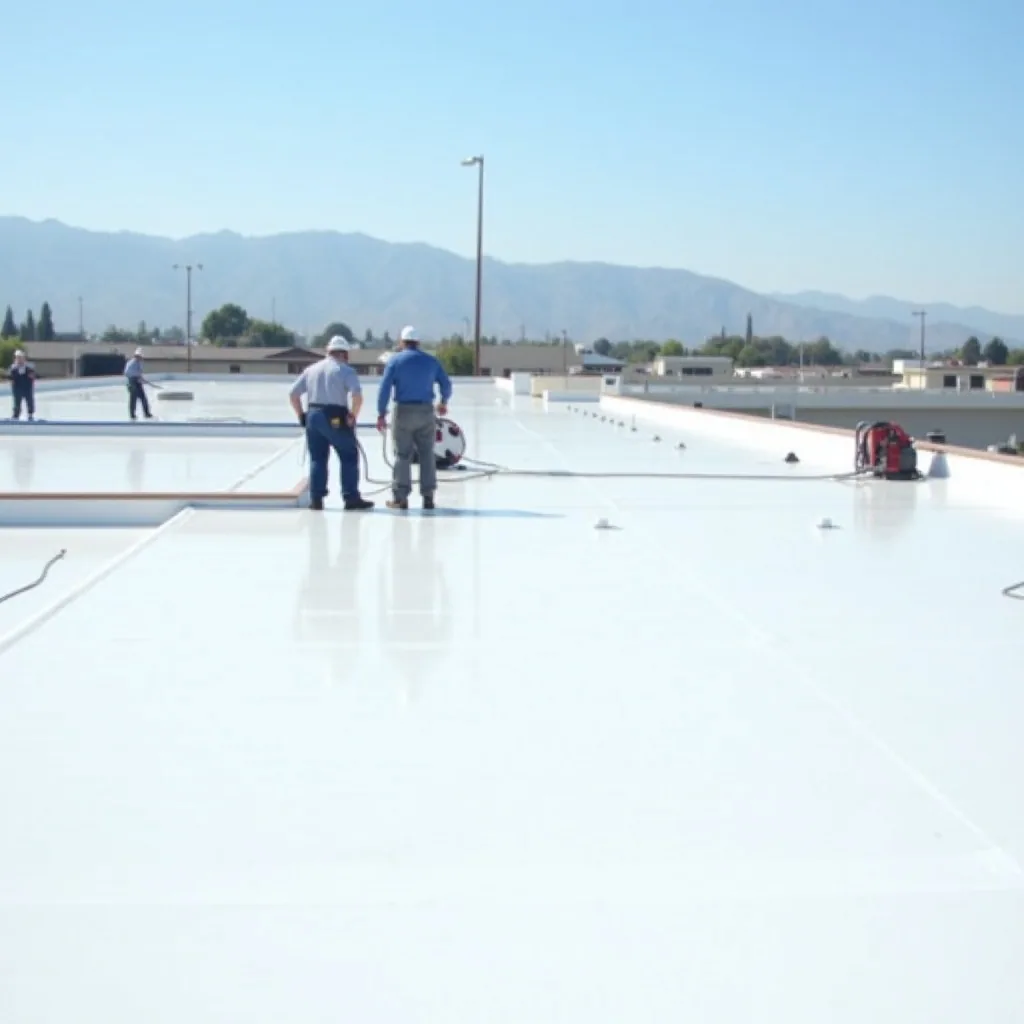
Field welding needs the surface and weather conditions to support a clean bond. Morning dew, rain, dust, and extreme heat affect preparation and close-in. We schedule the work when the membrane can be dried and tested, protect open sections, and keep a temporary tie-in available if the forecast shifts. The crew marks tools and materials by roof area so loose pieces do not travel toward drains or off the edge. Before leaving, we check welds, flashings, and temporary protection, then photograph the completed repair and any item carried forward.
For a larger reroof, we divide the roof into sections that can be opened and closed within the planned shift. The building manager identifies HVAC shutdown limits, delivery peaks, roof access points, and tenant routes. A facility near Trinity Mills Industrial Park may have a different operating schedule than a warehouse near the highway, so the access plan needs the property’s actual hours. We can phase an active facility through an occupied-building reroofing sequence and keep drains, doorways, and equipment paths in service. The close-in record names the roof area, material, weather, and inspection result.
A seam probe can test the cooled weld edge, and a visual check can reveal wrinkles, gaps, or contaminated areas. We mark any suspect section and use a controlled test only when the condition cannot be confirmed from the surface. The finding is recorded by roof area.
A patch repairs a compatible, dry surface. If moisture or a loose layer sits below the membrane, we map the affected area and open it only as needed to confirm the assembly. Wet material may require removal before a lasting repair can be completed.
The curb corners, termination, and sheet movement all matter. We look for separated flashing, poor welds, fasteners that have shifted, and water trapped beside the curb. The equipment trade may need to coordinate access before roofing work can be finished.
The number of existing layers, moisture, deck condition, attachment, and drainage shape the options. We inspect those items and document repair limits before comparing a recover with replacement. Code requirements and the planned assembly also have to fit the roof.
We close each section with a tested permanent detail when conditions allow. If rain arrives before that point, a temporary tie-in is secured, marked on the roof map, and assigned a return step so it is not mistaken for finished work.
RELATED WORK
CALL US
Leaks, storm damage, a failing membrane or a replacement on the calendar: tell us what is happening on the roof and we will set up a visit.
Roof Systems
Share the leak locations, roof access hours, and any loading or equipment limits. We will inspect the TPO seams and details, mark the repair boundary, and plan a safe weather window.
Call 555-555-5555 or request a roof assessment online.