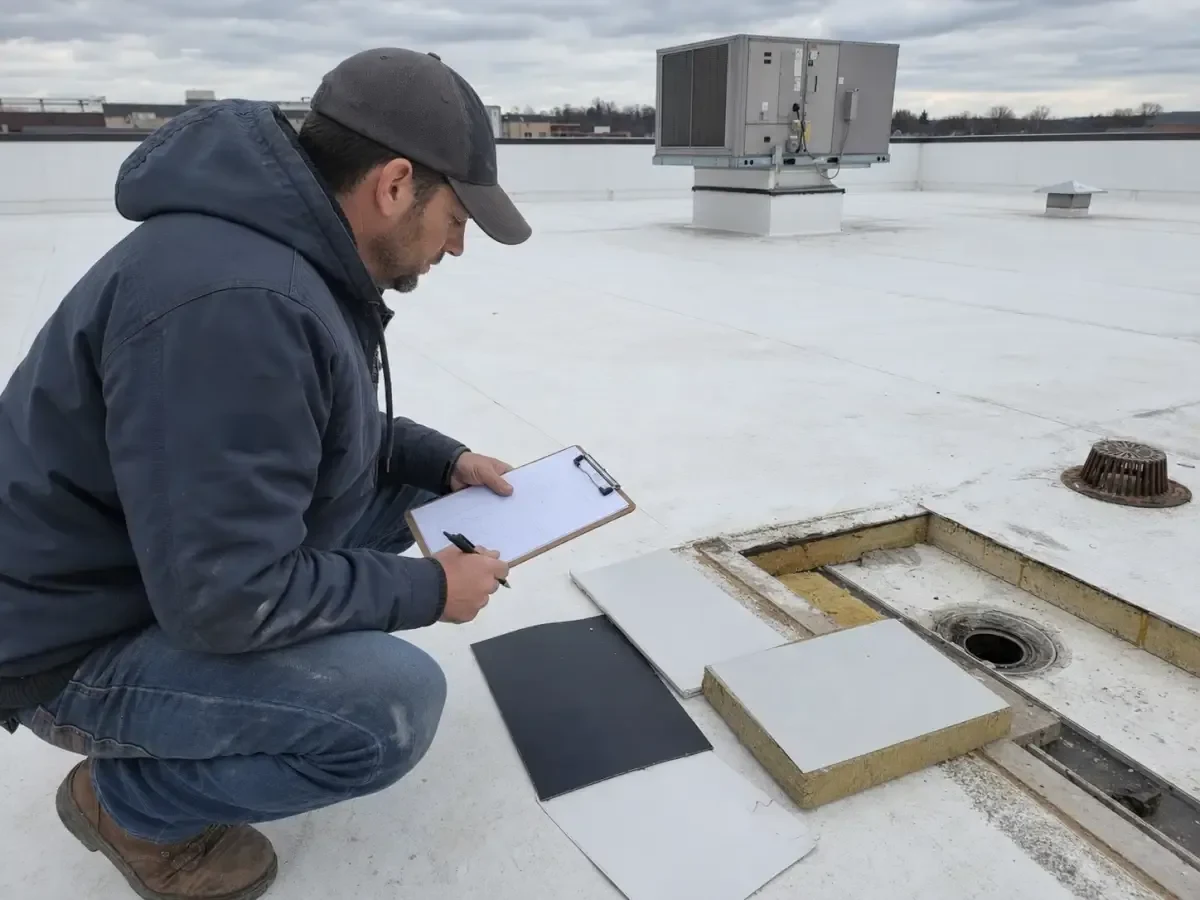
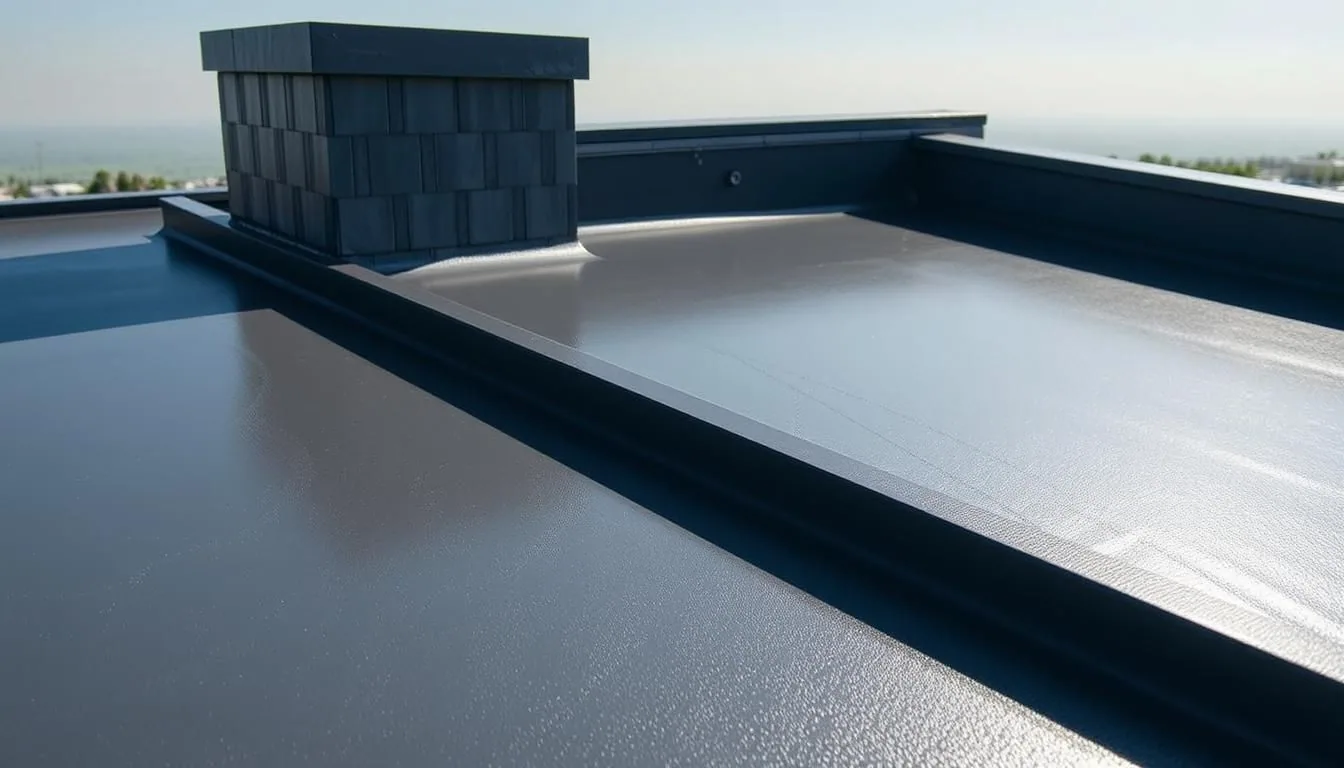
A black EPDM sheet can flex in the sun while a seam or flashing corner carries the strain. In Carrollton, TX, roof heat and spring storms make those transitions worth checking before a small opening reaches the insulation. We inspect the membrane, seam tape, adhesive, terminations, and drain details, then mark each condition by roof area. At Trinity Mills Industrial Park, the city reports a busy industrial district with manufacturing and distribution occupiers. Roof access and return visits need to fit the property’s schedule as well as the membrane repair.
EPDM is a flexible rubber membrane used on low-slope roofs. The sheet can be fully adhered, mechanically attached, or held by ballast, and the installation method changes where movement shows up. We look for wrinkles, shrinkage at the perimeter, punctures, loose flashings, and areas that have pulled away from a wall or curb. A fold in the membrane is not automatically a leak, but a fold that holds water or stresses a termination needs closer review. We mark the edge and follow it to the point where the membrane is still secure.
The regional summer pattern brings prolonged heat and humid air; July and August highs across Dallas-Fort Worth commonly sit in the 90s and frequently clear 100 degrees. That gives the repair crew climate context, not a reading from this membrane, so we inspect its actual surface and bond before choosing material. Dark membrane can soften in heat, and thermal movement can draw at edge details over time. During an inspection, we compare exposed and shaded sections, check the perimeter for loose metal, and note whether the sheet has enough slack at changes in plane. A roof condition inspection can show the locations that deserve repair before the next weather window.
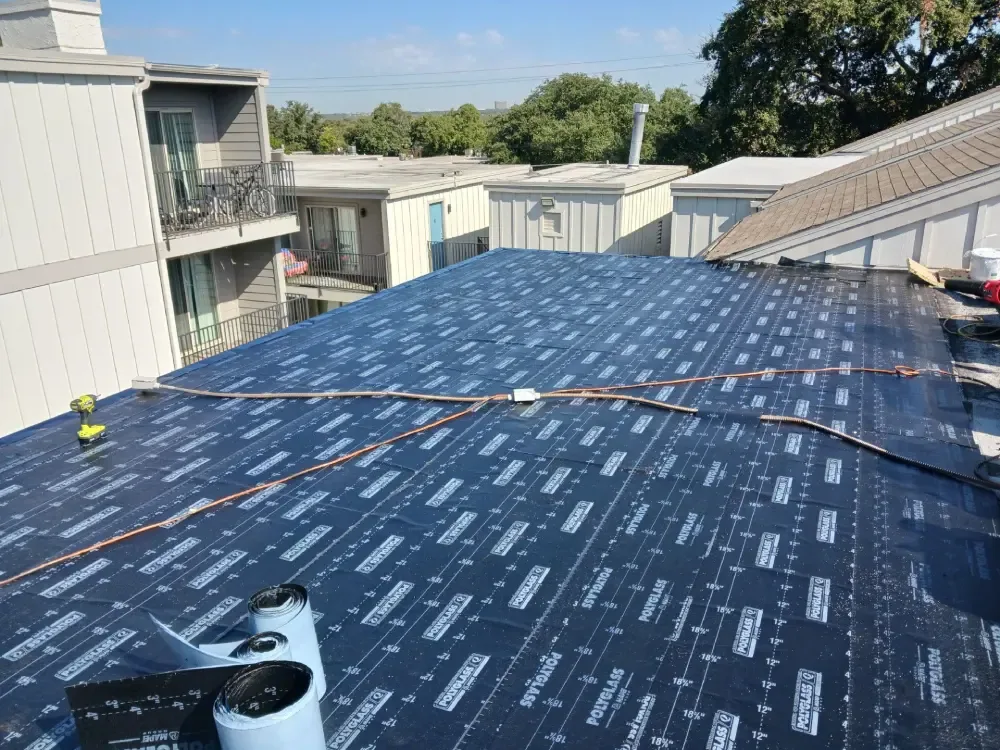
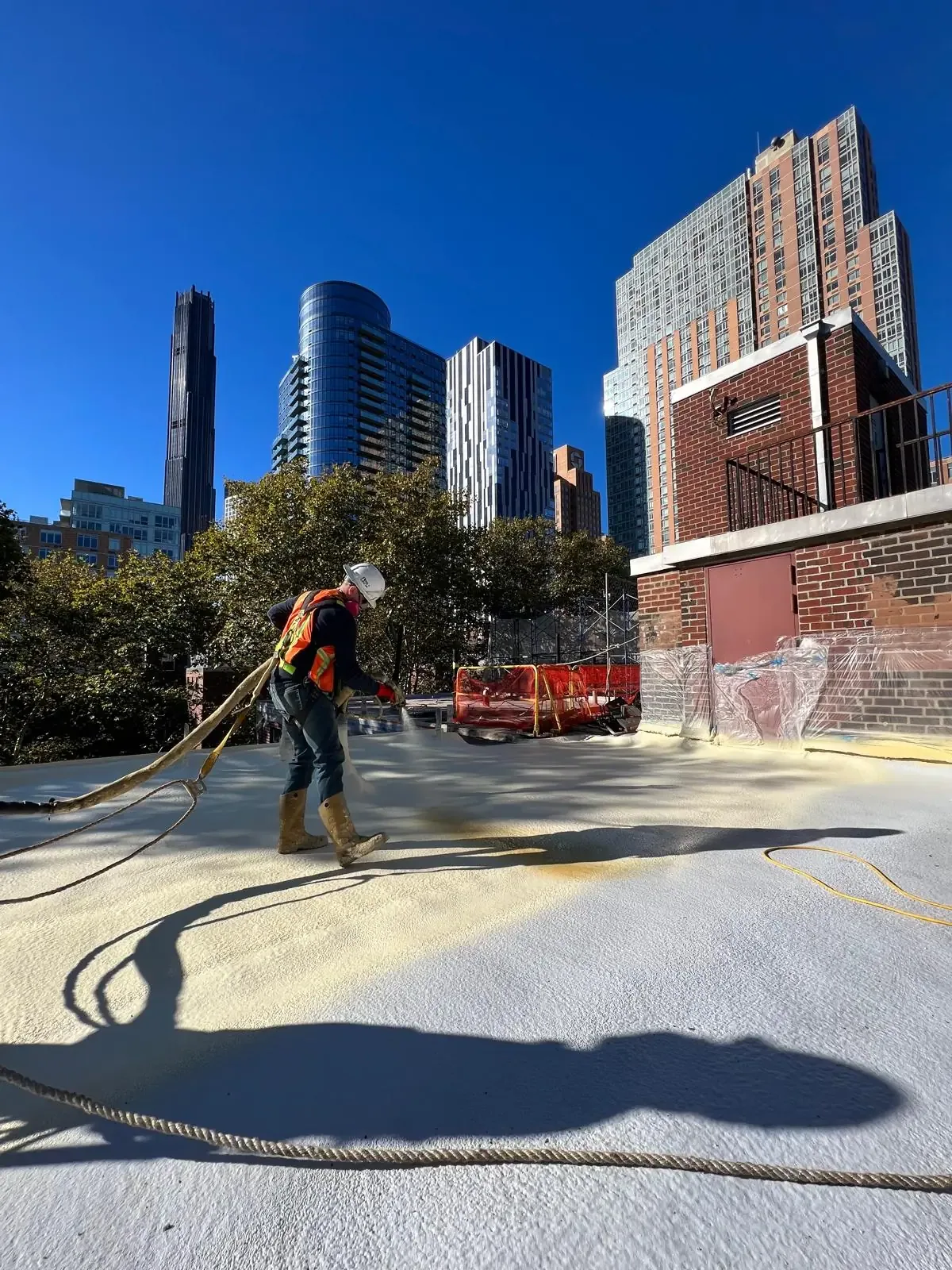
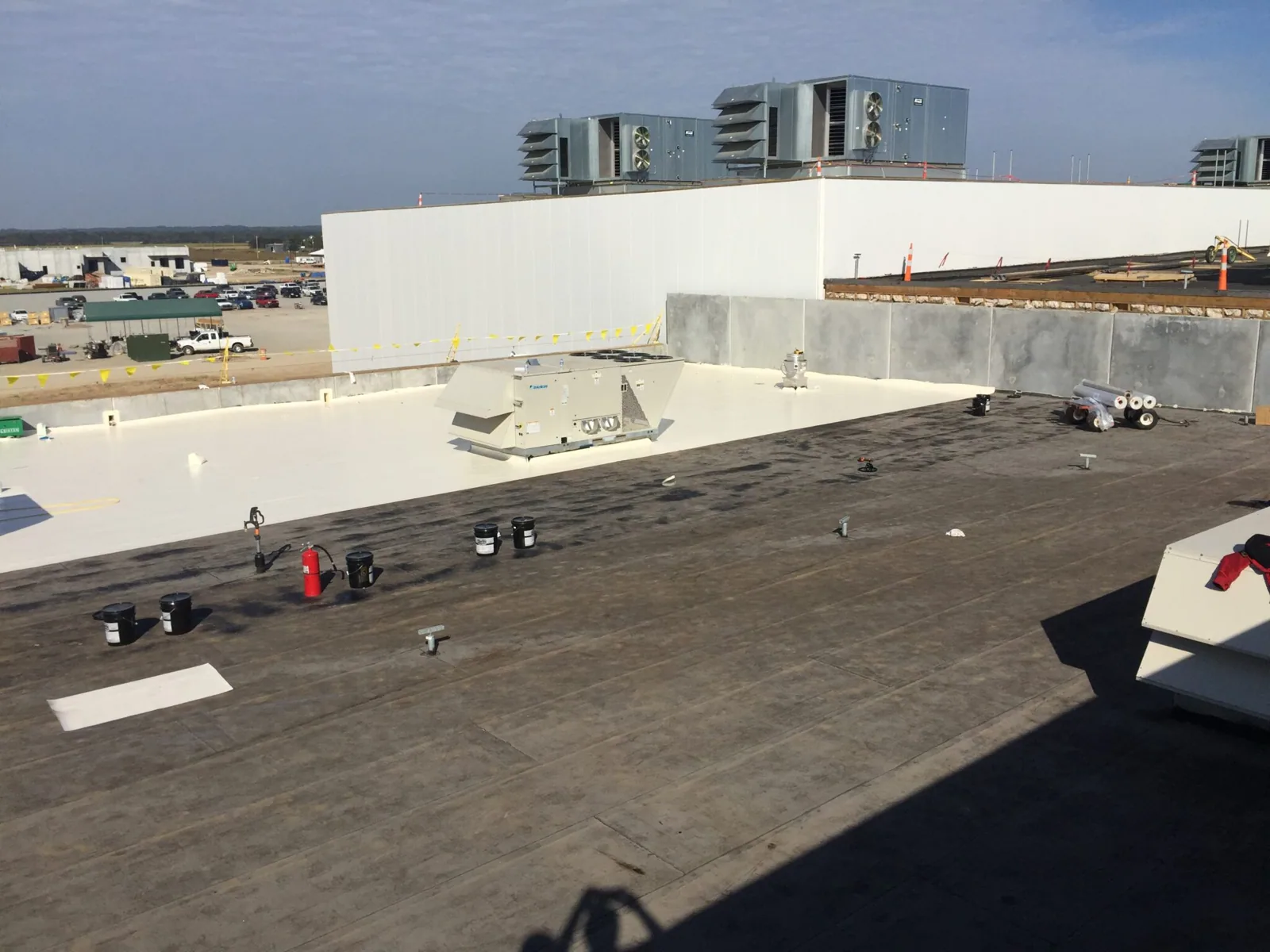
Many EPDM seams use splice tape under a lap. A bond can fail because the surfaces were not clean, the primer was missed, moisture reached the joint, or the lap has been pulled by movement. We check seam edges, intersections, corners, and patches for separation or fishmouths. A probe may identify a loose edge, while a controlled lift can reveal whether the bond continues to hold beneath it. The goal is to repair the actual failed length without cutting into areas that remain secure.
Adhesive-backed repairs need compatible materials and careful surface preparation. A patch laid over dust or a degraded coating may peel even if it looks pressed down. We clean and prepare the repair zone according to the membrane system, extend the patch beyond the defect, and roll the seam as specified. If an old sealant bead hides a split, we remove enough material to see the detail before selecting a repair. At Midway South Industrial Park, manufacturing and distribution activity may keep roof access moving, so repairs are grouped by safe work area rather than spread across active routes.
EPDM flashing must turn into drains and wrap curbs, pipes, and parapets without leaving an exposed edge for water to reach. We inspect the termination bar, corner patches, pipe boots, and metal counterflashing. A boot that has split at its neck may need replacement; a loose termination may need attachment work and new flashing. Sealant can protect a compatible transition, but it cannot make an unsupported sheet or wet substrate sound. We identify what holds the detail in place before choosing a repair method.
Drain bowls need special care because a small wrinkle can create a channel under the clamping ring. We check the strainer, the membrane cut, and the ring, then trace water toward the outlet. If debris or a low spot is holding water, we record that separately from a seam failure. A drain and scupper assessment can map outlets and roof flow, while a penetration flashing repair can address a pipe or skylight detail. We keep the repair boundary clear so one trade does not cover another trade’s unresolved connection.
Repeated leaks or soft insulation call for more than a new patch. We use test cuts where needed to identify existing layers, moisture, and deck condition. If wet insulation extends beyond the visible stain, it should be mapped before the roof is closed. We consider a recover only after confirming the existing roof is dry, secure, and approved to carry another layer. If the deck or perimeter has failed, replacement may be the more direct path. We list the repair limit and any concealed condition that still needs owner approval.
EPDM is not the only membrane choice. A KEE membrane or TPO system may fit different exposure, seam, and project requirements. We compare them against the roof’s actual condition, expected traffic, flashing details, and manufacturer instructions. A roof recover evaluation can establish whether existing layers can remain, while a replacement scope should carry through to insulation, edge metal, curbs, and drainage. We do not base the decision on membrane color or a single leak location.
These hazards reach some part of Dallas-Fort Worth in most years, and spring is the busiest severe-weather season. After weather passes, we inspect EPDM for punctures, displaced edge details, and new openings at equipment or parapets. A roof-level mark helps separate storm damage from a seam that had been aging before the event. Winter precipitation also returns each year, though freeze-thaw exposure matters more here than sustained snow load. A wet seam that cycles through freezing and thawing can become a wider repair if the water path is left open.
For maintenance, we check drains, walk paths, flashings, and adhesive seams, then clear safe-to-reach debris. Mechanical crews should use designated walk pads and avoid dragging parts over exposed rubber. We record the condition after their work, especially around pipe supports and replacement equipment. A roof near Trinity Mills may sit beside another building with different tenants and access rules, so the inspection map identifies the exact structure. Tell us when roof access is available and whether production, delivery, or equipment service limits the walk. The work plan can then set a clear weather window and close-in point.
A puncture in dry, stable membrane can often be patched with compatible EPDM materials. We inspect the area around it, prepare the surface, and check the finished edge so the repair does not stop at a tear that continues beneath the sheet.
Sheet movement, attachment, and perimeter detailing all affect the edge. We inspect the termination, metal, and membrane slack, then identify whether the failure is limited to flashing or extends into the roof field.
The repair needs clean, dry material and a sound bond. We test the seam and determine whether the tape failed locally or the lap has separated across a longer distance. The repair follows the verified limit.
A recover depends on moisture, existing layers, deck condition, attachment, drainage, and applicable requirements. We inspect the assembly and document those factors before comparing a recover with replacement.
Look for loose debris, new fastener holes, damaged walk pads, and disturbed flashing near the equipment. We can inspect those areas and record any condition that needs a roofing repair before weather reaches the deck.
RELATED WORK
CALL US
Leaks, storm damage, a failing membrane or a replacement on the calendar: tell us what is happening on the roof and we will set up a visit.
Roof Systems
Share the leak area, access hours, and any equipment or production limits. We will inspect the sheet, seams, and edges, then mark a repair boundary and the next step.
Call 555-555-5555 or request a roof assessment online.