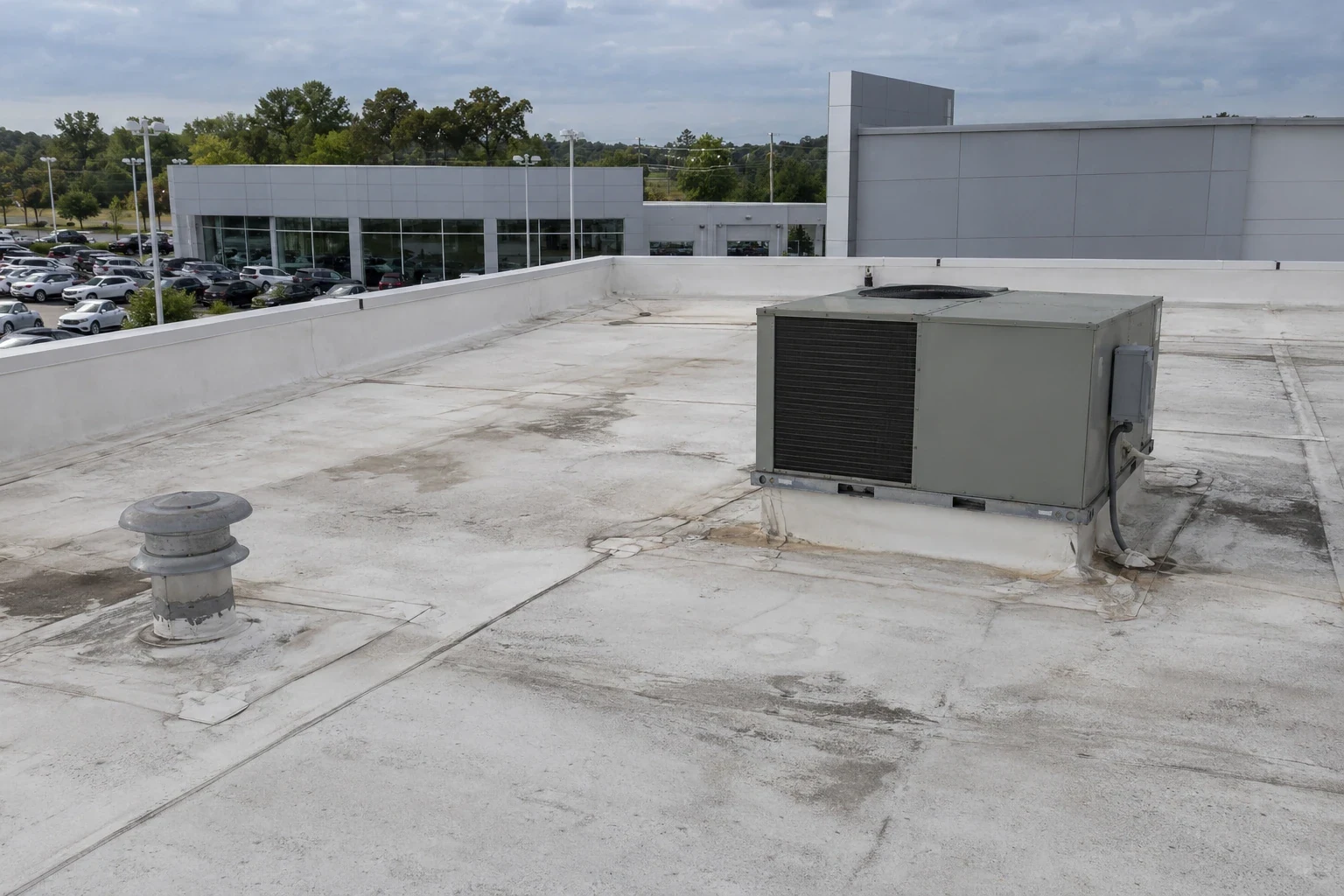
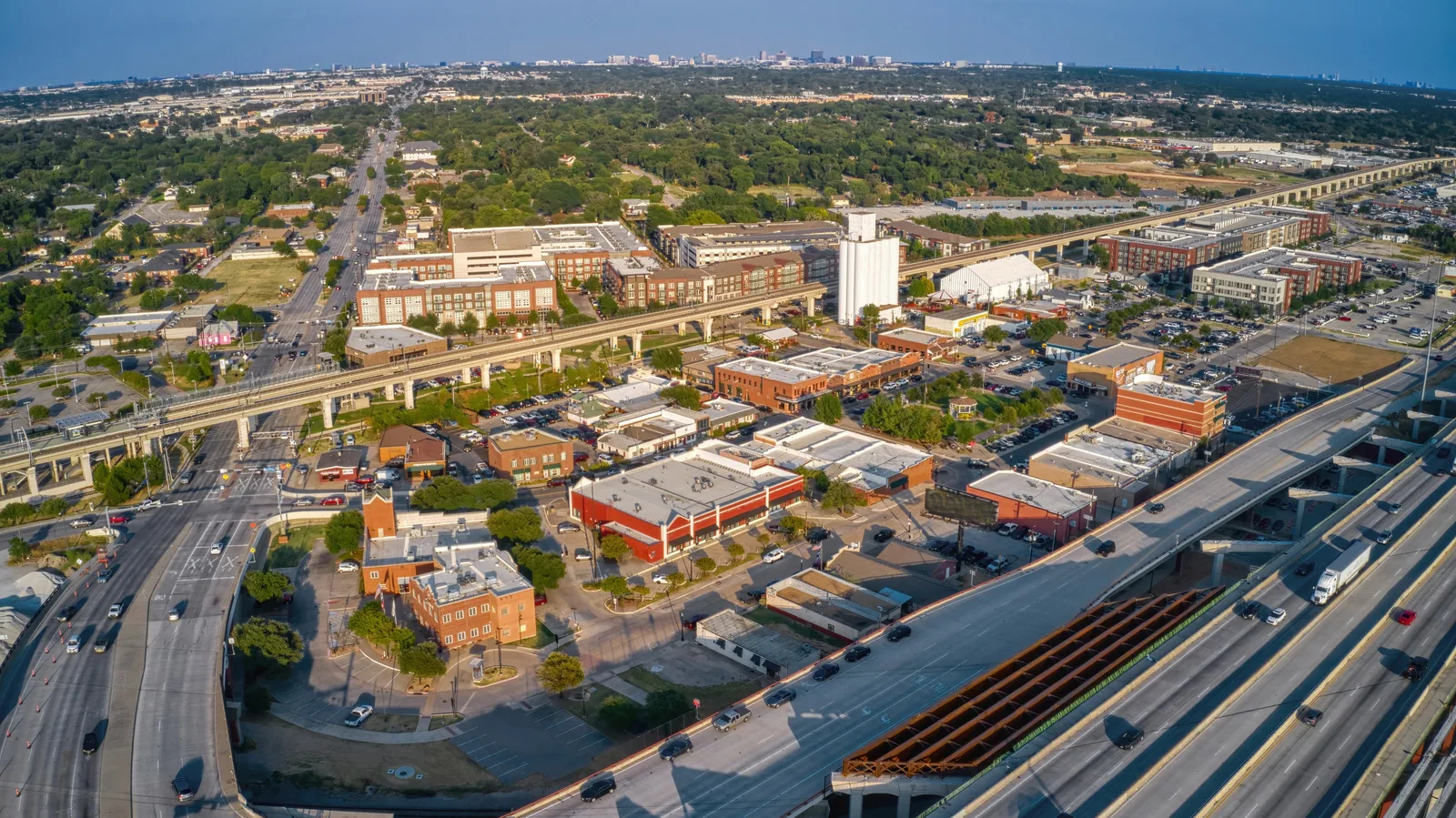
A blocked drain above a loading bay can turn a small roof leak into a problem across stored goods and daily dispatch. For warehouse roofing in Carrollton, TX, we inspect the roof area above the water mark, then trace seams, equipment curbs, and drainage paths. Valwood Industrial Park spans hundreds of buildings with distribution, manufacturing, and service tenants, so each inspection needs a building identifier and an access plan. We mark the affected area, check the deck and insulation where needed, and define how the roof can be closed before the next shift.
Warehouse work shares space with forklifts, trailer movement, deliveries, and inventory control. Before a roof walk, we confirm which doors remain active, where a lift can sit, and whether a loading schedule limits access. A roof hatch may lead above a picking aisle or equipment room, so the site contact should identify safe entry points and restricted zones. We plan material movement away from loading lanes and keep the roof route clear of loose tools and debris.
Frankford Trade Center includes distribution and logistics tenants, and work there may require coordination with vehicle traffic and delivery peaks. The roof plan should show the work area by building and note the hours when crews can enter. If the facility operates without a shutdown, an occupied-building reroofing sequence can divide the roof into sections with a daily close-in point. For a larger portfolio, the same rules apply to each individual structure. We do not assume that one warehouse’s access or roof details match another’s.
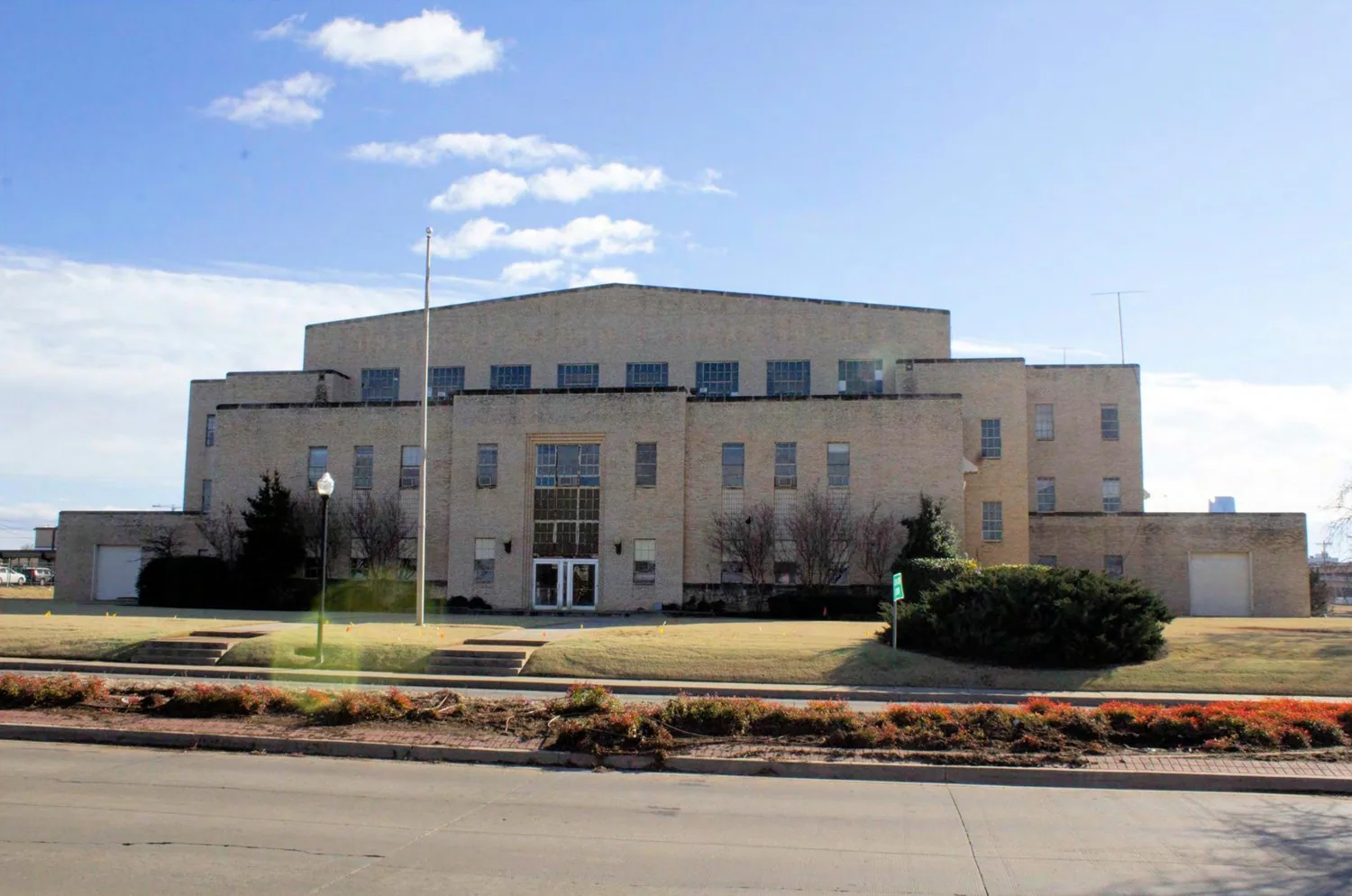
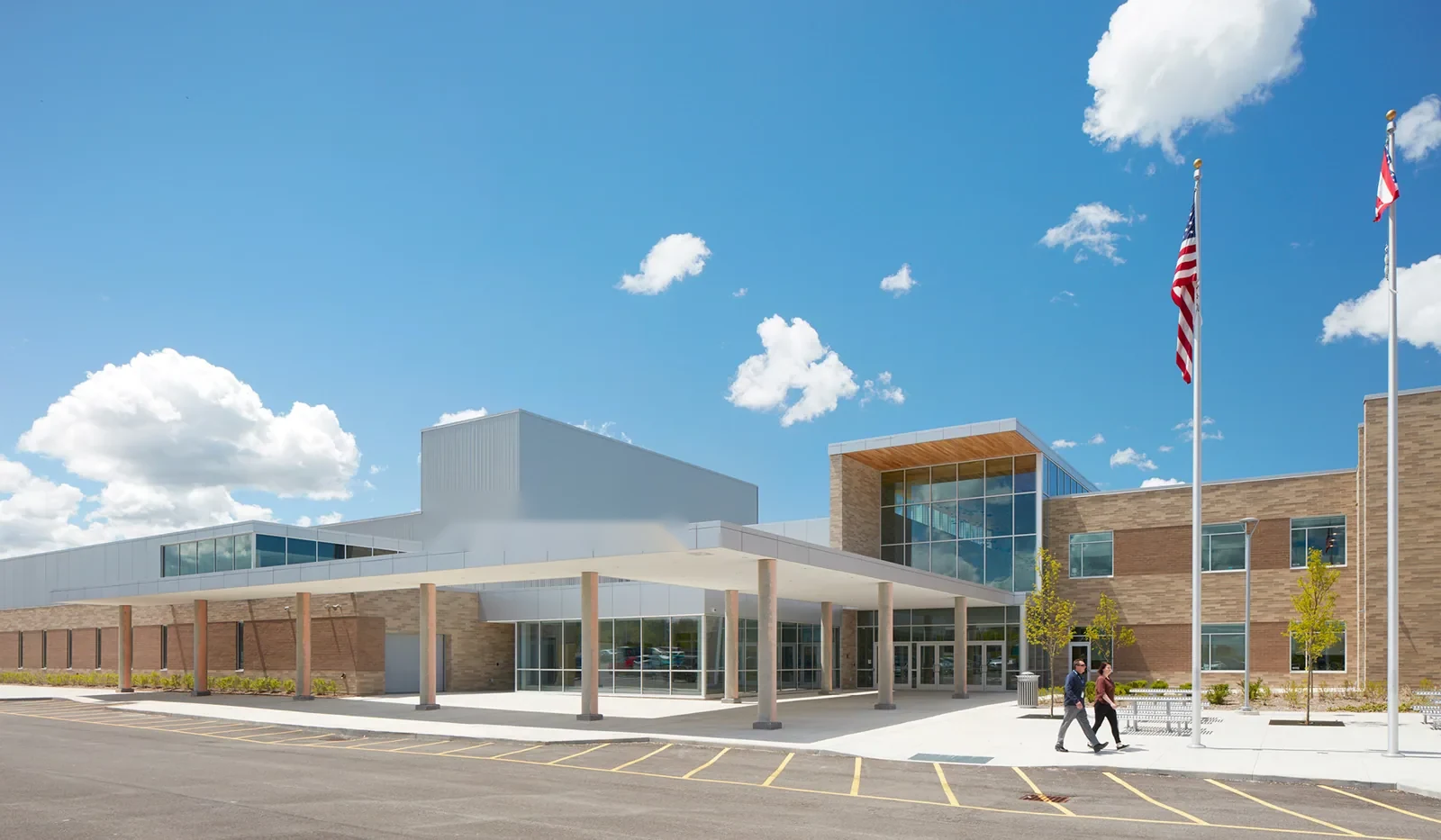
Inside stains and drip marks help locate a concern, but water can travel along a deck, joist, or roof layer before it falls. We compare the interior mark with drains, penetrations, seams, and low points above it. On the roof, we look for open laps, punctures, loose flashing, wet insulation, and areas where the deck has softened. A commercial roof inspection records the location and condition before repair material covers the evidence. When the roof assembly is unclear, a test cut may confirm the layers and moisture.
Carrollton’s industrial stock includes distribution and manufacturing parks, including the large inventory at Valwood and the properties at Frankford Trade Center. That scale makes clear roof maps useful for facility managers who track repairs by building. We mark the drain, curb, panel, or seam involved and keep photographs tied to the location. A roof record helps the next crew find the same detail without confusing it with a nearby structure. It also separates active leaks from older patches and staining that is no longer wet.
Warehouse roofs often have long field areas with multiple drains, scuppers, and equipment groups. We inspect strainers, bowls, sumps, and discharge routes, then note whether debris or compressed insulation is holding water. A low spot can collect water even when the nearest drain is open. We mark the start of ponding and check whether the deck, insulation, or slope is responsible. A drainage review maps outlets and flow paths separately from membrane repairs.
Water entry near a dock can affect cartons, machinery, electrical equipment, or inventory staging. We coordinate temporary protection with the manager and keep wet materials away from occupied aisles. A localized repair may close a puncture or failed seam, but moisture beneath the membrane may require removal and replacement of the wet layer. If a storm is approaching, we secure an interim tie-in and identify it as temporary. The closeout record names the area opened, the repair completed, and any condition that still needs a decision.
Warehouse roofs may use single-ply membranes, built-up roofing, metal panels, or coated assemblies. We identify the system before choosing a patch, flashing, or coating. A membrane repair needs compatible material and a sound substrate. Metal work may need fastener or panel correction. A coating only fits a surface that can accept it after preparation. We inspect the seam or detail and the area around it, because a small opening can sit inside a wider section of wear.
When several roof sections leak, we compare repair limits with the condition of insulation, deck, edge metal, and drainage. A recover may be possible when the existing layers are dry and attached. A replacement scope should account for curbs, drains, doors, and material staging across the warehouse. Facility owners can compare a distribution center roof plan or manufacturing facility roof plan when their operations add specialized access or equipment needs. Each option is based on the actual roof, not the building label alone.
Spring is the busiest severe-weather period in North Texas, when hail and strong winds can affect commercial roofs across the metroplex. After an event, we inspect perimeter metal, rooftop penetrations, membrane seams, and dock-side drains for changes. A field mark and a dated photo help show whether damage is new or part of an older repair history. Summer heat affects installation conditions too, so we plan exposed work for a suitable weather window and close each opened area before leaving.
Maintenance can reduce surprise work by finding a loose edge, clogged outlet, or damaged curb before a leak reaches stock. We can check roof sections on a planned route, clear safe-to-reach debris, and record repairs that should be revisited. A preventive maintenance visit should include the access limitations and areas where future service may be restricted. For a warehouse near Trinity Mills Industrial Park, west of Midway Road and north of Belt Line Road, the roof walk can be arranged around operating hours and transit-side access. The owner receives a simple list of field conditions and next steps.
We can phase work around operating hours when the roof, loading areas, and access route allow it. The facility manager identifies restricted zones and delivery peaks, and we close each work area before the shift or weather window ends.
We compare the interior mark with the roof features above it, then inspect seams, drains, curbs, and penetrations along the likely water path. The roof map records the finding even when water has traveled from another section.
We mark the area and use a controlled opening or other suitable inspection to confirm its extent. Wet insulation may need removal before the roof can be closed, and the repair limit follows the material that is actually affected.
The number of leaks alone does not settle the question. We inspect the membrane, attachment, deck, drainage, and past repairs, then compare a localized repair with a recover or replacement scope.
A prompt roof walk can identify lifted edges, punctures, and blocked drains before the next rain. We document each condition by roof section and provide temporary protection when a permanent repair needs dry conditions or material coordination.
RELATED WORK
CALL US
Leaks, storm damage, a failing membrane or a replacement on the calendar: tell us what is happening on the roof and we will set up a visit.
Property Types We Roof
Share the building identifier, access route, loading hours, and any inventory or equipment concerns. We will inspect the roof, mark the repair area, and set a sequence that fits operations and weather.
Call 555-555-5555 or request a roof assessment online.