A conveyor support added above a sorter can leave a roof opening that never made it onto the maintenance map. For distribution center roofing in Carrollton, TX, we trace penetrations, equipment routes, seams, and drains before planning a repair. Frankford Trade Center includes distribution and logistics tenants, so lift positions and delivery windows can shape how crews reach the roof. We record each opening by building and roof section, then check whether water has reached the insulation or deck below.
Fulfillment work has set movement below the roof: inbound trailers, staging lanes, conveyors, packaging lines, and outbound dispatch. We plan access with the facility manager and confirm where material can be lifted without blocking a dock or fire route. An active roof hatch should have a clear route, and tools should remain secured while forklifts and vehicle traffic move below. We confirm whether ladders, fall-protection tie-off points, or skylights sit inside a staging zone before lifting material overhead. If equipment shutdown is required for a curb repair, that window needs to be coordinated before roofing starts.
Valwood Industrial Park has a broad inventory of distribution and manufacturing buildings. A portfolio inspection there should distinguish one structure from the next and record the building ID, roof zone, and access restriction. We can phase work through an occupied-building reroofing plan so open areas are closed each shift and docks stay available where the site allows. A route at a single center may be different from another tenant’s layout, even when the buildings share a campus.
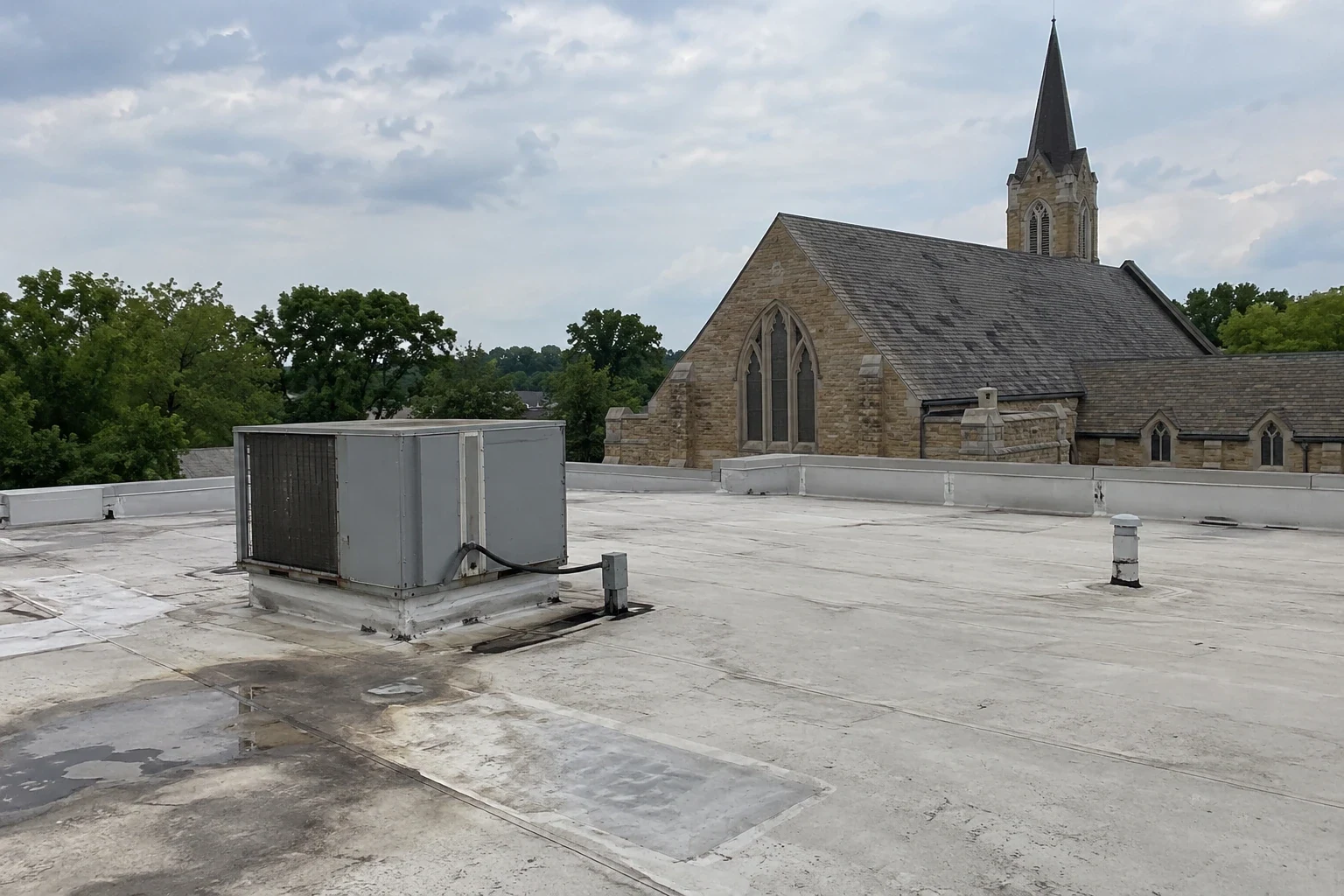
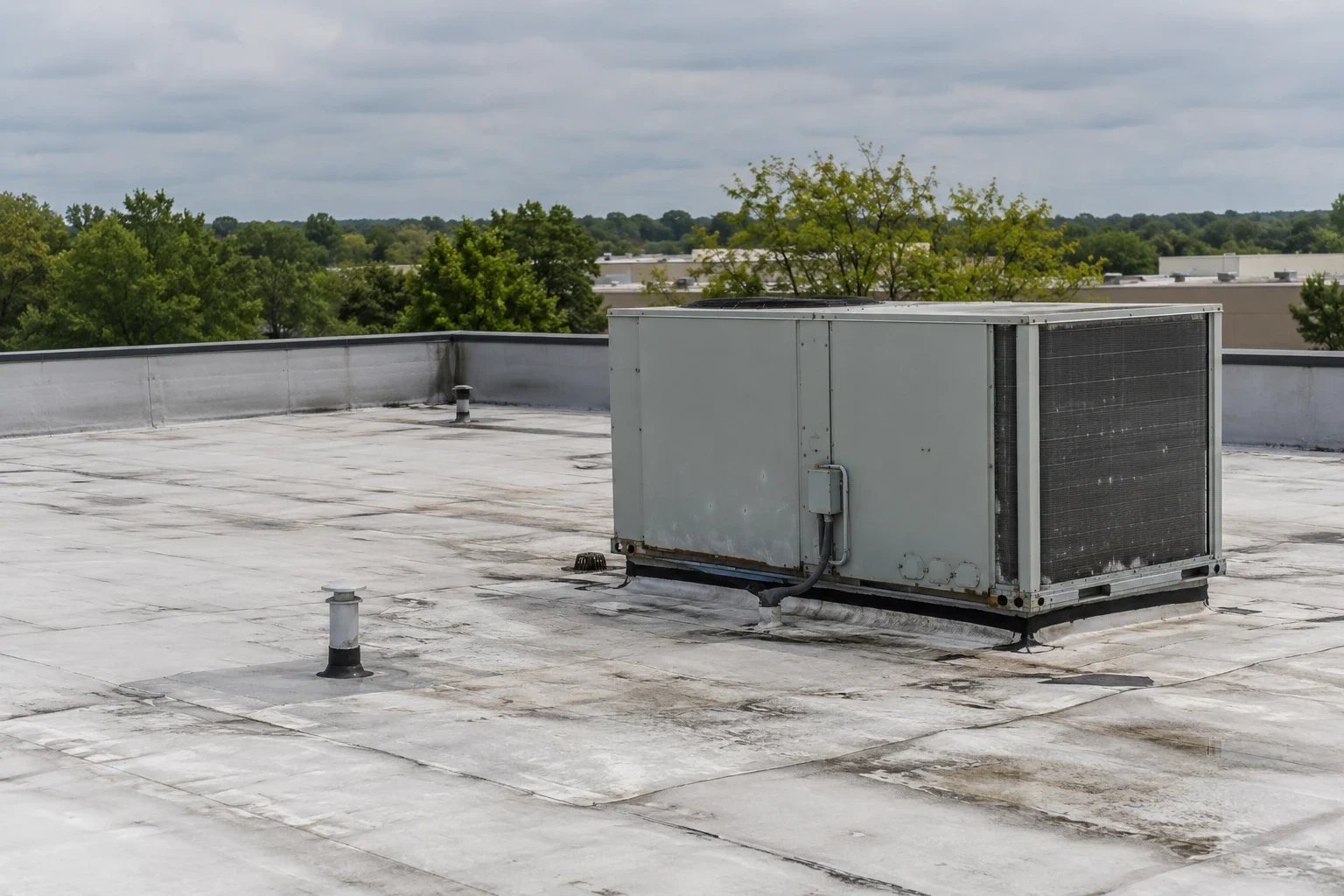
Sortation systems, rooftop HVAC, exhaust, vents, communication lines, and pipe supports all meet the roof in different ways. We inspect each curb or boot for gaps, loose flashing, movement, and evidence of service work. An abandoned conduit may leave a hole beneath a cap, while a new support can concentrate pressure on a small membrane area. We identify the trade responsible for the equipment and confirm that the roof connection can be repaired without shifting a live line.
On a center with many roof openings, a roof map can help the maintenance team find the unit above a leak report. We number details by area, take approved photos, and note if the route is accessible. A curb and equipment-support inspection can record the roof-side condition around units and supports. Where the existing assembly is unclear, a roof inspection may include a controlled test cut to check for moisture before the team closes the detail.
Cardboard, stretch wrap, dust, and windblown debris can collect at roof drains or scuppers. We inspect the strainers and bowls, check whether an outlet remains open, and look for standing water at the adjacent seams. A blocked drain may produce a leak far from the dock where it is first noticed. If the roof has compressed insulation or poor slope, we mark the low area and identify whether drainage correction is needed in addition to patching.
Large hail, damaging winds, flooding, and tornadoes affect some part of Dallas-Fort Worth nearly every year, with severe weather peaking in spring. After weather passes, we check roof edges, drains, curbs, and membrane seams before reopening the normal maintenance route. A drain and scupper review records outlet conditions, while a ponding water repair addresses low areas that persist after the outlet is clear. The roof plan notes which conditions are urgent and which can be scheduled with the next maintenance visit.
A single puncture may need one compatible patch. A line of recurring leaks at conveyor supports can mean the flashing or the attachment needs a wider repair. We inspect the membrane, test questionable seams, and check insulation at marked locations. If water has spread below the roof surface, the affected area may need to be opened and the wet material removed. We keep the repair limit tied to what the inspection confirms, and document each temporary cover so it is not confused with completed work.
When several roof zones need attention, the owner can compare a repair program with a recover or replacement. A roof recover evaluation checks layers, deck, attachment, and moisture. If the roof has broad failure, a replacement scope can include new insulation, equipment curb heights, drainage, and edge metal. A warehouse roof inspection can also help map shared dock and access conditions. For a center that includes colder rooms or other temperature-controlled use, cold-storage roof planning brings additional vapor and temperature details into the review. The system selection still follows this building’s actual design.
Maintenance crews return to the roof to service fans, replace motors, clear drains, and check controls. Each visit can disturb a boot, walk pad, seam, or panel fastener. We recommend a roof check after major mechanical work and severe weather, with photos that identify where the crew walked and what changed. The building manager can keep a list of authorized access points and trade contacts so roofing repairs do not delay equipment service.
At Trinity Mills Industrial Park, the industrial district lies west of Midway Road and north of Belt Line Road around the transit hub. For a distribution building, access may be arranged during a lower-volume period without assuming which tenant uses the space. A scheduled maintenance visit can review drains, flashings, seams, and past repairs before the next severe-weather window. The report records action items by roof area, so maintenance can assign them to the right building team.
We plan work by roof area and coordinate access, lifts, and noise with the facility manager. The sequence should preserve required loading and fire routes, with each opened section protected before crews leave.
We map the interior report to the supports, curbs, seams, and drains above it. If an operating line limits access, the manager and equipment trade help set a safe inspection window before the roof detail is opened.
A recover is possible only when the existing layers, deck, attachment, moisture, and drainage support another assembly. We inspect those conditions and compare them with the replacement requirements.
We check edge metal, membrane seams, rooftop penetrations, drains, and any location where debris or impact may have opened the surface. A location-marked record helps prioritize temporary protection and permanent repairs.
Each report should identify the building, roof zone, detail, and repair status. We add photos and any access restriction so a maintenance team can return to the same location without relying on a general campus note.
RELATED WORK
CALL US
Leaks, storm damage, a failing membrane or a replacement on the calendar: tell us what is happening on the roof and we will set up a visit.
Property Types We Roof
Share the building ID, loading windows, access route, and equipment constraints. We will inspect roof openings, drainage, and seams, then set a work sequence that keeps each section protected.
Call 555-555-5555 or request a roof assessment online.