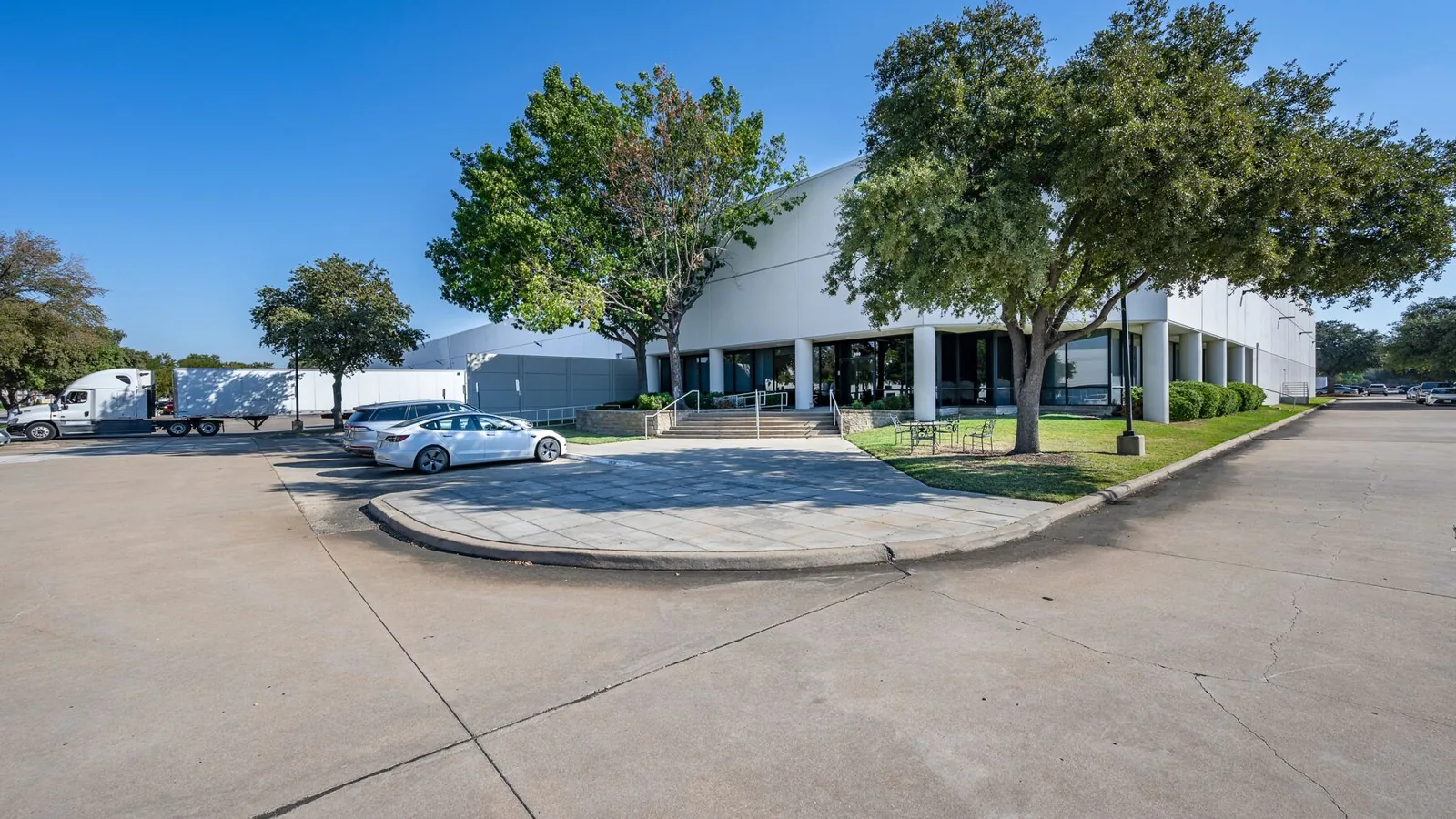
A wet mark at an equipment curb deserves a check of the flashing, the seam below, and the insulation around it. At Luna Industrial Park, we inspect penetrations, field seams, drains, and nearby insulation before setting the repair boundary. The park is one of Carrollton's seven designated industrial parks, with listed companies that include Cablcon, Iron Mountain, Reichert, Smith System, and Western Extrusions. Luna sits within the northern industrial belt served by I-35E and the Belt Line and PGBT network. We plan roof access with each property manager and tie recommendations to what the individual roof shows.
Pipe boots, equipment curbs, and wall flashings interrupt the open roof surface. We check where each detail meets the membrane, whether its termination remains secure, and whether a previous patch overlaps sound material. A crack at one corner can feed water beneath a larger sheet. We trace the interior mark against roof slope and nearby penetrations, then test the likely opening instead of assuming it sits directly overhead.
The first walk also covers drainage, edge metal, seams, and visible repairs. We mark roof zones on a plan or sketch and photograph each concern with a nearby reference. If roof records identify the membrane, we compare them with what is installed; if not, the field details guide the next check. A penetration flashing inspection can document pipe, curb, wall, and skylight transitions together. A a commercial roof assessment can extend the record to the overall roof condition.
Carrollton is in a hot-summer region. Dallas-Fort Worth daytime highs in July and August consistently reach the 90s and often top 100 degrees. Heat cycles can work on a membrane where it meets metal, a curb, or an older repair. We look for a lifted edge, brittle flashing, loose sealant, or stress along the seam. Then we check whether the surrounding area is still bonded and dry. A repair that only covers the exposed split can leave the movement that caused it in place.
Severe weather is another reason to revisit exposed details. The metroplex's spring storms can bring hail, damaging wind, flooding, and tornadoes somewhere in the region nearly every year. We inspect the perimeter and rooftop equipment after a storm, looking for punctures, displaced edge metal, and loose flashing. Each finding gets an area mark and photo so the owner can track the permanent repair. Our wind damage inspection follows the perimeter inward, while hail damage review checks the membrane for functional impact.
Water around a drain may point to a maintenance issue, a low area, or a membrane defect. We inspect the bowl, strainer, adjacent sheet, and path toward the outlet. A blocked drain can hold water at seams that otherwise shed rain. If a leak occurs near a low point, we compare the drain location with roof slope, deck direction, and the ceiling mark. The cause needs to be identified before a repair can be sized.
Where moisture beneath the roof is possible, a thermal scan can help select a test location. A test cut verifies the layers and insulation at that point. We record the result and close the opening on the same visit. Wet insulation may require removal; a dry assembly with a contained seam failure may need only a compatible patch. An infrared survey can map suspect areas; we also document the water path and outlet condition.
A localized failure is a repair candidate when the surrounding membrane is stable and the substrate is dry. We remove loose material, prepare the repair area, and connect compatible material to sound roofing. If the defect runs beneath a curb or into an edge transition, the scope follows it to the stable boundary. Photographs record the detail before work and the completed repair for later inspection.
A recover can be considered only when the assembly's moisture, attachment, drainage, and project requirements support another layer. Replacement becomes more likely when wet insulation or repeated failures span multiple roof zones. Cost and timing depend on those layers, access, staging, material availability, and how the building stays in use during work. We explain those tradeoffs in a commercial reroof assessment and distinguish visible facts from conditions that require a test opening.
Before cutting or removing roofing, we agree on the work area, materials, access route, and close-in point. The property manager identifies tenant activity, loading, equipment restrictions, and areas needing protection below. We stage what is needed before opening the assembly, then keep the exposed section within the crew's ability to secure it before weather changes. A test cut is planned and closed the same day.
Luna's position within the northern industrial belt makes coordination with the property important, but it does not reveal the roof's construction or condition. Those are confirmed on the building. If work can be completed in phases, we set a sequence that protects each transition before moving to the next area. Our occupied-building roof plan can align the work zones with active operations. For severe weather response, emergency roof repair can protect an active opening while the permanent scope is prepared.
The listed companies in Luna's industrial park do not indicate the age, type, or condition of any particular roof. A field inspection does. We record the building, membrane details, drainage observations, prior patches, and moisture checks, then mark the location of each repair or follow-up item. The owner can use that record to tell a recurring leak from a new condition and avoid losing the history between maintenance visits.
Routine attention to drains, seam edges, penetrations, and perimeter metal can catch loose details before water reaches occupied space. We note when a patch remains sound and when another inspection is due. If a portfolio also includes Belt Line Industrial Corridor or Valwood Industrial Park, each property gets its own roof map and access plan. A roof condition report can preserve the photos and priorities for the next budget review.
No. The companies listed for the park do not establish a particular building's roof type or condition. We review available plans, then inspect seams, flashings, drainage, and the roof layers where necessary.
We inspect the unit curb, flashing, nearby seams, roof slope, and penetrations, then compare those details with the interior report. Water may travel below the membrane, so we test the likely source before expanding the repair area.
We open a small, selected area to verify roof layers or check the insulation. The location is photographed and recorded, then securely closed before we leave. The result helps determine whether repair, recover, or replacement is appropriate.
The manager can identify loading, access, tenant, and equipment limits before scheduling. We set the material route and daily close-in point around those restrictions and the weather window. The repair area determines how many phases are practical.
A repair addresses the confirmed failure when nearby materials are sound. If wet insulation, repeated seam openings, or an unstable substrate remain, broader work may be needed. We document what the inspection confirms and what requires follow-up.
RELATED WORK
CALL US
Leaks, storm damage, a failing membrane or a replacement on the calendar: tell us what is happening on the roof and we will set up a visit.
Service Areas
Set a safe access window and identify tenant, loading, or equipment constraints. We will trace the roof details, mark any repair limit, and return a clear scope for the building.
Call 555-555-5555 or request a roof assessment online.