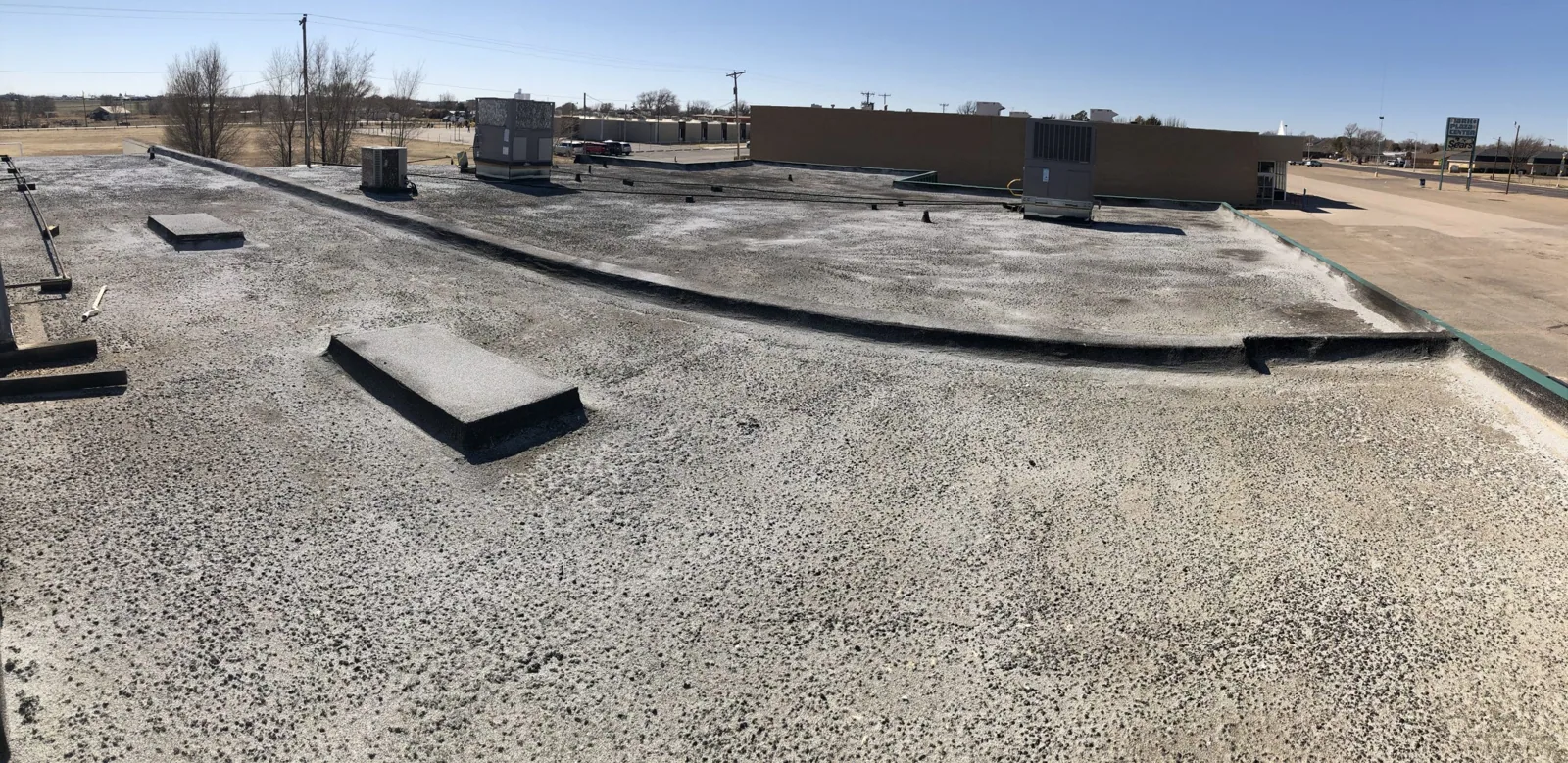
A seam that looks smooth can still separate where a roof meets a curb or wall. PVC is a heat-welded single-ply membrane, and each transition needs a clean bond plus sound material below it. In Carrollton, TX, hot summers and active industrial properties make surface condition and service access part of the roof plan. At Valwood Industrial Park, manufacturing and distribution uses share a large building inventory, so we check the roof detail against how the property operates. We mark the field, welds, and penetrations before deciding what the repair should include.
PVC is often considered where grease, oils, or other chemical exposure may reach the roof, but the actual product and exposure still need review. Exhaust from a kitchen, process vent, or rooftop equipment can leave deposits that affect a membrane. We identify the source, how often it runs, and where residue lands, then check the manufacturer’s compatibility information for the proposed system. If contaminants are present, the roof may need cleaning or a different protection detail before a new sheet is installed. A material name alone does not answer that question.
Dallas-Fort Worth’s summer heat raises surface temperatures, while humid air and intense spring weather add other stresses. The region sees large hail and damaging winds nearly every year somewhere across the metroplex, though any property’s damage must be inspected directly. On a roof near Frankford Trade Center, access planning can matter as much as material selection when deliveries are moving. We record membrane cuts, impact marks, displaced edge details, and any wet area separately. A commercial roof inspection creates a marked condition record before the owner compares repair or replacement.
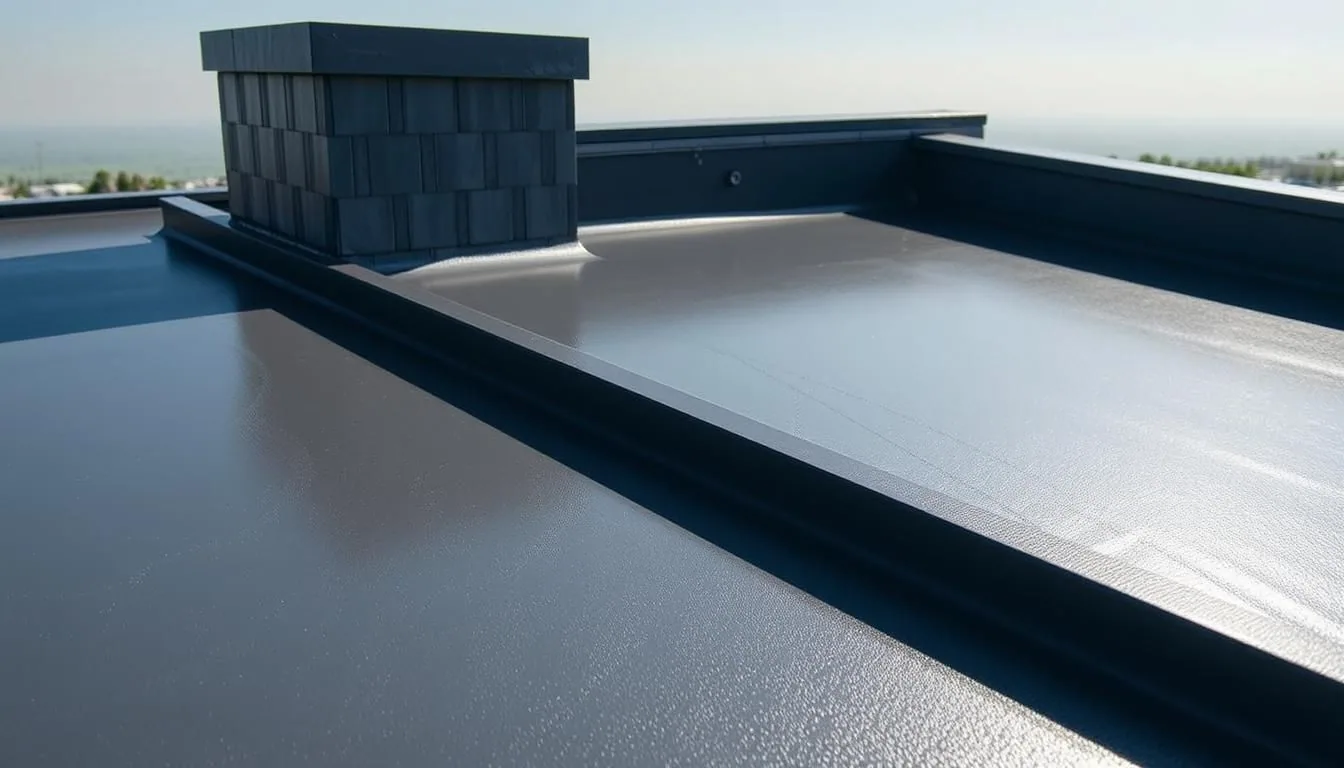
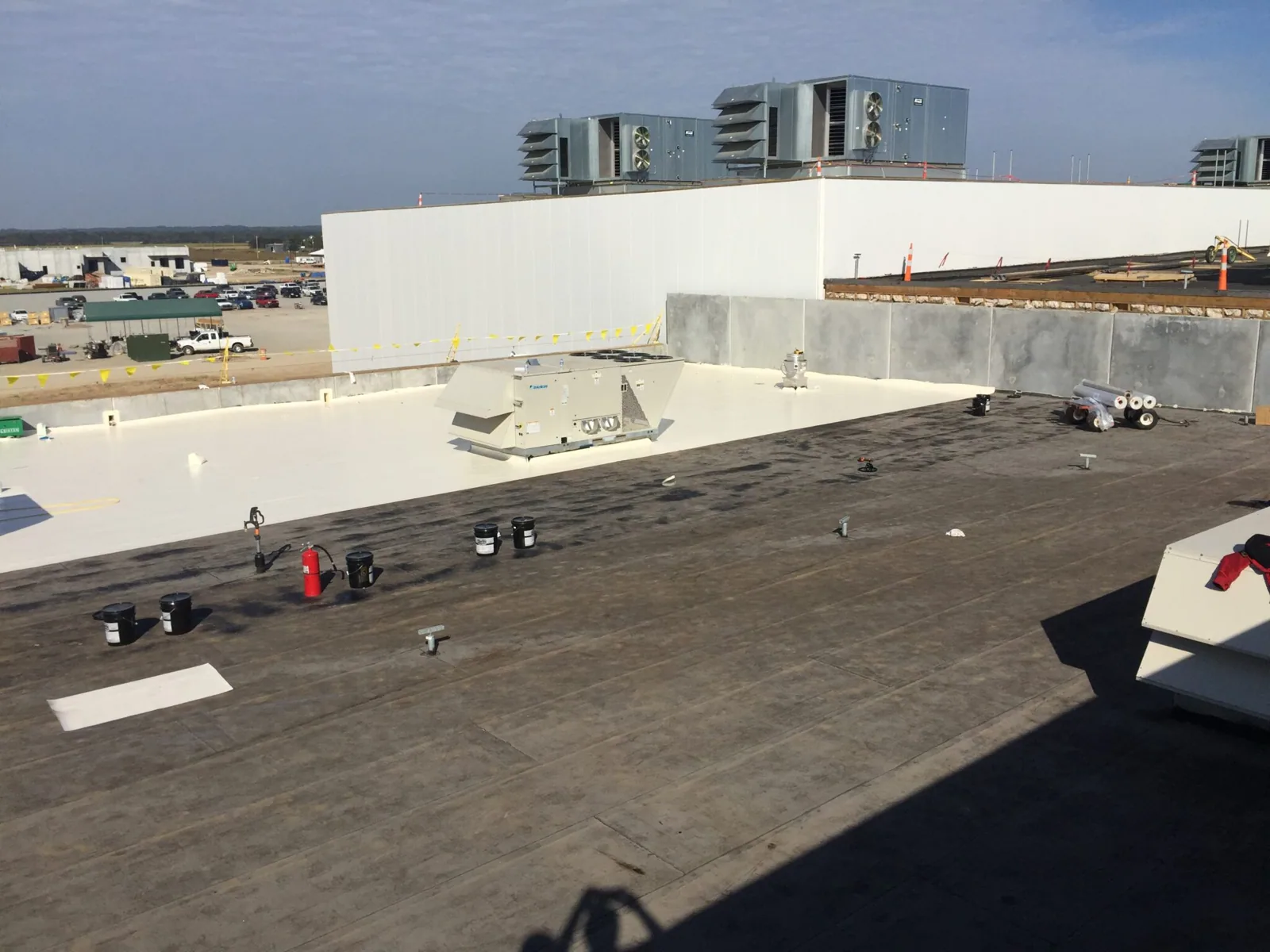
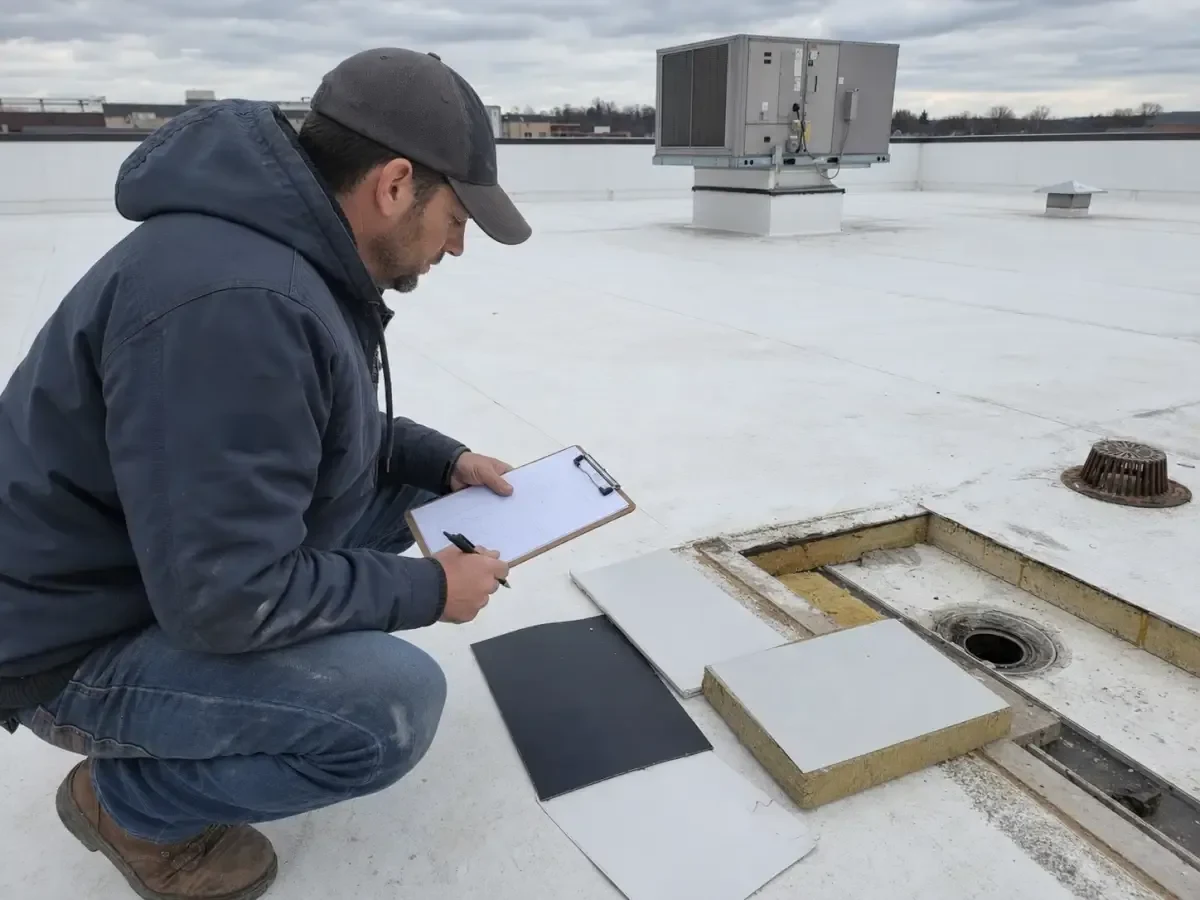
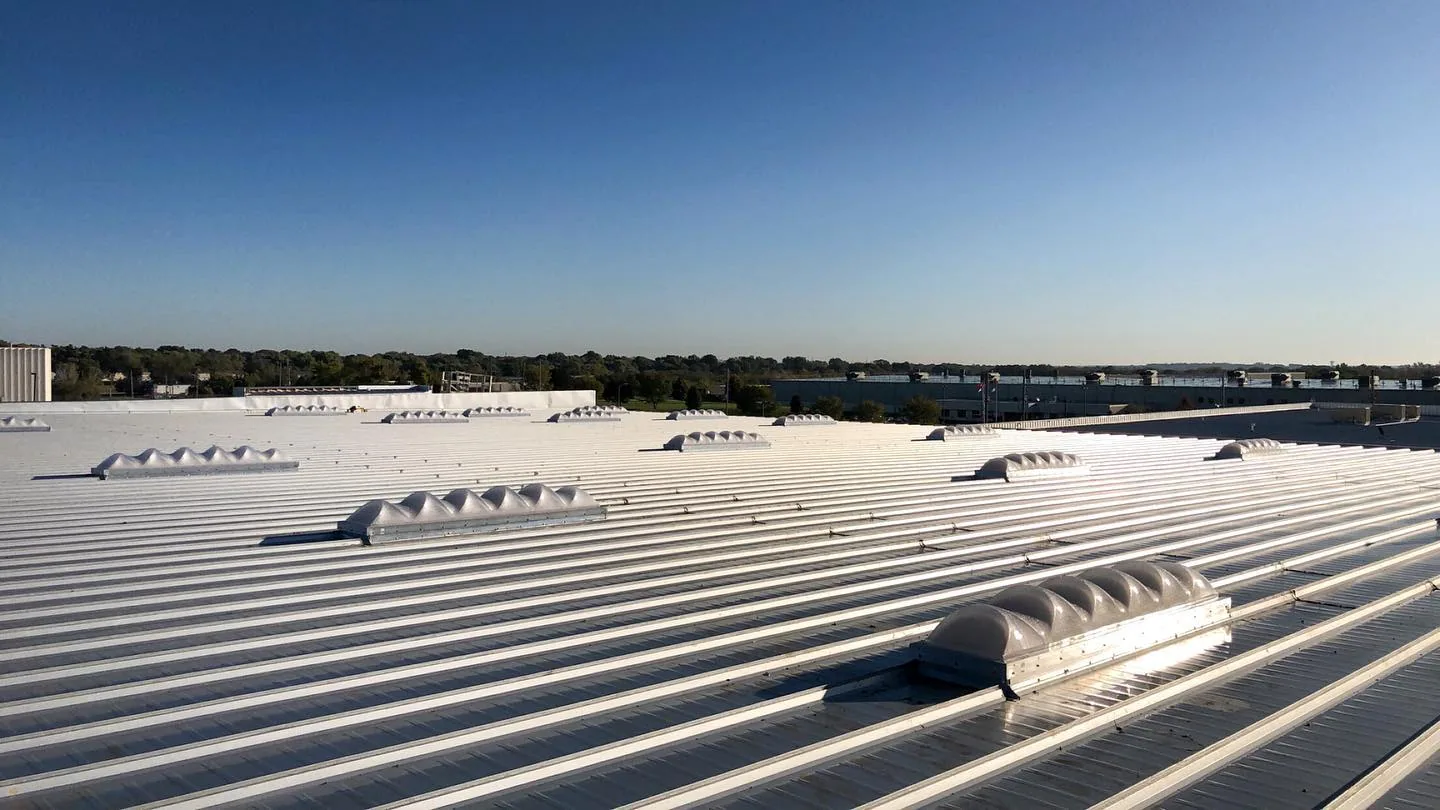
Heat welding fuses PVC sheets at the lap. A properly prepared seam has consistent width and a bond that can be checked after cooling. Dirt, moisture, incorrect machine speed, or an unsuitable temperature can leave a weak area even when the top looks continuous. We test the seam edge with a probe, look for fishmouths or wrinkles, and check the lap at corners and changes in plane. Hand-welded flashing needs the same attention. Around a pipe, curb, or drain, small gaps can direct water beneath the sheet.
Repairs must use materials compatible with the existing membrane and its age. A weathered surface can be harder to weld than a new sheet, and old coatings or unknown patches may interfere with preparation. We identify the layer at the repair, remove only what must come away, and make sure the substrate is dry. If a split runs along a termination, we trace it until the fastener row and metal edge are secure. A penetration flashing repair should address the boot and the surrounding sheet, not only add sealant at the visible opening.
PVC turns up into a drain bowl and is held by the drain assembly. We look for membrane pulled away from the clamping ring, cracks around the bowl, debris at the strainer, and water that stays after surrounding areas have dried. A leak beside a drain may begin at a seam several feet away, so we follow the flow path before opening the surface. If the drain is low or the insulation has compressed, a patch will not change where water collects. We document ponding separately from a failed weld.
Roof units, conduit, and service paths can complicate drainage. A condensate line should not discharge where it keeps a seam wet, and equipment traffic should not crush the membrane around a service walkway. Where an outlet or scupper is part of a wider issue, a drainage detail review can map the bowls and discharge path. We note which repairs belong to roofing and which require plumbing or mechanical access. That division keeps the PVC detail intact when other trades return to the roof.
A small puncture in a dry, stable PVC roof may be repairable with a compatible welded patch. A long seam failure, repeated patches, or water below the sheet changes the decision. We use test cuts where needed to confirm insulation and deck condition, and we note whether the existing assembly has space for another layer. A recover can preserve a sound assembly while adding a new surface, but only when code, attachment, moisture, and drainage permit it. We do not recommend covering a wet roof and hoping the problem stops.
Carrollton’s International Business Park includes office, industrial, and retail properties, so the roof use and access can vary across the district. The same membrane detail may face different exhaust, foot traffic, or loading conditions. We compare PVC with a TPO membrane or a KEE roof system only after identifying the actual exposure and project specifications. If the substrate or attachment has broad failure, a replacement plan can include insulation, edge metal, curbs, and drain transitions as one assembly.
PVC welding depends on a surface that is clean and dry, with temperature and wind conditions suited to the equipment. We plan exposed work in a weather window, stage sheets so they are not dragged across rough surfaces, and secure the open edge before leaving the area. If rain threatens, the crew closes the section or installs a temporary tie-in that is marked for return. At the end of the shift, we inspect the cooled seams, check corners and penetrations, clear the drains, and record repairs by roof section.
For larger roofs, a staged sequence can keep loading, tenant routes, and rooftop equipment available. The manager identifies no-go areas, delivery hours, and any exhaust that affects the membrane. We do not set a welding schedule without looking at the actual roof conditions. A roof near the International Business Park may have office users beside industrial operations, so access and close-in are planned around the building’s schedule. If the property remains active during the work, we can phase the replacement through an occupied-building sequence. The close-in record shows which seams were tested and what still needs review.
It can suit some grease or chemical exposures, but the exact membrane and exhaust conditions need review. We locate the discharge, identify residue on the roof, and confirm material compatibility before setting the scope.
After the weld cools, we probe the lap edge and inspect its width, corners, and transitions. A suspect section is marked and tested carefully so we can separate a weak bond from damage below the sheet.
Sealant may serve a limited role at a compatible detail, but it does not replace a welded membrane repair where the sheet has split. We identify the existing membrane and prepare a patch that can bond to it.
A dry surface does not prove the insulation is dry. We use targeted test cuts or other inspection findings to map moisture, then identify what needs removal before the roof is closed again.
A recover is possible only when the existing layers, deck, moisture, attachment, and local requirements support it. We document those conditions and compare the recover with replacement before material is selected.
RELATED WORK
CALL US
Leaks, storm damage, a failing membrane or a replacement on the calendar: tell us what is happening on the roof and we will set up a visit.
Roof Systems
Arrange roof access and share any exhaust, process, or loading limits. We will inspect the PVC welds and details, mark repair limits, and document the conditions that guide the next step.
Call 555-555-5555 or request a roof assessment online.