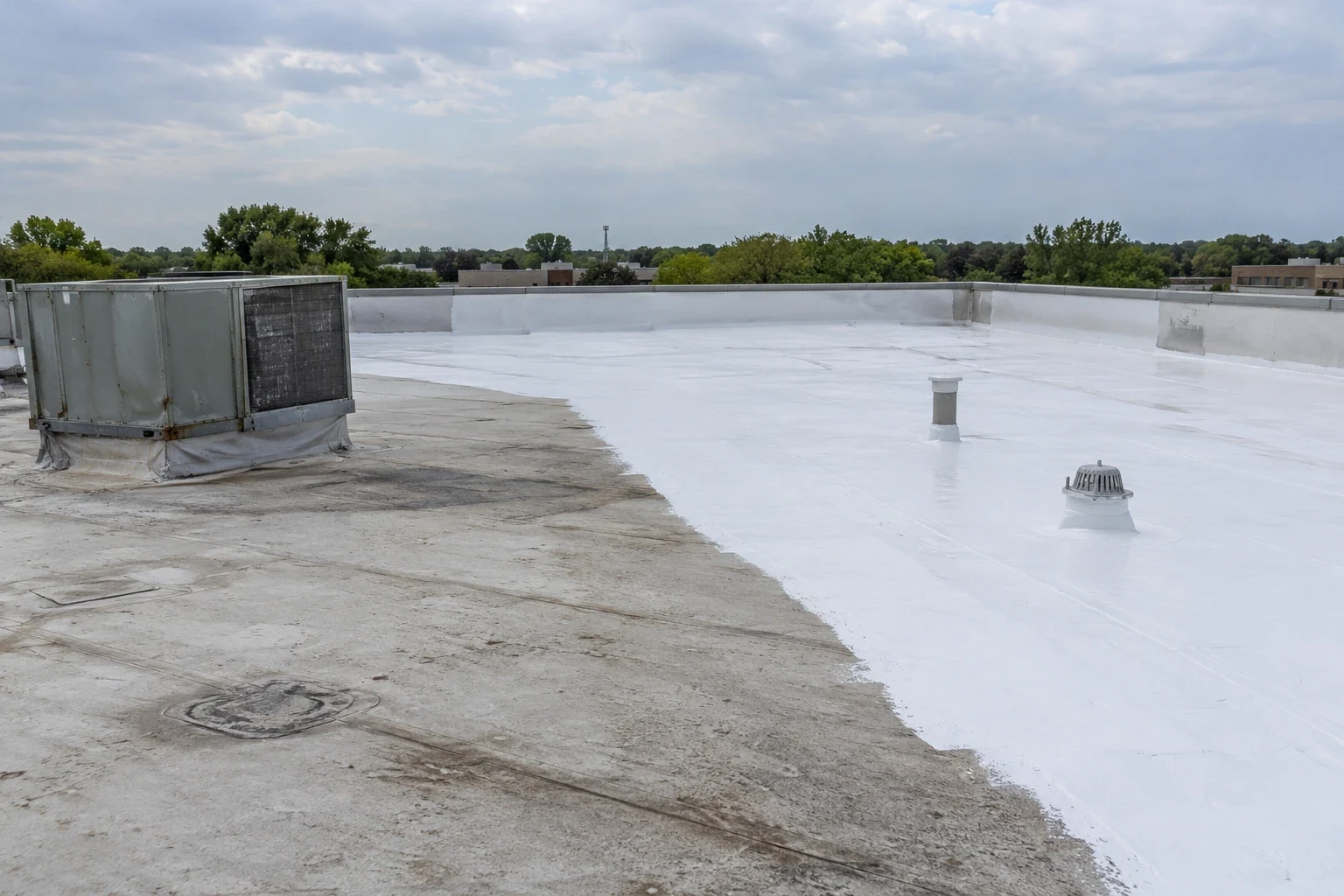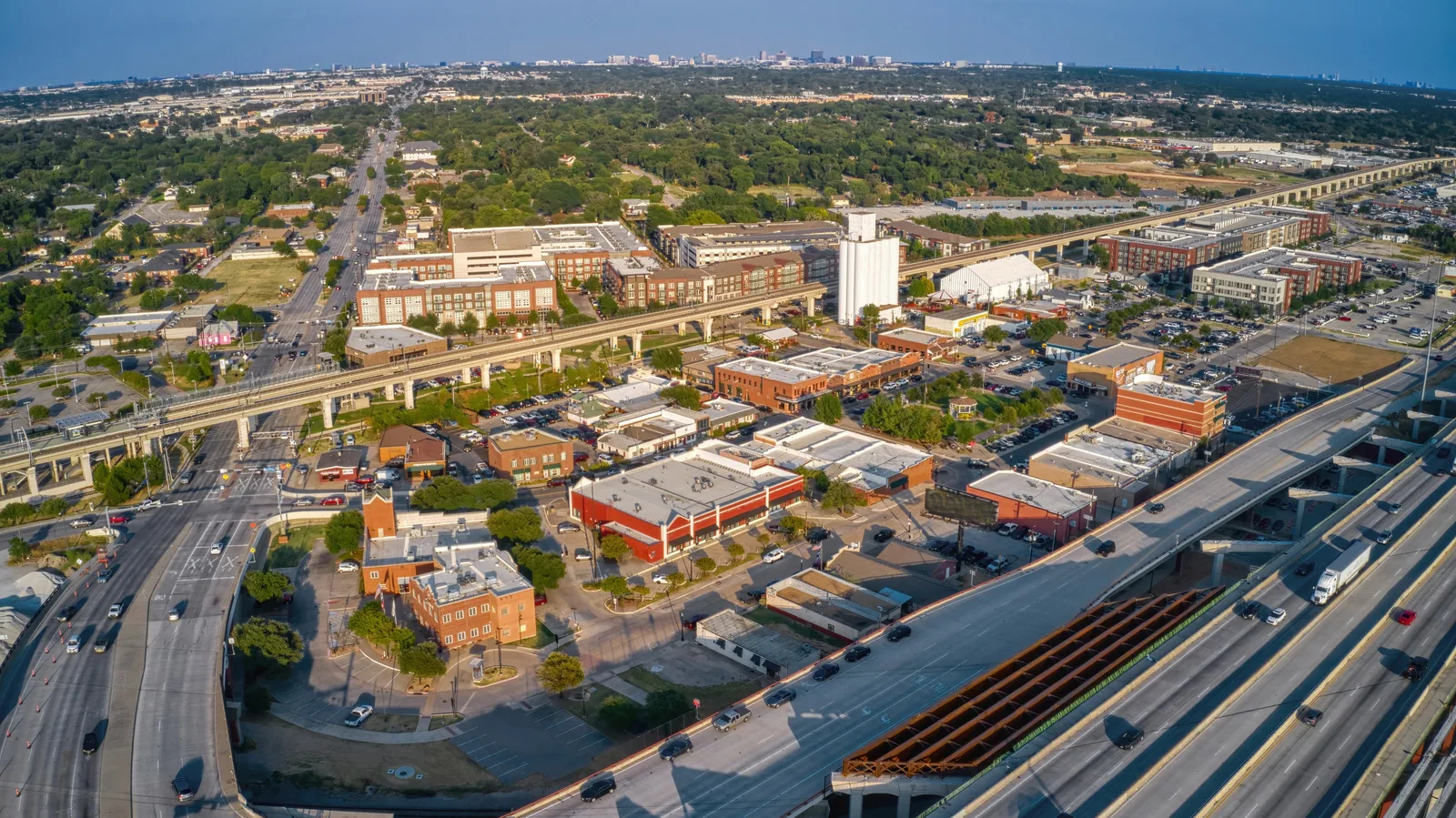
A raised seam at an equipment curb can tell you more than a view from the parking lot. We walk the roof, check the interruptions in the membrane, and mark what needs repair, monitoring, or further testing. In Carrollton, summer heat and spring hail or wind make those details worth recording before a leak appears. Weather history gives context, not a condition reading for one building. At Trinity Mills Station District and Valwood Industrial Park, property managers may be dealing with different roof sizes and operating schedules, but the inspection still follows the roof's details. We check the assembly, photograph findings, and leave a report that ties each observation to its location.
We begin by confirming how to reach the roof, which areas are restricted, and whether rooftop equipment can remain in service during the walk. Then we divide the field into identifiable sections and check seams, laps, penetrations, wall terminations, edges, drains, and prior repairs. We note areas that feel soft or hold water, and we distinguish a visible defect from an area that needs a test cut. That prevents a single photograph or interior stain from standing in for the whole roof.
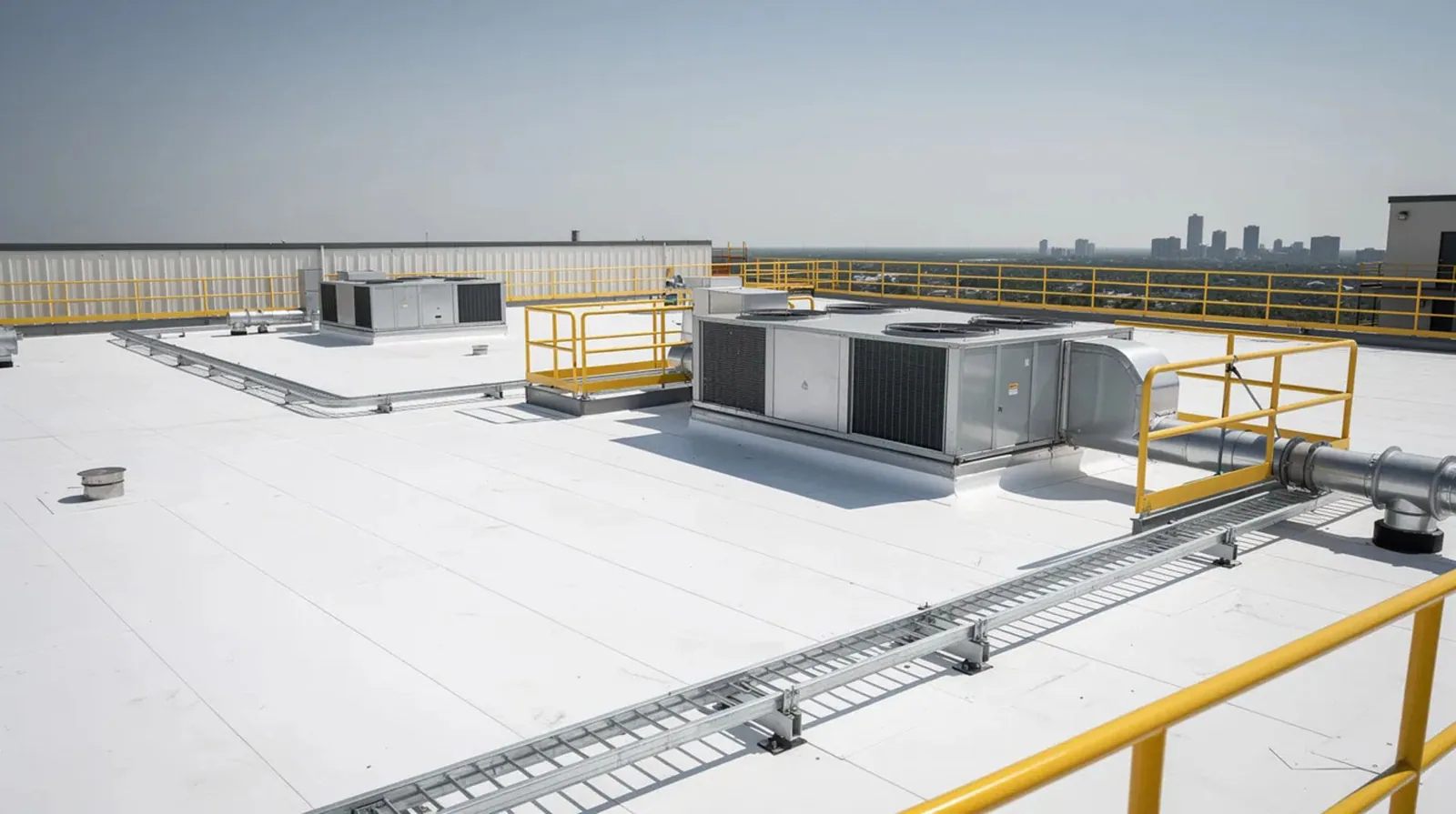
At the perimeter, we inspect edge metal, fasteners, coping, and transitions where wind can work against the roof. At drains, we look for debris, loose membrane, standing water, and signs that the bowl or nearby slope is not moving water as intended. We also check equipment curbs and abandoned penetrations, where old flashing can split as the roof heats and cools. For a warehouse roof, we record equipment and access paths that may affect future repair staging.
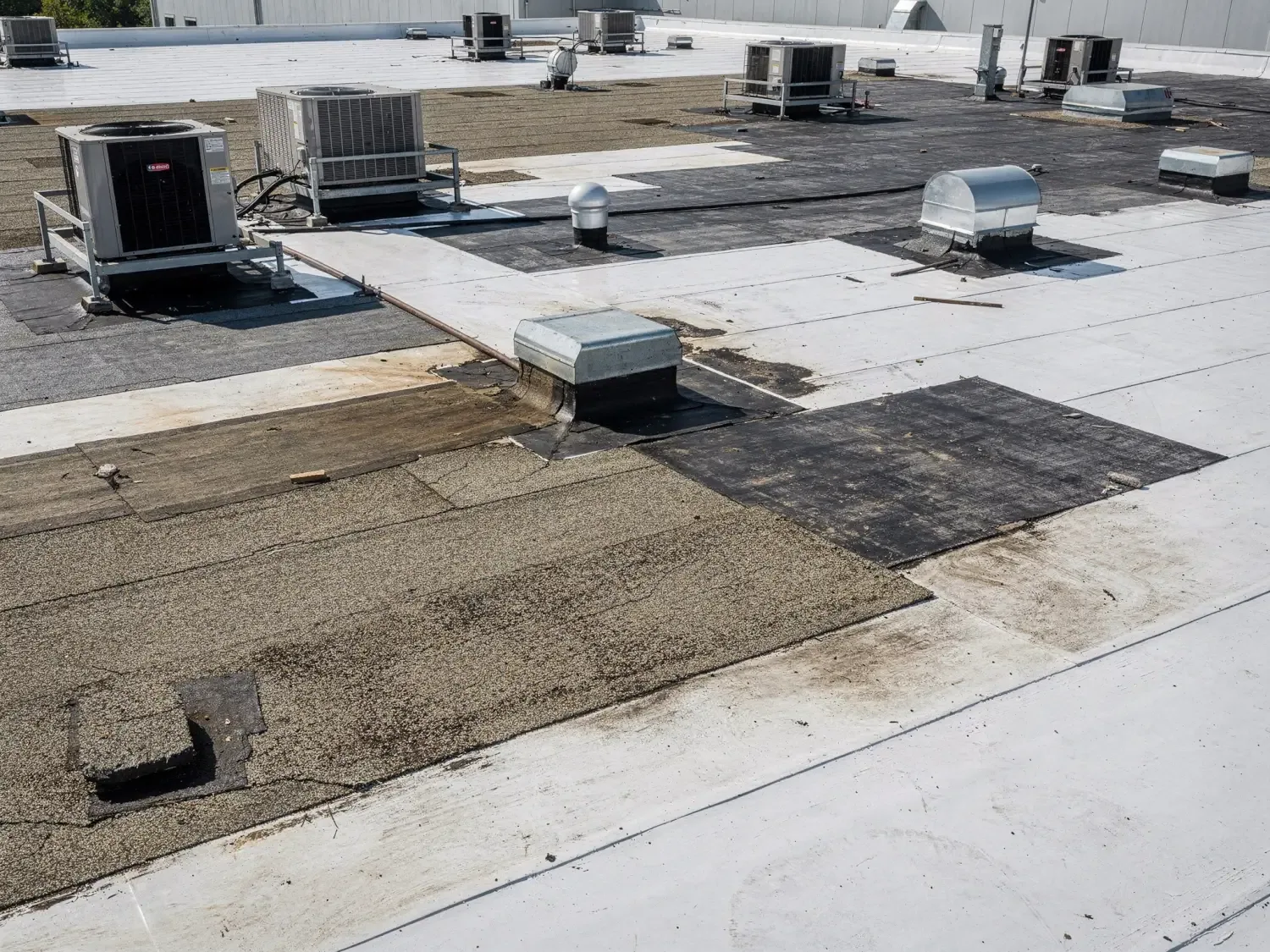
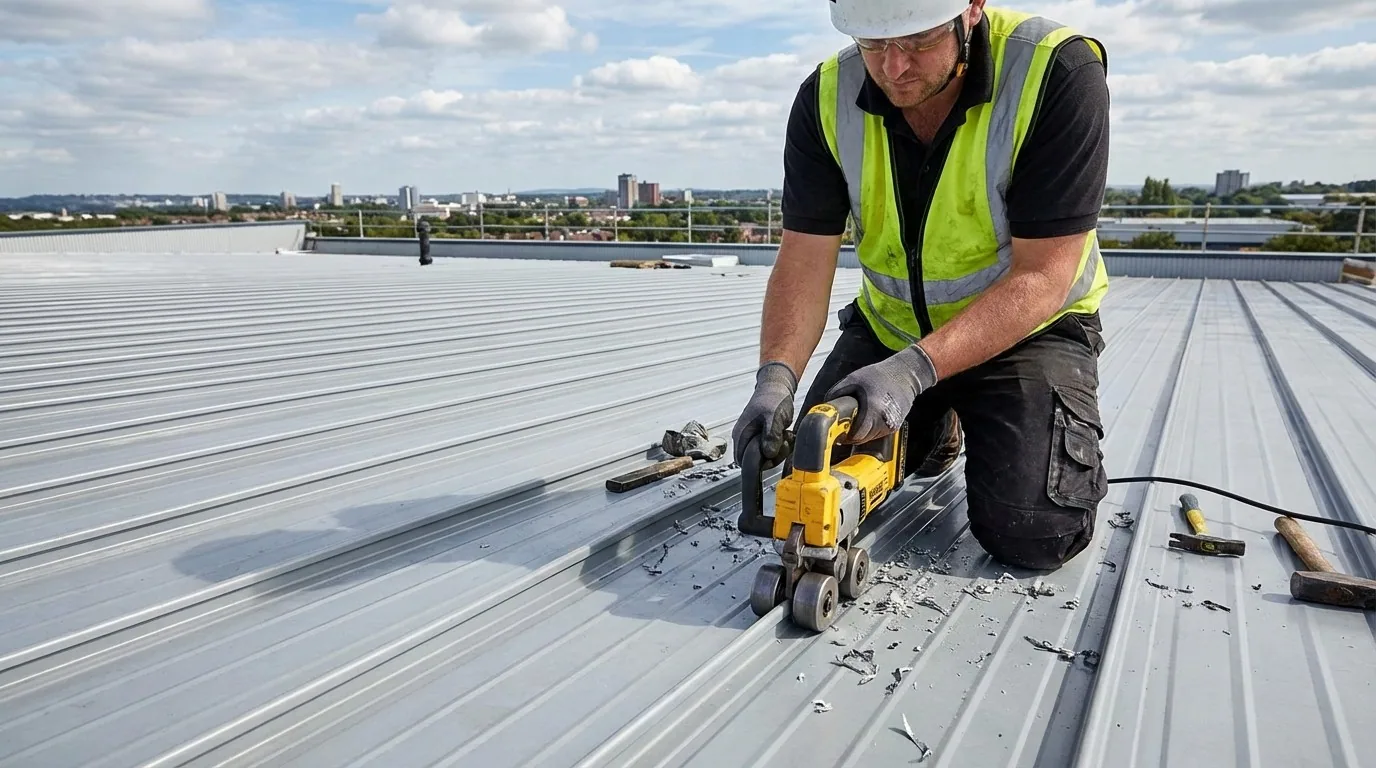
Not every mark calls for the same response. A loose seam, puncture, brittle patch, or open termination should be recorded with its location and approximate extent. Hail impact, wind movement, heat-related surface change, and ordinary wear can look different and carry different repair implications. We photograph each finding and compare it with adjacent material, not just the roof area first reported by the property manager. Where origin or depth is uncertain, the report should say so and recommend a suitable test.
The Dallas-Fort Worth area sees large hail and damaging winds during severe weather periods. A post-storm walk checks exposed metal, membrane seams, and equipment details for impact or movement, but regional history cannot substitute for evidence at the building. We can also document interior water evidence where it helps track a roof path. If moisture may be below the membrane, an infrared moisture survey can help identify test areas, with core cuts used to confirm suspect locations.
A condition report should help the manager make a decision. We identify the roof area, show the defect in a photo, describe what we observed, and state whether the item calls for a repair, additional testing, or continued monitoring. We record access constraints and note work that depends on weather or tenant coordination. The report does not need to turn every roof detail into a recommendation. It needs to show what is there and what action follows.
For a commercial property with several sections, we can create a roof map and mark repair limits or test locations. That helps compare current findings with prior visits and gives a repair crew a consistent reference. A written condition report with photographs can support budgeting and contractor coordination without assuming a particular roof life or future cost. If the findings point to a broader decision, our replacement evaluation compares localized repairs with removal or recover options based on observed assembly condition.
Large roofs take time to inspect well. We confirm ladder or hatch access, rooftop safety requirements, areas with sensitive equipment, and whether tenants need notice. A route through an active distribution facility must not interfere with receiving, shipping, or equipment service. A manufacturing building may have exhaust or production zones that need additional coordination. We identify those constraints before arriving, then use field marks that can be matched to the roof plan or another stable reference.
At Trinity Mills Industrial, the DART station district includes a mix of office, retail, industrial, and residential development, while Valwood is a major industrial district. The use and access at each property can differ, so we do not assume that one inspection sequence fits every roof. A property manager who coordinates several locations can use a multi-site roof inspection program to establish a consistent map, photo format, and priority list. Each visit still records that property's observed conditions.
After the roof walk, we review the findings with the property contact and separate immediate water-entry concerns from maintenance items. A small puncture may need prompt patching. A drain restriction may need clearing and a closer look at slope. Repeated seam separation or wet insulation may justify testing before the repair limit is set. If a repair is appropriate, we can specify material compatibility, surface preparation, and close-in conditions. If the assembly shows broader deterioration, we explain why a replacement or recover assessment is warranted.
The inspection is also a chance to plan around the next weather window. Carrollton sees hot, humid summers and spring storms, while winter precipitation can bring freeze-thaw cycles even in seasons with little snow. We do not convert those regional patterns into a property forecast. We use them to keep the roof record current and to schedule exposed work with actual conditions in view. Arrange roof access, share leak locations, and identify any equipment or loading area that needs to remain clear. We will return a marked record that helps your team choose the next step.
The report identifies observed conditions by roof area, with photographs and a practical action for each finding. We note repairs, moisture tests, drainage concerns, and items for monitoring. Any area we could not safely or fully inspect is called out, so the record does not imply coverage we did not complete.
A visual roof walk cannot confirm conditions inside every roof layer. We look for surface and interior clues, then recommend a test cut or infrared survey where the pattern warrants it. Core samples can confirm whether insulation is wet at selected locations.
A storm can move edge metal, open laps, puncture a membrane, or damage equipment supports. We document observed conditions and compare them with prior records when available. The report distinguishes visible damage from older wear and notes areas needing further testing.
Time depends on roof area, number of sections, access, equipment, and how much documentation is needed. A multi-building site or roof with restricted areas takes longer to map than one open field. We confirm the access route and priorities before setting the visit.
Send any roof plan, leak locations, prior repair records, and access instructions. Identify active shifts, rooftop equipment that cannot be interrupted, and areas requiring an escort. That gives us a route that can cover the roof without disrupting building operations.
RELATED WORK
CALL US
Leaks, storm damage, a failing membrane or a replacement on the calendar: tell us what is happening on the roof and we will set up a visit.
Commercial Roofing Services
Share the roof plan, known leak areas, and access or loading limits. We will inspect the assembly, photograph the findings, and give you a clear repair and testing list.
Call 555-555-5555 or request a roof assessment online.