A split at a pipe boot can reach the insulation before the open seam is easy to spot. KEE roofing uses a PVC-based membrane alloy, and its performance still depends on the assembly, welds, and details around each interruption. In Carrollton, TX, industrial roofs see heat, service traffic, and spring weather that can test those connections. Belt Line Industrial Corridor links a range of working properties to major freight routes. We inspect each roof as built, mark the repair limit, and check whether the layer beneath the membrane remains sound.
KEE is a ketone ethylene ester modifier blended with PVC in a single-ply roofing membrane. The formulation can affect flexibility and resistance to some exposures, but the product data and project use still control the selection. We look at the exact membrane, its thickness, reinforcement, attachment, and chemical contact rather than relying on the acronym alone. If rooftop exhaust deposits oil or process residue, we locate the source and confirm compatibility before specifying a repair or new sheet.
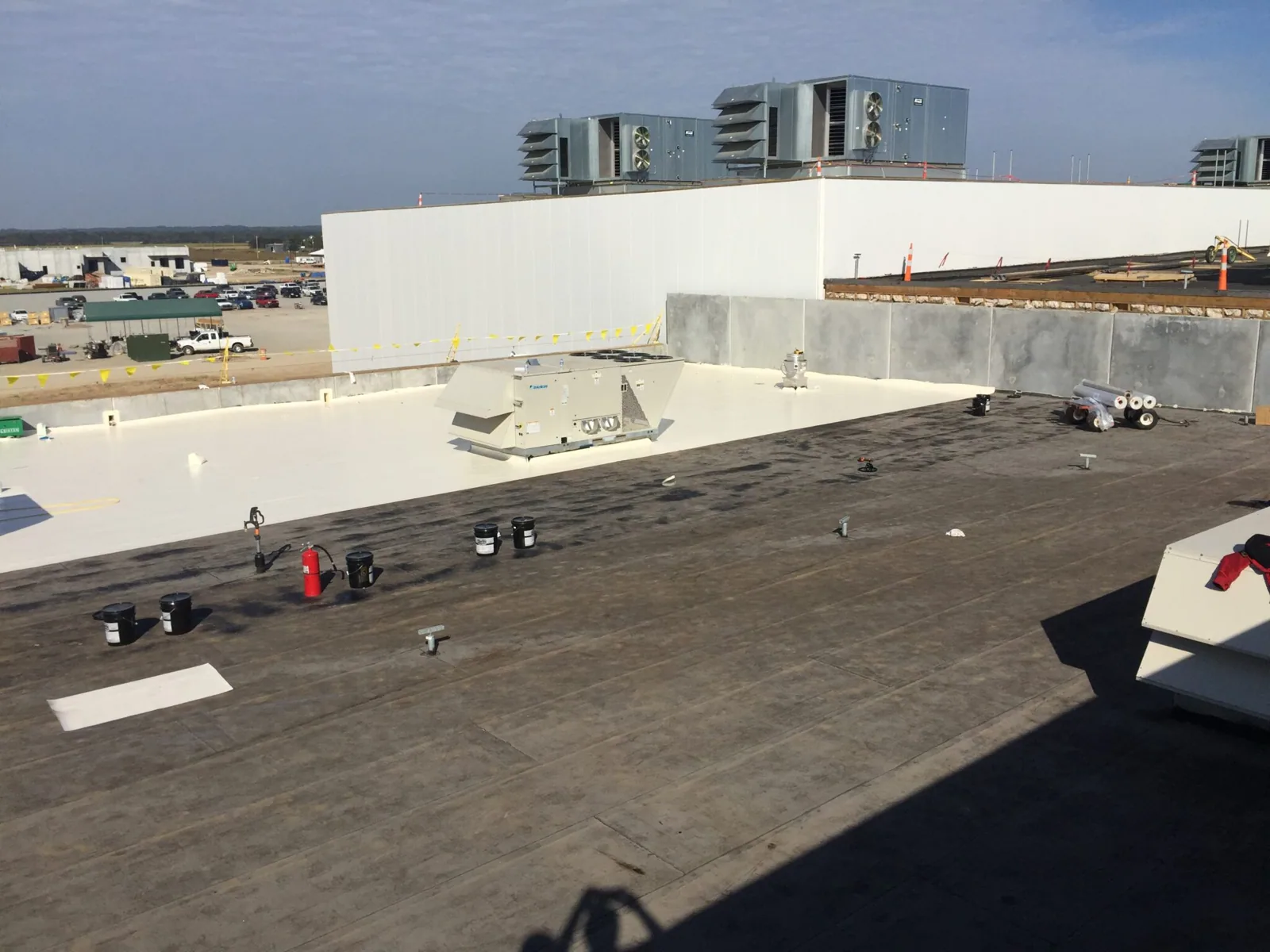
On a KEE roof, seams are heat welded. Temperature, surface preparation, and machine speed influence the bond, and a cooled seam must be checked at the edge. We examine field laps, hand welds, corners, and flashing transitions for gaps or distortion. A roof inspection can include test cuts where the surface suggests moisture or a trapped layer. We document the assembly before material is ordered, especially when the existing roof includes older PVC or patches with uncertain chemistry.
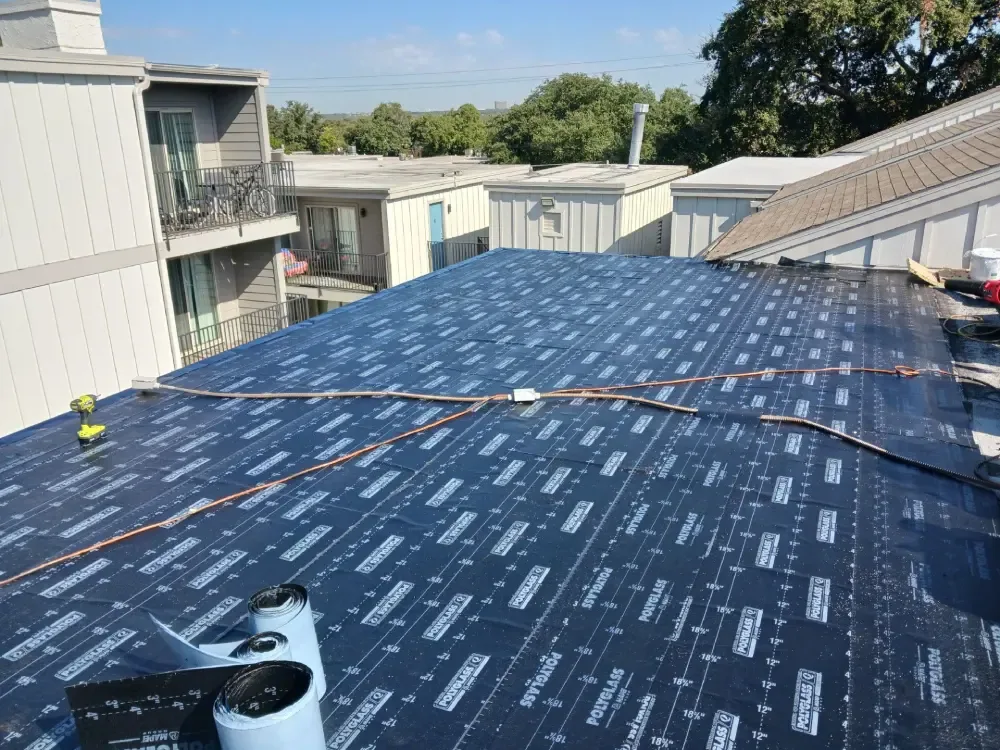
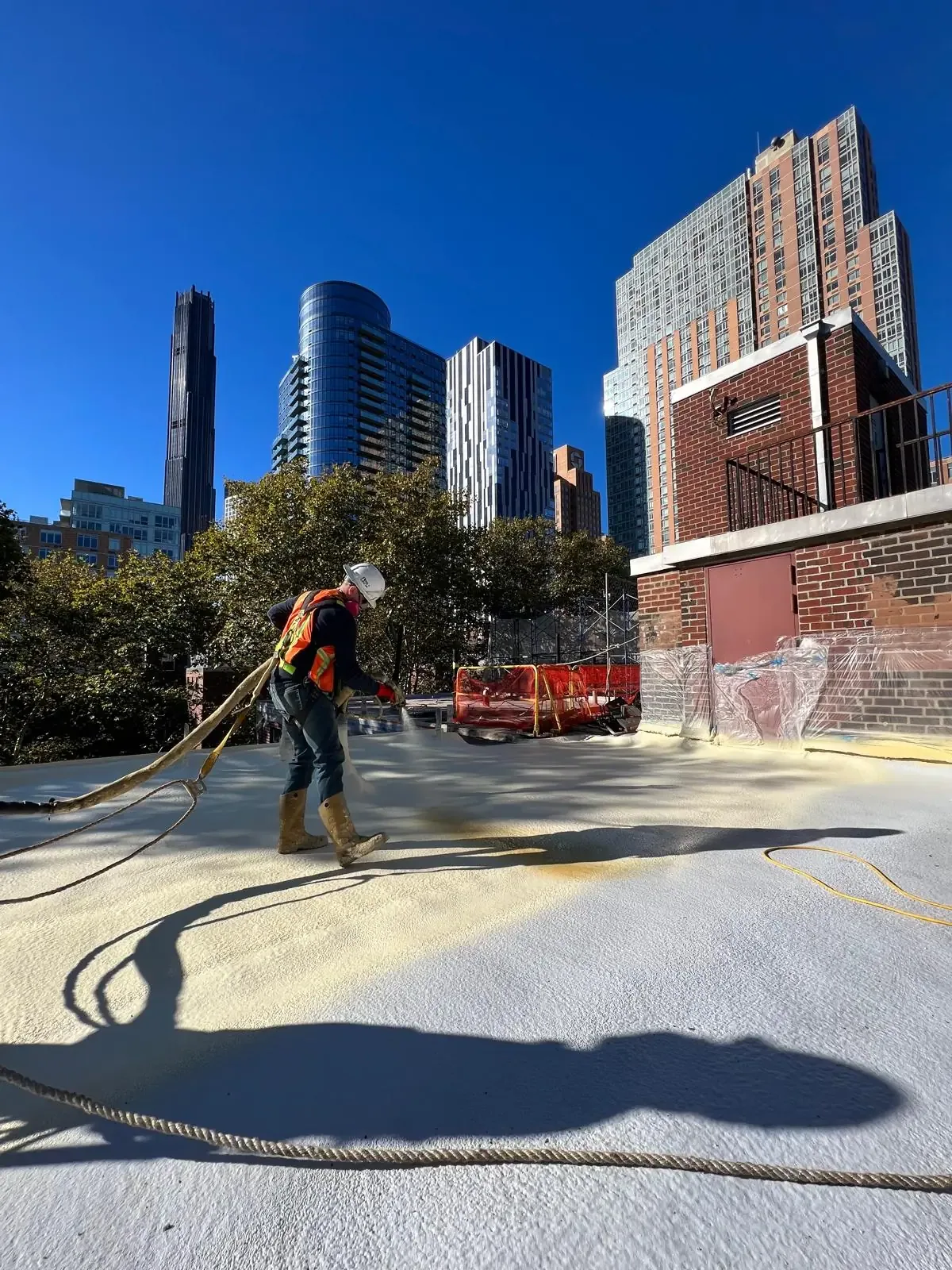
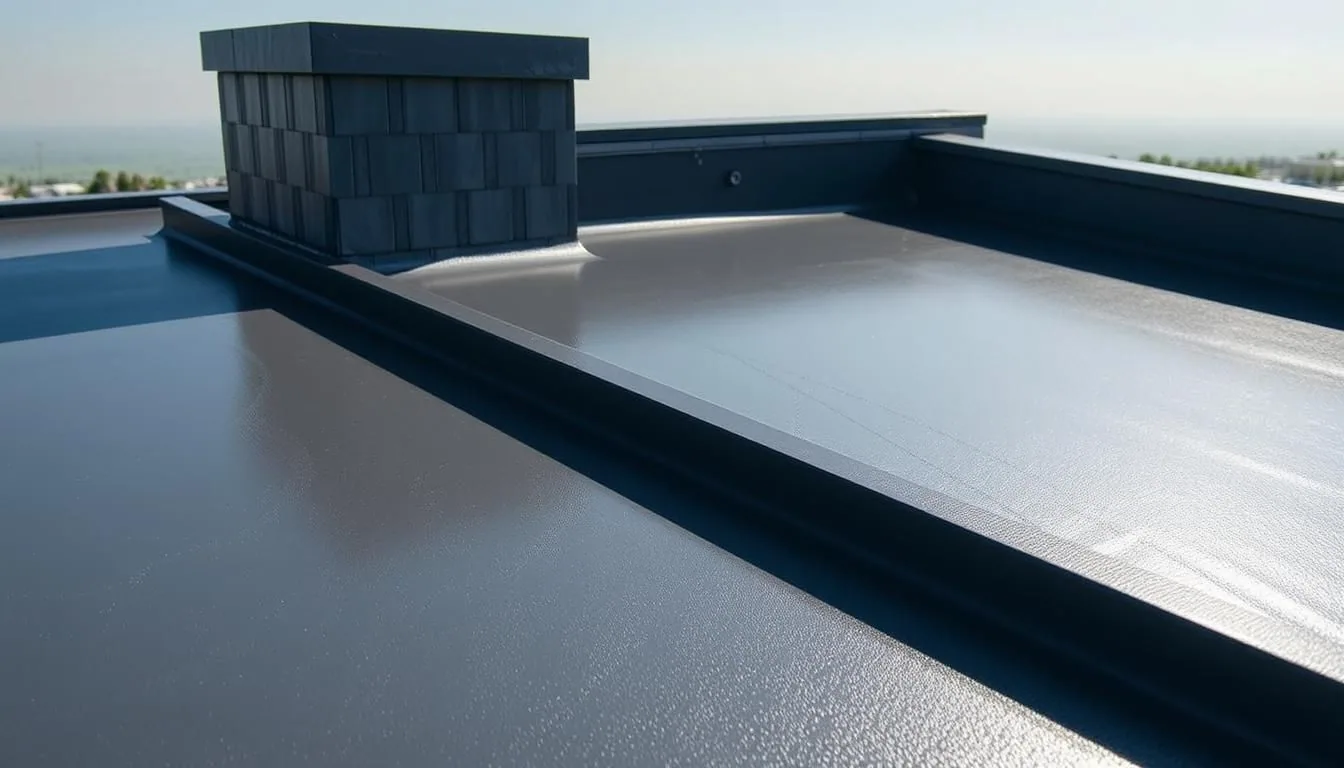
Roof heat affects adhesives, sheet movement, and how a detail handles repeated expansion and contraction. Dallas-Fort Worth summer days in July and August routinely sit in the 90s and often pass 100 degrees. That regional pattern does not tell us the temperature of a particular membrane, so we inspect the actual roof and note the exposure. At Valwood Industrial Park, a large industrial property may have multiple equipment groups and service routes. A technician’s path can leave scuffs or concentrated wear that needs to be kept separate from weather damage.
Foot traffic, dropped tools, fastener fragments, and equipment moves can puncture or abrade the sheet. We check around rooftop units, ladders, access doors, and the ends of walk pads. If the membrane shows a cut, we inspect the surrounding surface and confirm whether the reinforcement or insulation was affected. A compatible patch should cover the full defect and bond on clean material, with the finished weld probed after cooling. For a larger field with recurring damage, a commercial roof repair plan can group work by area and record what remains active.
Most water paths start at a transition rather than in the center of an untouched sheet. We inspect parapet turns, expansion joints, curb corners, pipe boots, scuppers, and drain bowls. The membrane must stay supported and secured as it changes direction. A loose metal edge or split corner can expose the underside of the KEE sheet, while a clogged drain can keep the flashing submerged. We trace water uphill and check each seam that crosses the path before opening the roof.
Where a mechanical trade has changed equipment, the old curb may remain with new flashing around it. We ask who controls the unit, identify abandoned penetrations, and confirm the roof attachment before sealing the opening. A drain detail evaluation helps when water stands at the bowl or outlet, and a flashing repair can address damaged boots and curb corners. We avoid covering a questionable substrate. If a test cut finds wet insulation, we mark the location and coordinate removal before the new sheet is welded.
A sound membrane may need a localized repair. Multiple seam failures, moisture in several bays, or a loose perimeter can change the scope to a broader recover or replacement. We count layers, check deck attachment, and look for height changes at doors, walls, curbs, and drains. A recover must fit the existing assembly and applicable requirements; adding a new membrane over wet material leaves the old problem in place. The inspection record should show both what is repairable and what needs opening for confirmation.
We can compare KEE with PVC roofing or TPO roofing when those systems meet the project’s specification and exposure. Differences in formulation, seam method, and manufacturer details matter more than a simple color choice. For an older roof with broad wear, a coating restoration review may be considered only if the substrate and coating compatibility support it. When replacement is warranted, the scope should include edge metal, insulation, drains, and the work sequence for rooftop equipment.
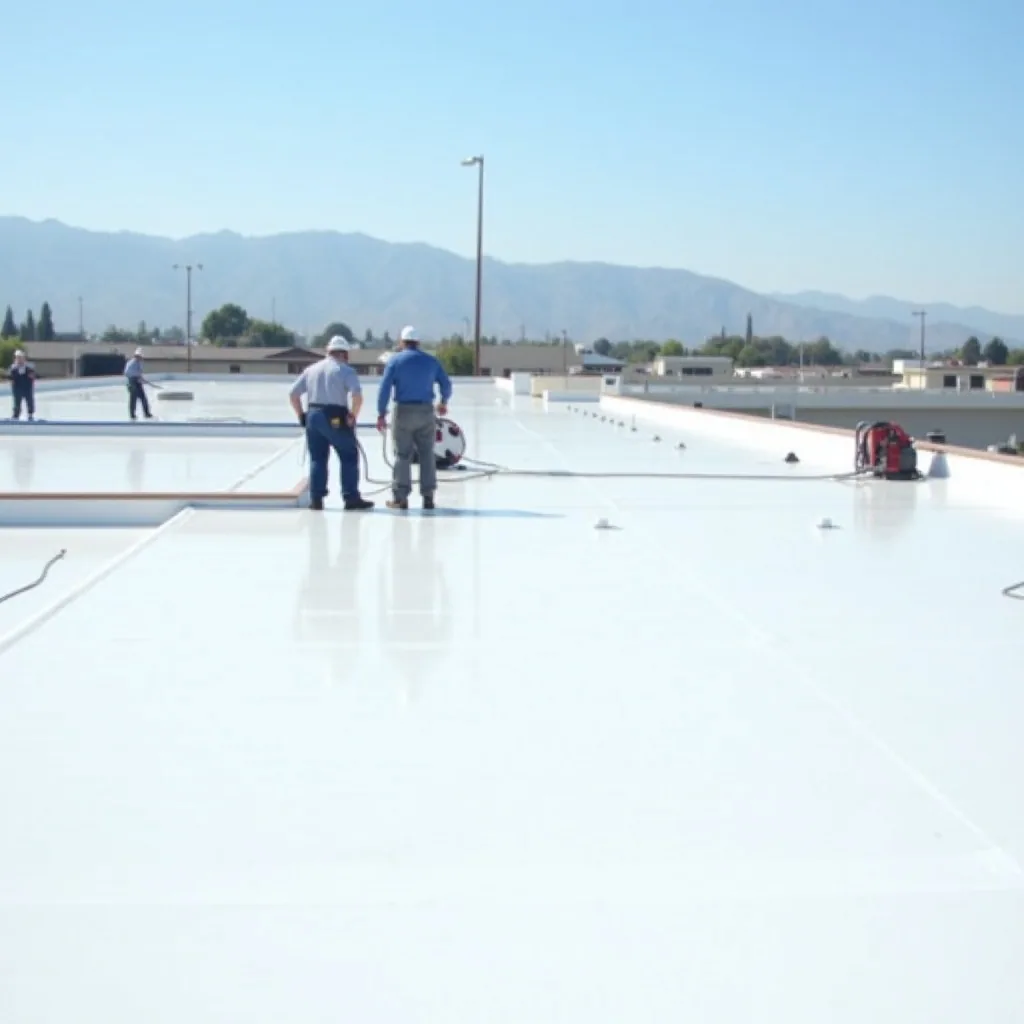
Heat welding calls for a dry surface and stable work conditions. We remove dust and residue at the lap, set the tool for the selected membrane, and make a test weld before moving into the field. The crew keeps sheets aligned, closes each section at day’s end, and returns to probe the cooled seams. Wind can carry debris into a prepared joint, so the work area is kept clean and staged material is secured. If rain interrupts the sequence, we protect the open edge and record the temporary condition.
Working buildings need a roof plan that reflects actual access. At Frankford Trade Center, distribution and logistics operations make lift locations and delivery hours part of the discussion. We coordinate around equipment shutdowns, tenant routes, and loading activity before the first roll is opened. An occupied-building reroofing sequence can divide the job into sections with clear daily close-in points. Photos and field marks show which welds passed inspection, which details were repaired, and what the owner should monitor during maintenance.
We identify the sheet and repair material, clean the weld zone, and use heat to form a compatible lap. After the seam cools, we probe the edge and record the repair location. A contaminated or wet substrate needs separate correction.
No single membrane fits every exposure. We identify the chemical source and contact pattern, then check the specific product data and project requirements before choosing KEE or another assembly.
A recover depends on the existing sheet, attachment, moisture, deck, and number of layers. We inspect those conditions first and explain where a test cut or removal is needed before the roof can be closed.
We inspect the equipment curb, pipe supports, service route, and nearby welds for cuts, loose flashing, or displaced walk pads. Each finding is marked so the repair can be assigned to the roof area that needs it.
We set access, material staging, and close-in windows with the property manager. The crew works by marked section and leaves drains, equipment routes, and required entrances available as the building plan allows.
RELATED WORK
CALL US
Leaks, storm damage, a failing membrane or a replacement on the calendar: tell us what is happening on the roof and we will set up a visit.
Roof Systems
Share the membrane information, leak marks, roof access hours, and equipment limits. We will inspect the KEE sheet and transitions, then map the work needed for a sound close-in.
Call 555-555-5555 or request a roof assessment online.