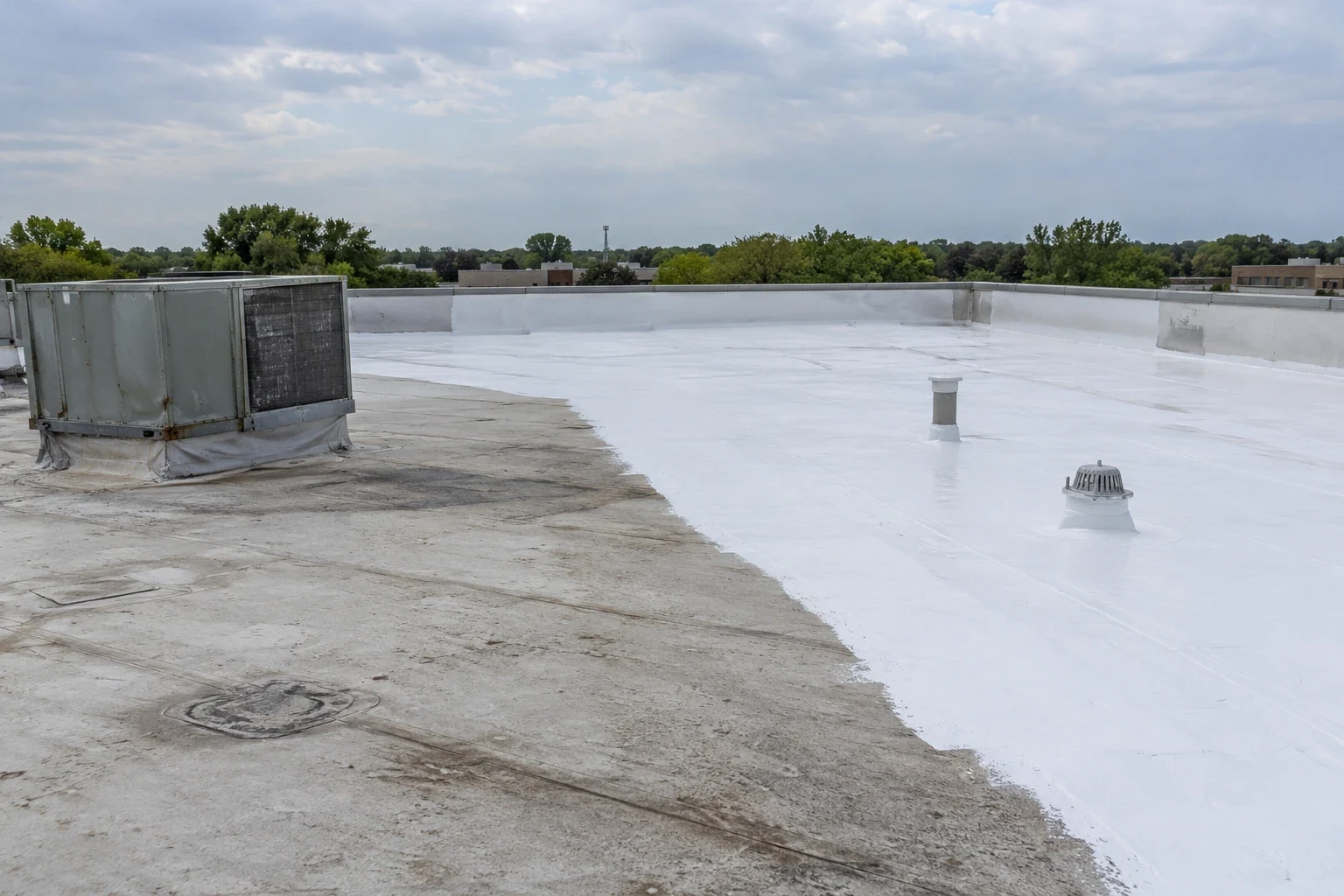
A loose seam can admit water long before a ceiling shows a stain. The first useful mark is on the roof: where the seam separates, how far it runs, and what detail interrupts it. We inspect the membrane, flashing, fasteners, drain bowl, and edge metal around the visible damage before choosing a patch. That matters across Carrollton's mix of manufacturing and distribution buildings, including Midway South and Belt Line Industrial Corridor, where roof access may share the day with loading, production, and equipment service. A repair has to stop the entry path and leave the surrounding assembly intact. We document the location and limits, then explain what can be repaired now and what needs a larger scope. For a recurring leak, our leak tracing and repair starts by following water back to the failed detail.
Water follows the easiest path, which may lead well away from the entry point. A roof walk checks the area above the stain and the details that can feed it: open seam laps, loose terminations, punctures, abandoned equipment openings, clogged drains, and failed flashing. We note whether the membrane is split, pulled from the substrate, brittle, or still flexible. The observation narrows the repair method. A cut that needs welding, a fastener line that needs resealing, and a curb corner that needs new flashing are different repairs, even when the interior symptom looks alike.
North Texas weather adds useful context, not a diagnosis. The Dallas-Fort Worth area sees hail and damaging winds in spring and hot, humid summers. After a storm, we check metal edges, seams, rooftop equipment, and loose debris for signs of movement or impact, then document any wind-related roof damage. The record should identify the roof area and show the defect with a nearby reference point. A commercial roof inspection can map broader deterioration when one repair call reveals several unrelated failures.
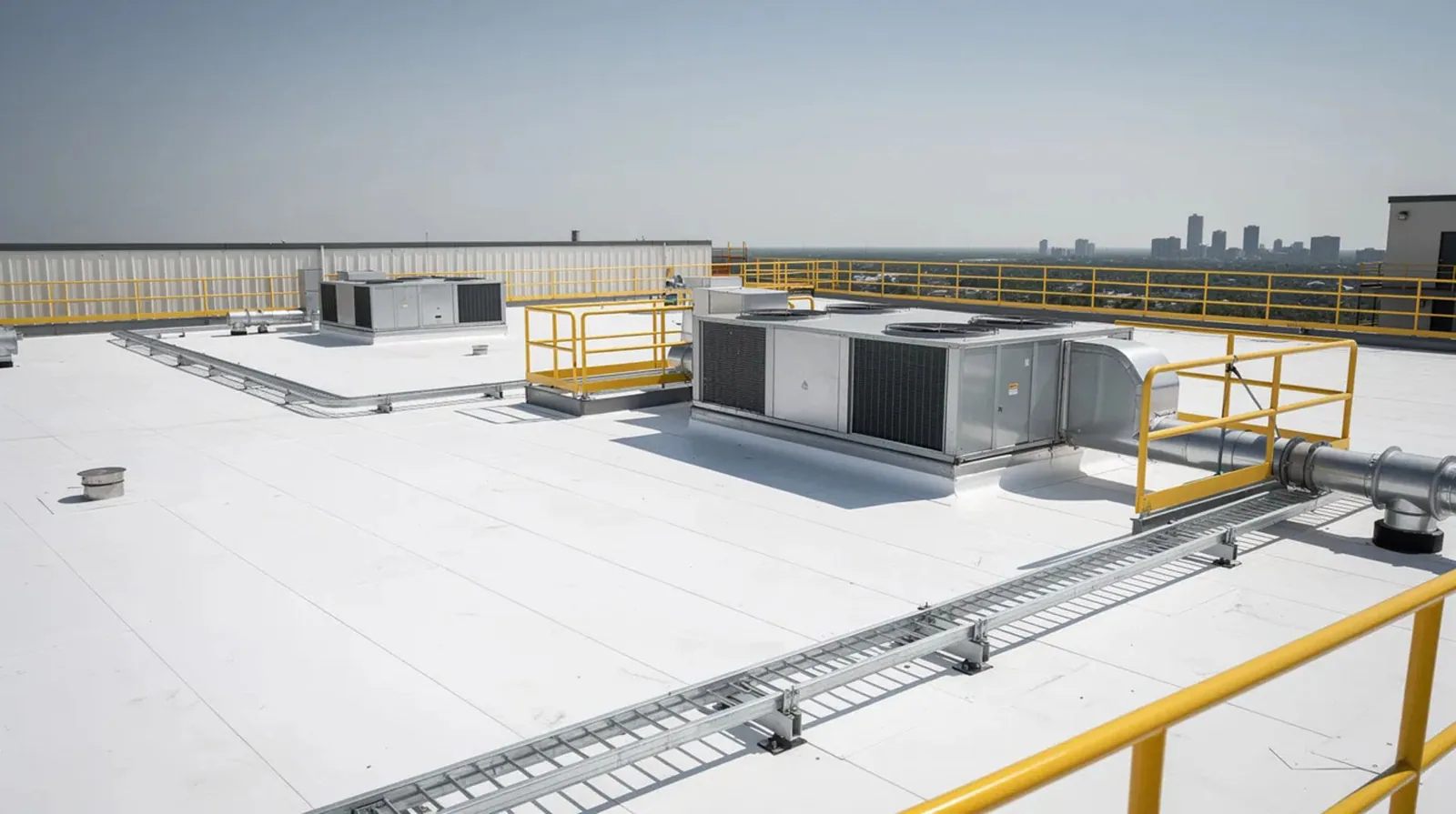
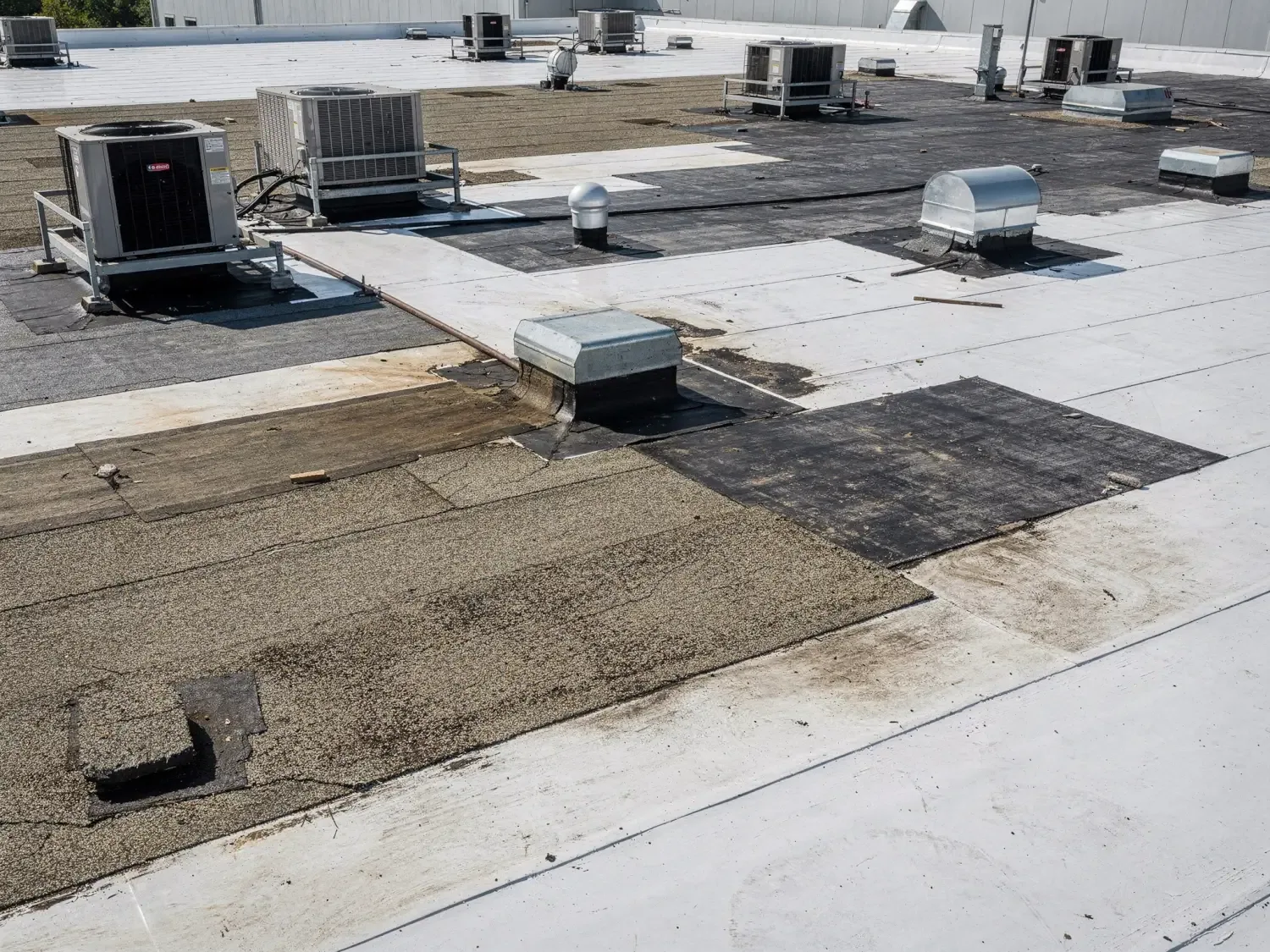
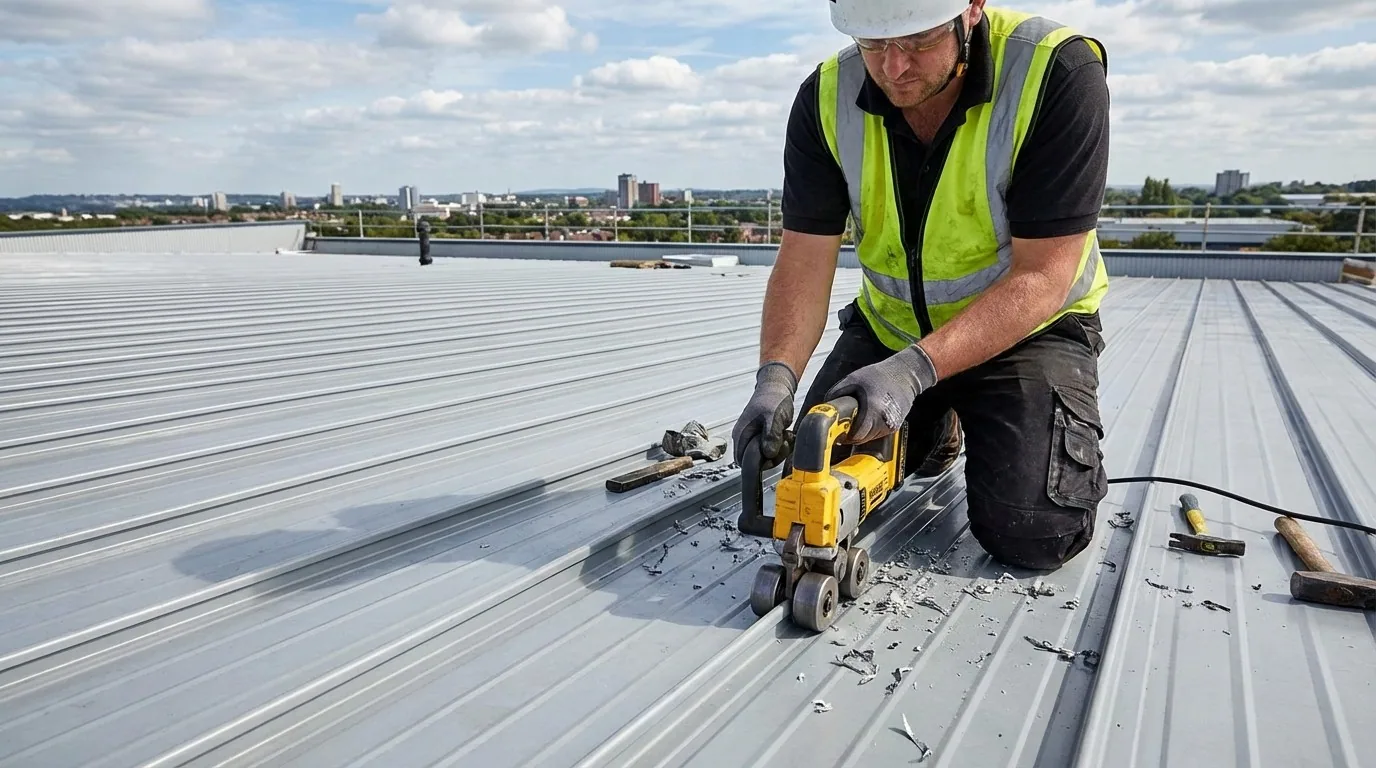
Repair material needs to bond or weld to the existing system. We identify the membrane or metal panel first, clean and prepare the surface, and then make a repair that fits the system's detail. A compatible patch needs sound material beyond the cut, proper overlap, and a finish that does not leave a curled edge or exposed corner. At a penetration, we check the full curb or pipe flashing instead of laying sealant over the visible crack. Sealant can be part of a repair, but it is not a substitute for rebuilding a failed transition.
At a drain, we inspect the bowl, clamping ring, membrane connection, and nearby slope. Leaves or debris may slow drainage, but a recurring pond can also point to a low area, a crushed drain, or insulation that has settled. We clear the obstruction where appropriate and record whether water still remains after the drainage path is restored. A drain and scupper repair addresses the collection point and surrounding membrane, while a larger drainage correction may need separate design and scope.
A good repair has a defined boundary. We mark the damaged section, identify membrane that can accept a patch, and check the adjacent field for signs the failure continues beyond the visible opening. If moisture extends under the membrane, the wet insulation may need to come out before the roof can be closed. If the deck is soft or corrosion has advanced, a surface patch does not restore support. Test cuts can confirm the layers and help set the repair limit without removing more roof than the finding requires.
After a repair, we photograph the closed seam, flashing, or patch and tie it to a roof map. That creates a useful baseline for future roof walks. If the same area opens again, the record shows whether movement, water, or an adjacent detail is extending the failure. For property managers tracking multiple buildings, photo-based condition reports keep repair locations and open issues in one place. We identify conditions that should be watched and separate them from items that need immediate correction.
Some repairs need a short dry interval, while others require longer surface preparation or membrane welding. We match the work to the weather window and protect the opening if conditions change. High heat can affect how some adhesives and coatings handle; rain can defeat preparation or leave water beneath a patch. The crew checks the forecast before opening the roof, limits the exposed area, and closes the work the same shift when conditions permit. Any temporary measure should be described as temporary, with a clear next step if the permanent repair needs a better weather window.
At Valwood Industrial Park, large commercial buildings may have rooftop units, loading activity, and several access points. Before the walk, we confirm where the crew can enter and what operations need to stay clear. We stage tools so that the repair path stays separate from material traffic and leave a marked work area when the roof is released. If damaged membrane remains near an edge or equipment curb, we can phase the repair and return only when the surface is ready for the specified method.
A repair is a sound choice when the defect is localized, the surrounding membrane remains serviceable, and water has not compromised the assembly beneath it. If leaks appear in several roof areas, seams repeatedly separate, or moisture testing finds wet insulation across a broad field, the repair limit may need to expand. We explain what the current evidence supports and which additional checks would narrow the choice. A replacement scope becomes relevant when repair work would leave widespread failures or concealed wet layers in place.
There are useful options between patching and full tear-off. If the existing roof is dry, stable, and meets applicable layer limits, a recover assembly may be considered. If the roof is suitable for a coating system, we inspect adhesion, seams, penetrations, and drainage before recommending it. The proposal should state what is included, what was observed, what remains uncertain, and how the repair area will be protected. Arrange access and tell us about loading hours, active equipment, or tenant conditions so the roof walk can answer the right questions.
A patch can stop the entry point when the damaged area is isolated and the surrounding membrane is sound. We inspect beyond the visible split or hole, because water can travel under the roof before it reaches the interior. If moisture or seam failure continues past the first mark, we expand the repair limit and explain the additional work.
Compatibility matters at every bond, weld, and transition. We identify the current system before specifying repair material. If the membrane is unknown or no longer available, we inspect a sample and detail the transition carefully rather than assuming that a generic patch will hold.
A wet surface can obscure the failure and prevent reliable adhesion testing. We can document visible conditions, check interior evidence, and return when the surface can be prepared. Any temporary protection is recorded separately from the permanent repair scope.
We clear debris if it is safe to do so, inspect the bowl and outlet, then observe whether water moves toward the drain. If ponding remains, we check the nearby slope and insulation for settlement. A clear bowl is one part of the repair, not proof that drainage is restored across the whole area.
It should show the marked location, repair method, materials, preparation, close-in plan, and conditions that could change after opening the roof. We include photos of the defect and completed work. If access or operations constrain the schedule, those limits belong in the work sequence too.
RELATED WORK
CALL US
Leaks, storm damage, a failing membrane or a replacement on the calendar: tell us what is happening on the roof and we will set up a visit.
Commercial Roofing Services
Arrange access and tell us where leaks recur, along with loading or equipment constraints. We will inspect the surrounding details, set a repair limit, and document what the roof needs.
Call 555-555-5555 or request a roof assessment online.