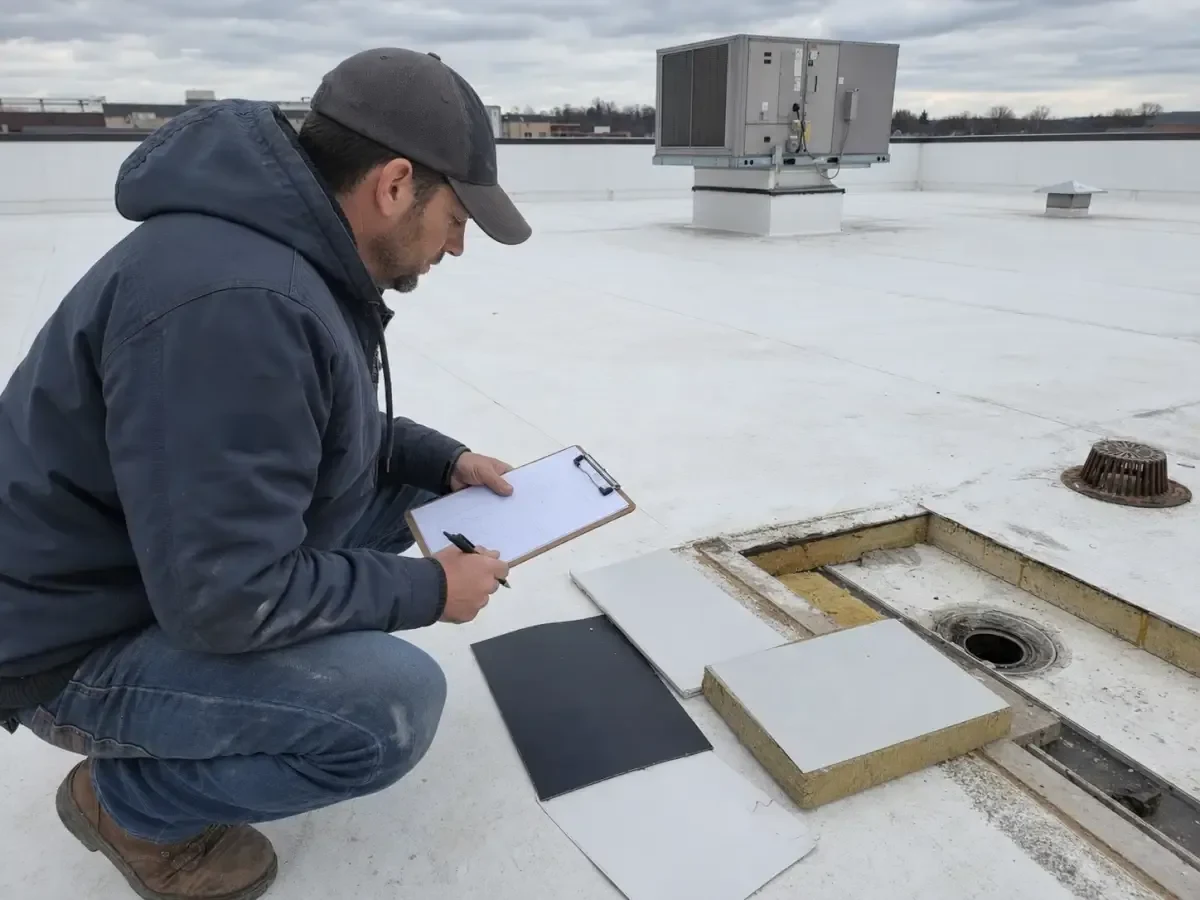
Loose gravel beside a drain can point to more than a housekeeping issue on a built-up roof. The surfacing may have shifted, water may be collecting, or the top ply may be wearing through. In Carrollton, TX, summer heat and spring storms make it important to inspect the layers below the surface before adding another coat. The Frankford Trade Center includes substantial distribution and logistics space, where safe roof access and staging need to fit active building operations. We map the roof, check the plies, and mark any area that needs a test cut.
A built-up roof combines alternating roofing felts and asphalt, often with a gravel or mineral surface. The number of plies, attachment, insulation, and deck vary by installation. We look for blisters, ridges, splits, exposed felt, loose gravel, and areas where the surfacing has shifted away from a drain or wall. A test cut can show whether water has moved between plies and whether the insulation can stay. We close each test opening with compatible material and record its location.
At a building where equipment has been added over time, old patches may hide the original assembly. We compare the visible layers at a test location with the roof records and inspect around curbs, pipe stands, vents, and expansion joints. A commercial roof inspection can document those findings across a roof map. If the deck is soft or the insulation is wet, an overlay may seal in a problem rather than solve it. The work scope should distinguish sound areas from sections that need removal.
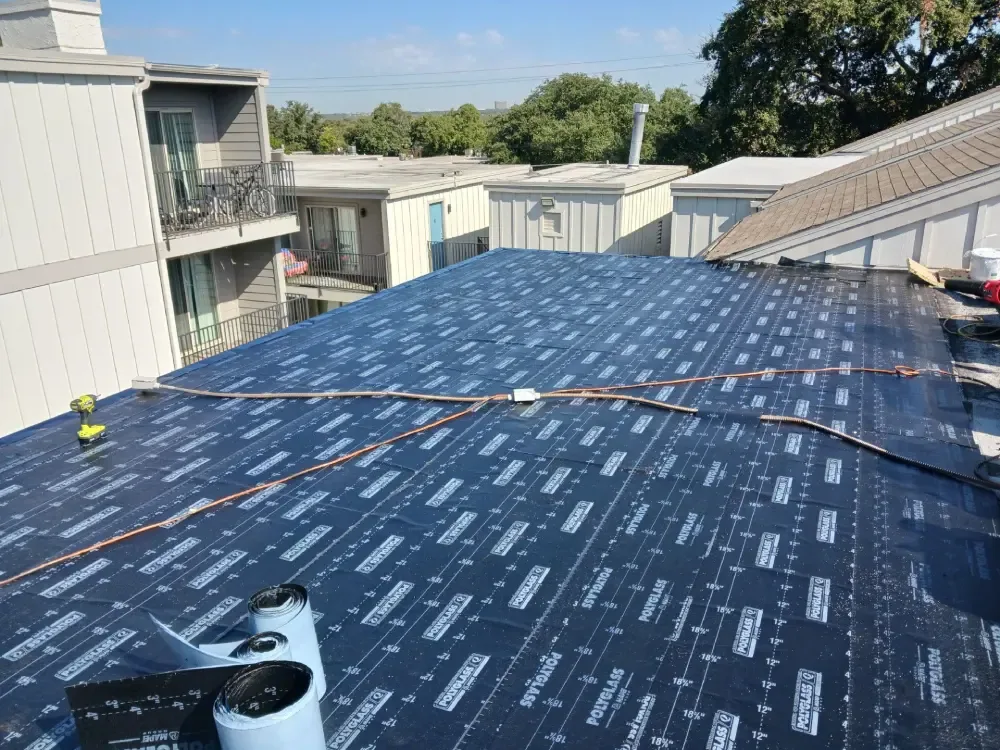
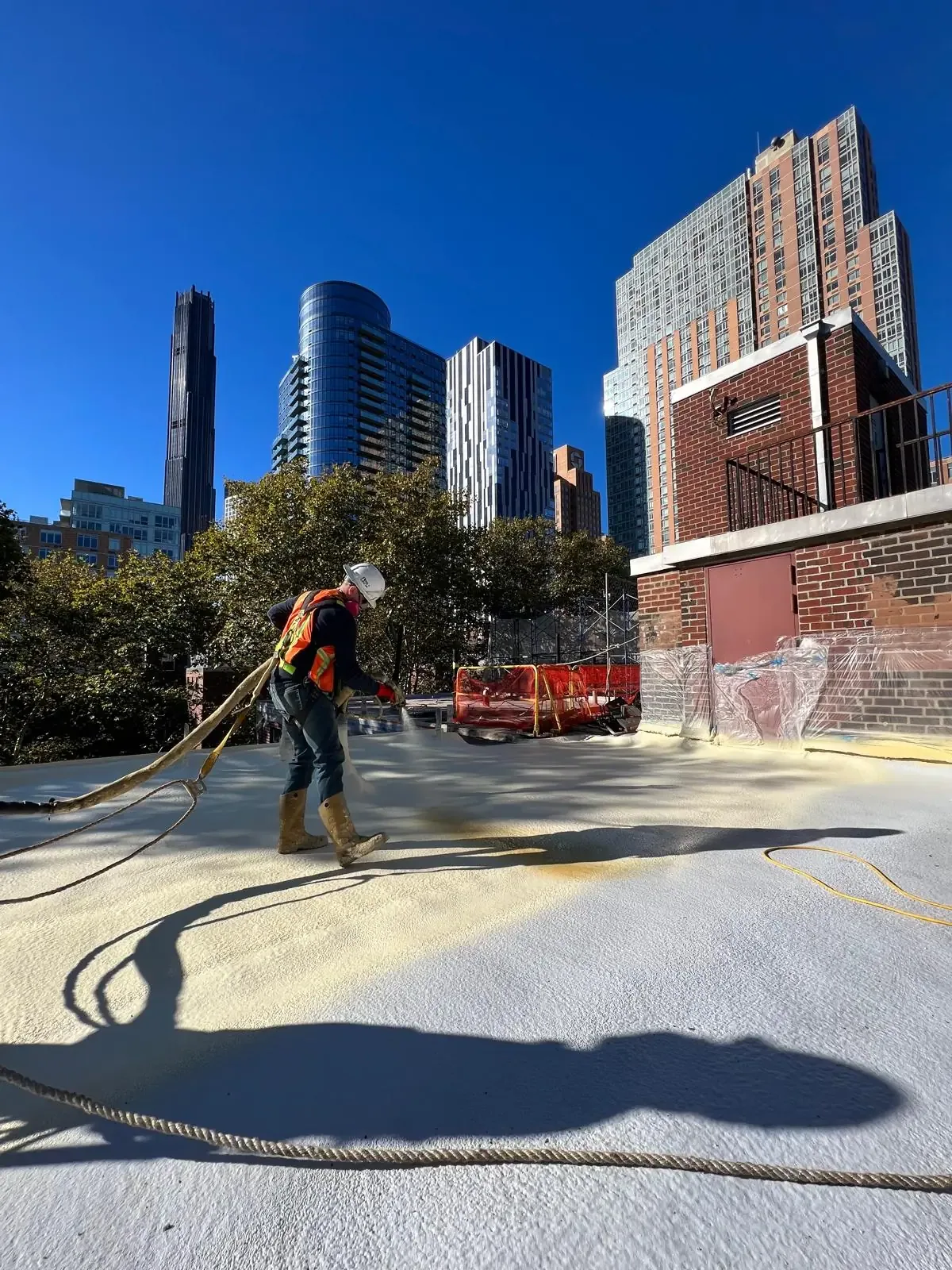
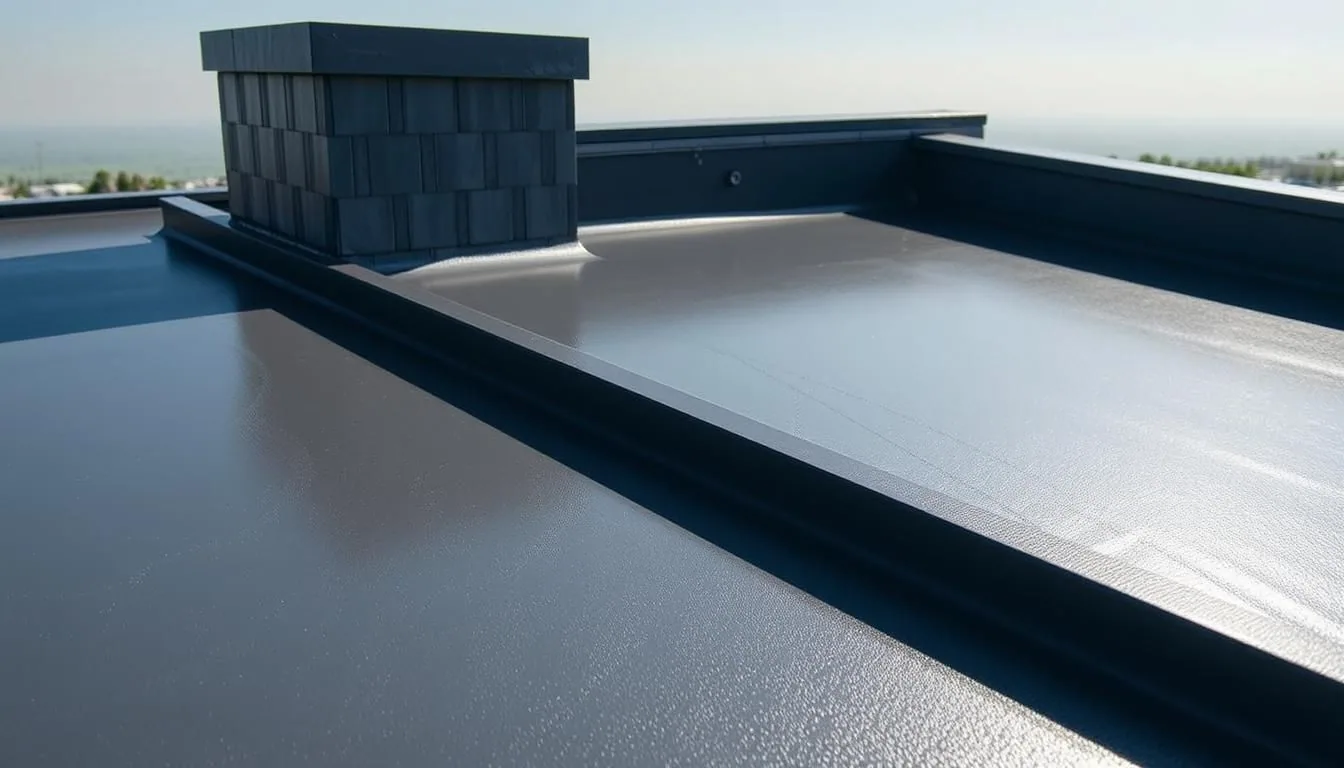
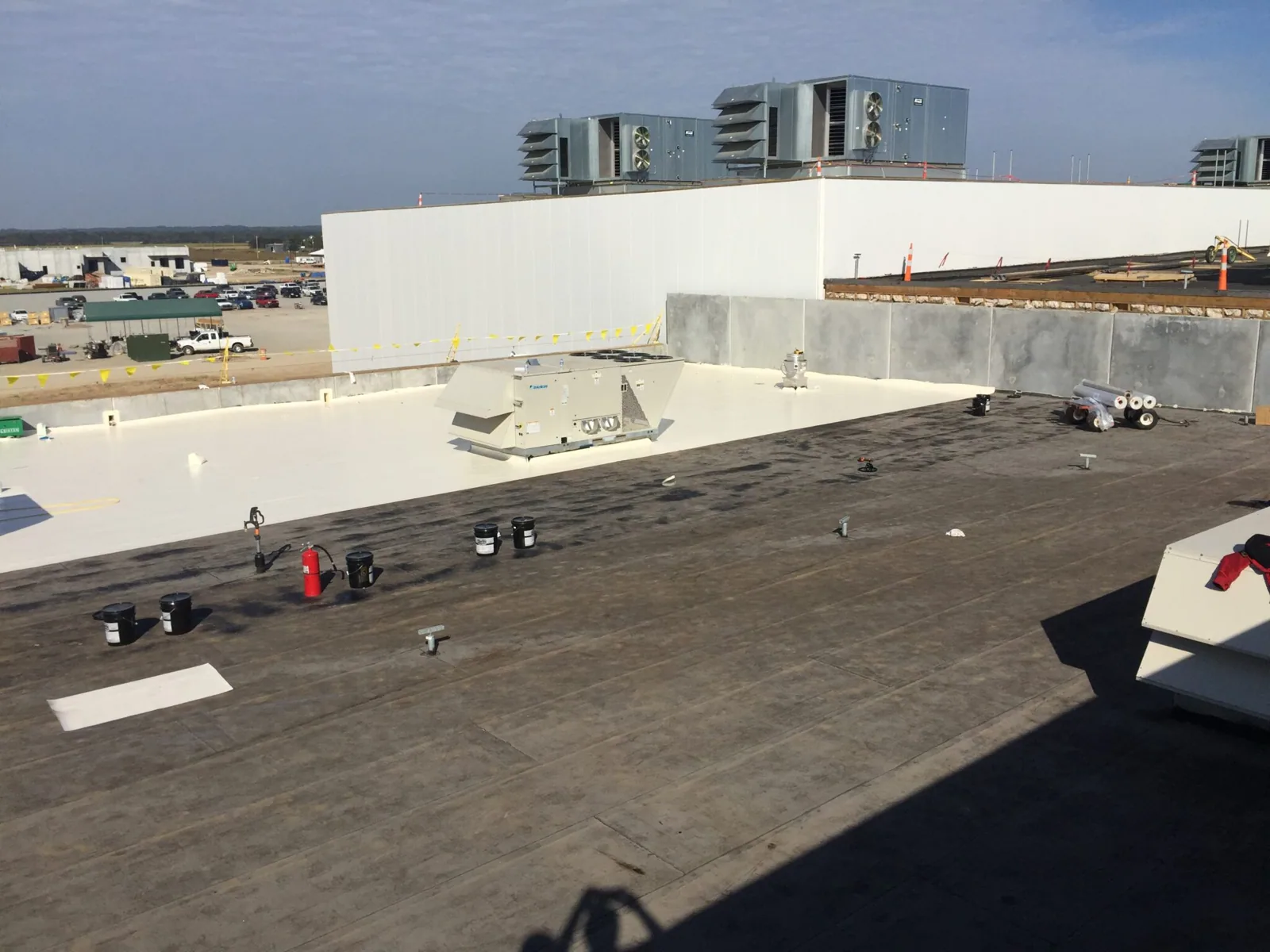
Gravel protects some built-up roofs from sunlight and foot traffic, but it can also move toward low points and block a drain. We check whether the surfacing remains even, whether the asphalt has become brittle, and whether the drain bowl is clear. Water that sits after nearby areas dry may signal a slope or compression issue. We trace the flow path, note where ponding begins, and check whether the roof layers have softened below the low area. A coating over loose gravel cannot correct a sagging deck.
Dallas-Fort Worth has hot, humid summers, and July and August daytime temperatures are commonly in the 90s and often above 100 degrees. Heat affects asphalt, surface work, and safe handling. We use the local climate as planning context and inspect actual material condition before choosing a repair. Where drains or scuppers are involved, a drainage inspection can record the bowl, strainer, and discharge point separately from the field membrane. Keeping the roof outlet open is part of protecting the plies below it.
Built-up roofing turns up at walls and curbs, passes beneath metal, and meets a drain assembly. The transition can fail where the asphalt no longer bonds, where a corner has opened, or where metal moves against the flashing. We examine the vertical surface, check for exposed felt, and inspect the top edge for a secure termination. At penetrations, we verify that each pipe or support has a compatible boot or flashing. A surface coating alone cannot bridge a loose edge or create support beneath an open ply.
Hail and damaging wind occur nearly every year somewhere in the Dallas-Fort Worth Metroplex, with severe weather most active in spring. After a storm, we check gravel displacement, punctures, open flashing, and metal that has lifted from the perimeter. We tie visible damage to a roof location and compare it with prior photos where available. If metal has shifted, an edge and coping repair may be needed alongside a field repair. The owner receives a clear boundary for work and any concealed condition that needs approval before removal.
A small split above dry, solid material can be repaired by preparing the surface and rebuilding the affected ply or cap. A blister needs closer review because trapped moisture or air may sit below it. We determine whether it is safe to open, remove the material required to reach a stable base, and install compatible layers with a properly finished edge. Any temporary protection is labeled and scheduled for follow-up. We do not cover a wet spot with a broad mastic patch and call the roof restored.
When defects repeat across several sections, we compare a repair program with recover or replacement. A recover assessment checks layer count, attachment, deck condition, moisture, slope, and height at roof edges. If the assembly has widespread deterioration, a replacement scope can include new insulation, drains, curb heights, and metal transitions. A modified bitumen system or TPO membrane may be compared when the building requirements support another assembly. We describe the maintenance and access differences as part of the decision.
Built-up work can involve hot asphalt, open flame, adhesives, or other methods selected for the assembly. Each method has different weather, access, and protection needs. We establish staging, material handling, and fire precautions before work begins, and coordinate any restrictions with the property manager. In heat, crews need an orderly sequence and shade or hydration arrangements appropriate to the site. If rain approaches, open sections are closed or protected before the work area is left.
The International Business Park includes office, industrial, and retail uses, so roof access can differ between neighboring properties. Valwood Industrial Park spans hundreds of buildings; each roof map should carry a building identifier, not only a street address. We confirm the material route and work hours before choosing a sequence. Where a tenant must keep operating, phased reroofing can preserve access below and give each section a defined close-in time. The final record identifies the layers repaired, test locations, surfacing condition, and any return item.
We look for blistering, soft areas, displaced surfacing, and recurring leaks, then use a test cut where the condition needs confirmation. The cut shows the layers and moisture at that point, and we close it with compatible material.
Not by itself. We check whether the gravel moved, the cap surface is worn, or the underlying plies have separated. The repair or replacement decision follows the assembly condition, deck, and drainage.
A coating may protect a compatible, stable surface, but it does not correct a low deck or compressed insulation. We map where water remains and identify whether slope or drainage work should come first.
We inspect the roof for displaced surfacing, punctures, open flashings, and lifted metal. Photos and marked locations help separate storm-related damage from older wear and define any temporary protection needed.
A localized replacement can work if the surrounding plies are sound and the transition can be sealed securely. We inspect the edge of the proposed repair, the deck, and drainage before setting that boundary.
RELATED WORK
CALL US
Leaks, storm damage, a failing membrane or a replacement on the calendar: tell us what is happening on the roof and we will set up a visit.
Roof Systems
Share the roof access window, leak areas, and any loading or tenant constraints. We will inspect the surfacing, plies, and transitions, then record a repair limit and close-in plan.
Call 555-555-5555 or request a roof assessment online.