A leak over a pick line or pallet aisle can affect product, scanning equipment, and outbound schedules. Commercial roofing for logistics and 3PL operators in Carrollton, TX starts with the dock pattern, tenant contact, affected bay, and the path a crew can use without crossing active freight movement. We locate the roof detail, record the repair boundary, and coordinate staging with the site team. A distribution roof may span a large area, but a useful scope still identifies the exact bay and access point.
Before the crew arrives, the property contact should identify receiving and shipping peaks, trailer circulation, gate procedures, and any fire lane or dock that must stay open. We confirm where a service vehicle may park, how materials will be raised, and whether a lift needs a reserved area. The schedule should account for noise, overhead protection, and the time needed to secure the work zone at the end of a shift.
Frankford Trade Center covers roughly 172 acres and more than 2.5 million square feet. Its named logistics tenants include GXO and Mary Kay Distribution, and the city describes it as North Dallas’s only full-service Foreign Trade Zone. Those details show the regional freight role of the district, but do not disclose a tenant’s roof layout or operating calendar. A Frankford Trade Center roof visit begins with the facility’s own access contact and dock requirements. A commercial roof inspection then ties each finding to a roof section and nearby operating area.
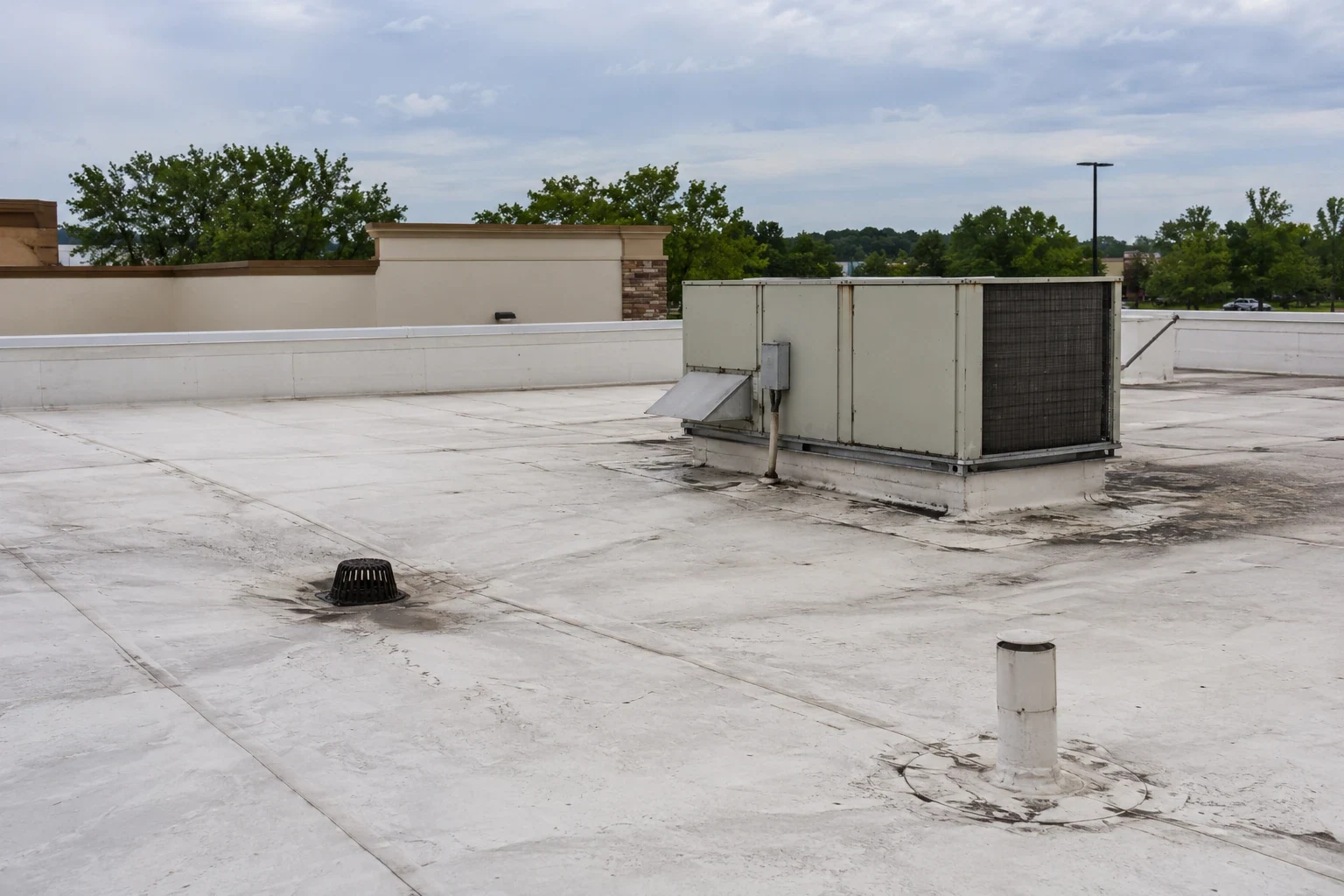
Ceiling drips and wet cartons give a starting point, not a confirmed roof source. We compare the interior location with the roof drainage path, seams, curbs, wall flashings, drains, and prior repair marks. Water may travel along a deck or insulation before it appears over a pallet or conveyor. When safe access allows, we check for soft areas and document whether further testing is needed to define the extent.
If water is still entering, the immediate response should protect the inventory and limit additional exposure. We distinguish temporary cover from permanent repair in the work note and explain any area that remains vulnerable. A leak repair inspection can trace an opening and identify the repair detail. After hail or wind, a storm-damage assessment records visible conditions without assuming the storm caused every existing defect. The site can use those observations to determine the next action and any claim review.
A high-bay facility can have multiple drains, expansion joints, rooftop units, skylights, and repair generations across a single roof. A report that says “north roof” may not be precise enough for a second visit. We mark the grid, bay, or recognizable rooftop feature, then photograph the detail and describe the observed condition. If a section is inaccessible, we record the boundary instead of treating it as inspected.
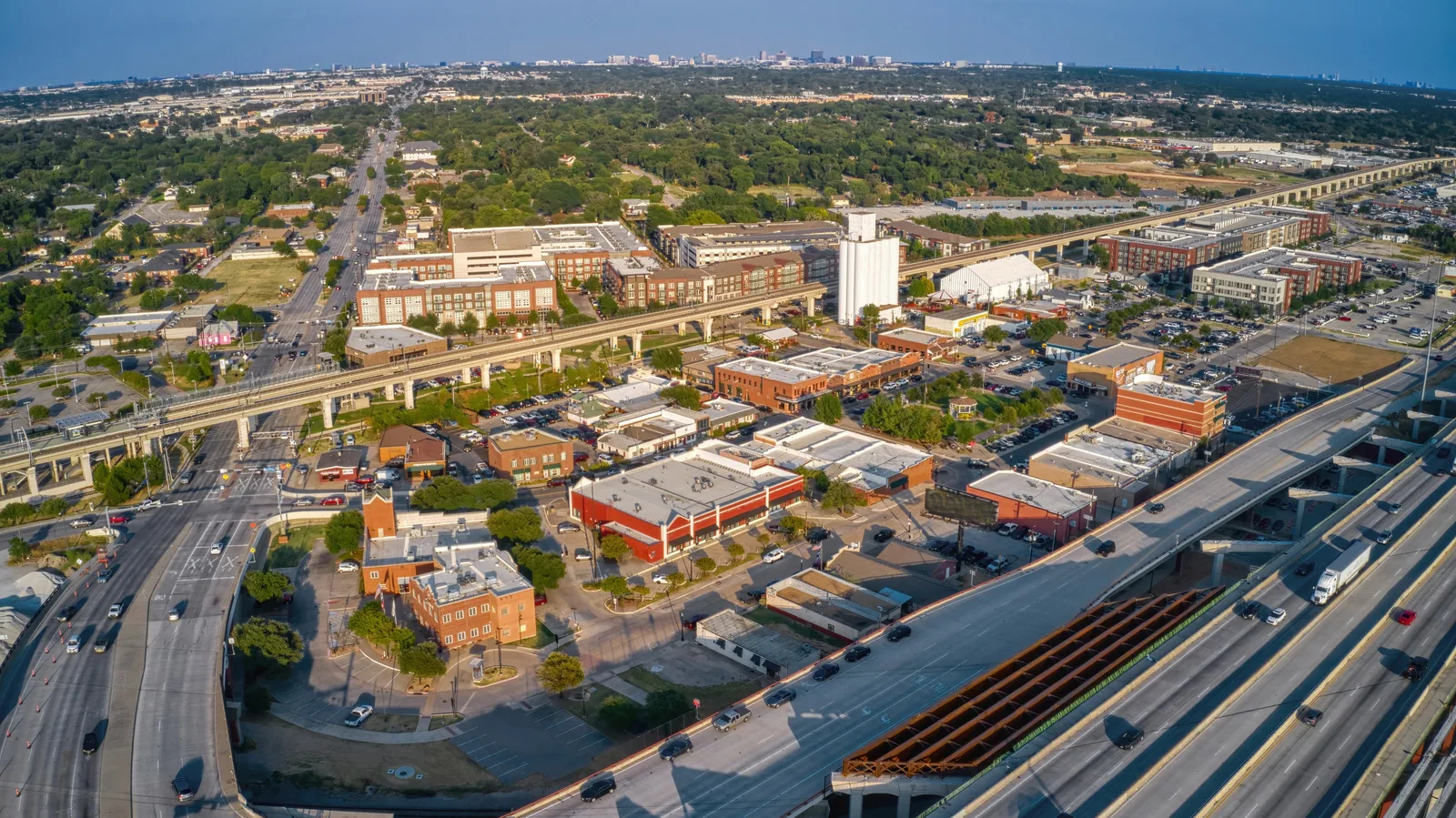
Valwood Industrial Park is reported as a 2,200-acre district with more than 26 million square feet across roughly 500 buildings. Trinity Mills Industrial Park adds about 1.4 million square feet across a 73-acre area near the transit hub. These district-level totals show the scale and variety of Carrollton’s industrial stock; each facility still needs its own measurements and roof records. For a manager coordinating several properties, the portfolio roof tracking approach separates a building’s condition from the broader site schedule.
Debris can collect around drains, scuppers, curb corners, and equipment legs. We check these points along with seams, edge metal, and earlier patches, looking for open laps, loose flashing, blocked flow, or movement at a transition. On a flat roof, standing water should be documented with location and conditions; it does not by itself prove a leak or identify the correct repair. The report should state what was observed and what needs follow-up.
A preventive visit may be timed before a high-volume season or after nearby construction work puts dust and debris on the roof. We clear only material that can be safely removed as part of the agreed scope, then note any roof detail that needs repair. Our maintenance service records the date, roof zone, findings, and next inspection item. If recurring water entry appears across different bays, we compare each location before expanding the repair area.
A reroof over active distribution space needs a practical sequence. We identify tear-off limits, material delivery points, crane or hoist needs, roof opening size, and how the crew will protect the building if rain arrives. Sections can be phased around freight peaks when assembly and weather conditions permit. The proposal should state which docks, trailer routes, or interior areas need coordination, along with any shutdown or access assumptions.
Trinity Mills station connects DART’s Green Line with Denton County’s A-Train, while nearby industrial property includes operators such as FUJIFILM, IQ Supply, Ultra Clean, and WMS. The transit connection is context for the district, not a substitute for a delivery plan at a specific facility. A commercial roof replacement plan lists the roof assembly, substrate assumptions, edge work, phasing, and close-in points. For manufacturing and distribution sites that share loading constraints, the manufacturing facility coordination page describes related planning considerations.
Hot, sunny summers can make roof surfaces difficult to work on, while spring is the region’s primary severe-weather period. Hail and wind may require a prompt roof check; cold snaps and freeze-thaw changes can also affect repair timing. We use current conditions and product requirements to decide whether a section can be opened and completed. The plan should identify the daily area that will be left watertight, who receives a schedule update, and where temporary protection may be used.
Weather observations are regional and do not establish damage at a particular distribution building. If an event prompts a report, we document what is visible and compare it with the pre-existing maintenance record where available. A repair scope can then separate newly observed conditions, older wear, and any areas that need more investigation. That distinction helps operations staff plan access and inventory protection while the owner or carrier reviews the evidence.
Closeout should identify the site, roof zone, bay or dock relationship, repair material, work date, photos, and any unresolved condition. We state whether the repair is permanent or temporary and identify areas that could not be reached. A marked roof map gives operations staff a way to compare a later leak call with the completed work. The written record can be shared with property management, maintenance, and the tenant contact without losing the location details.
A visit to Frankford Trade Center or Trinity Mills Industrial Park still depends on each facility’s gate, truck schedule, and staging instructions. District names help orient the service call, but the site contact controls the access plan. We return the closeout to the agreed contact and identify the next action plainly. If a larger repair is recommended, the proposal should give the team enough information to schedule around freight and evaluate the work by zone.
Yes, when the operator identifies busy windows, trailer paths, and doors that must remain open. We coordinate staging and lifting access with the facility contact before arrival.
We start from the reported bay and inspect the roof area above and around it, including seams, drains, curbs, and earlier repairs. The report marks the confirmed source or any remaining uncertainty.
The site should protect people and inventory, report whether the leak is active, and identify the affected bay. We assess temporary protection first, then define permanent repair after locating the roof condition.
Phasing may work when the roof assembly, weather, and access plan support it. The scope identifies each zone, opening limits, staging, and the point where the roof will be closed for the day.
We can document visible conditions and identify areas needing closer review. A regional storm report alone does not prove damage at a specific building, so findings are tied to roof locations and photos.
RELATED WORK
CALL US
Leaks, storm damage, a failing membrane or a replacement on the calendar: tell us what is happening on the roof and we will set up a visit.
Industries We Serve
Send the site address, affected bay or dock, access contact, and freight schedule. We will inspect the roof, coordinate staging, and return a clear repair or maintenance record.
Call 555-555-5555 or request a roof assessment online.