
A loose coping cap after a spring storm can leave the roof edge open to the next rain. Commercial wind damage roof repair in Carrollton, TX starts with the perimeter, corners, rooftop equipment, and any membrane edge that moved. We check the wind-lift path, photograph the detail, and mark how far the damage extends. A lifted edge is not the same repair as a puncture or a split seam, so the first visit needs to establish what moved and what still holds.
Wind loads are not distributed evenly across a roof. Perimeters, corners, parapet transitions, and equipment curbs can experience different forces from the central field. We inspect edge metal, terminations, flashing laps, and attachment points for movement, fasteners that have backed out, or membrane that has pulled free. We also look for signs of water entry below the exposed detail. The repair limit follows the material and attachment that failed, not just the area visible from the ground.
The National Weather Service’s Dallas-Fort Worth summary places the region’s strongest storm season in spring and reports damaging winds across the metroplex in most years. That regional pattern makes a timely roof walk useful after a reported event, but it does not establish that a particular Carrollton property was damaged. Valwood Industrial Park includes distribution, manufacturing, and service properties. For a roof at Valwood, we confirm the building contact and operating limits before inspecting the edge and nearby details.
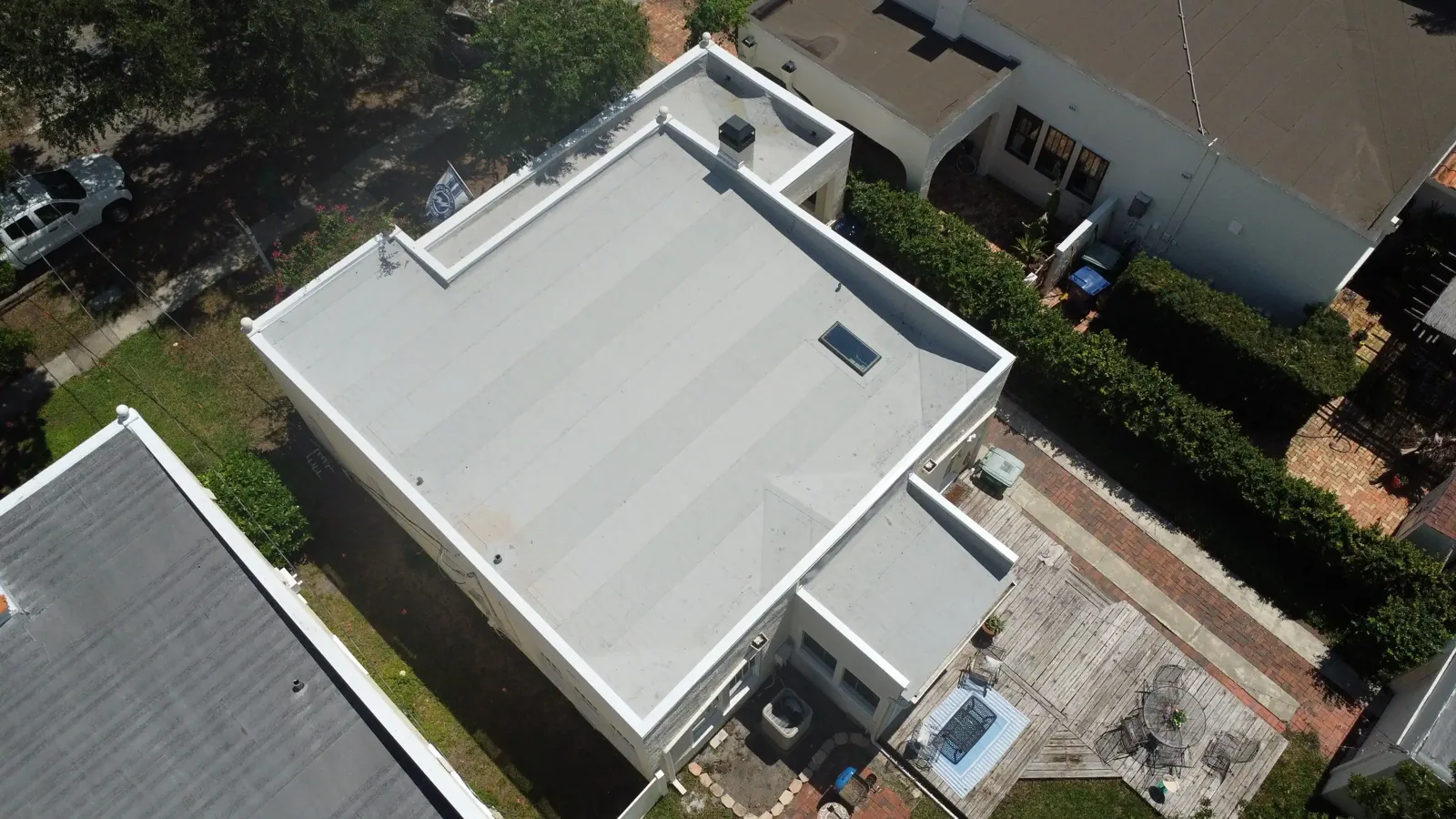
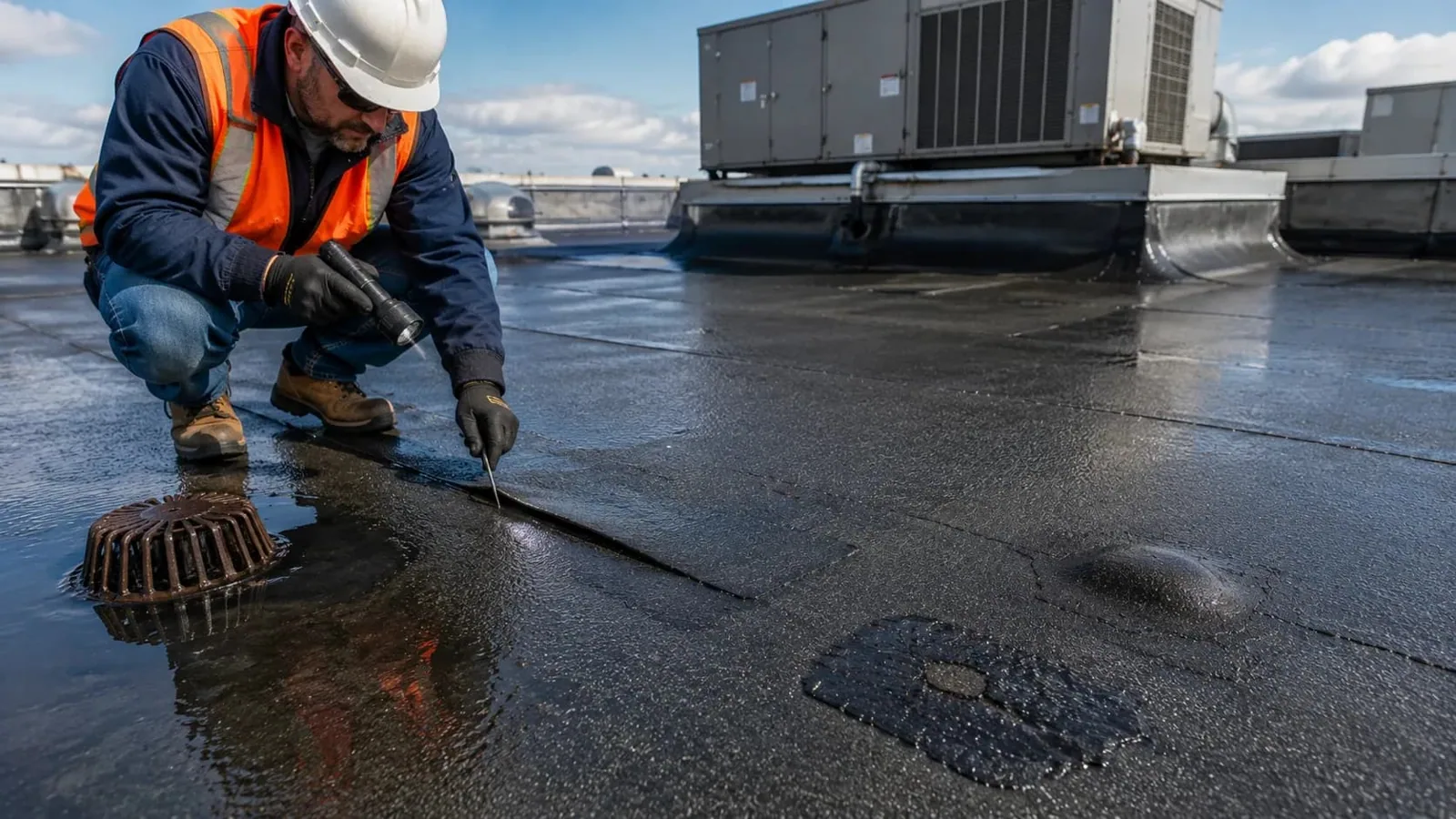
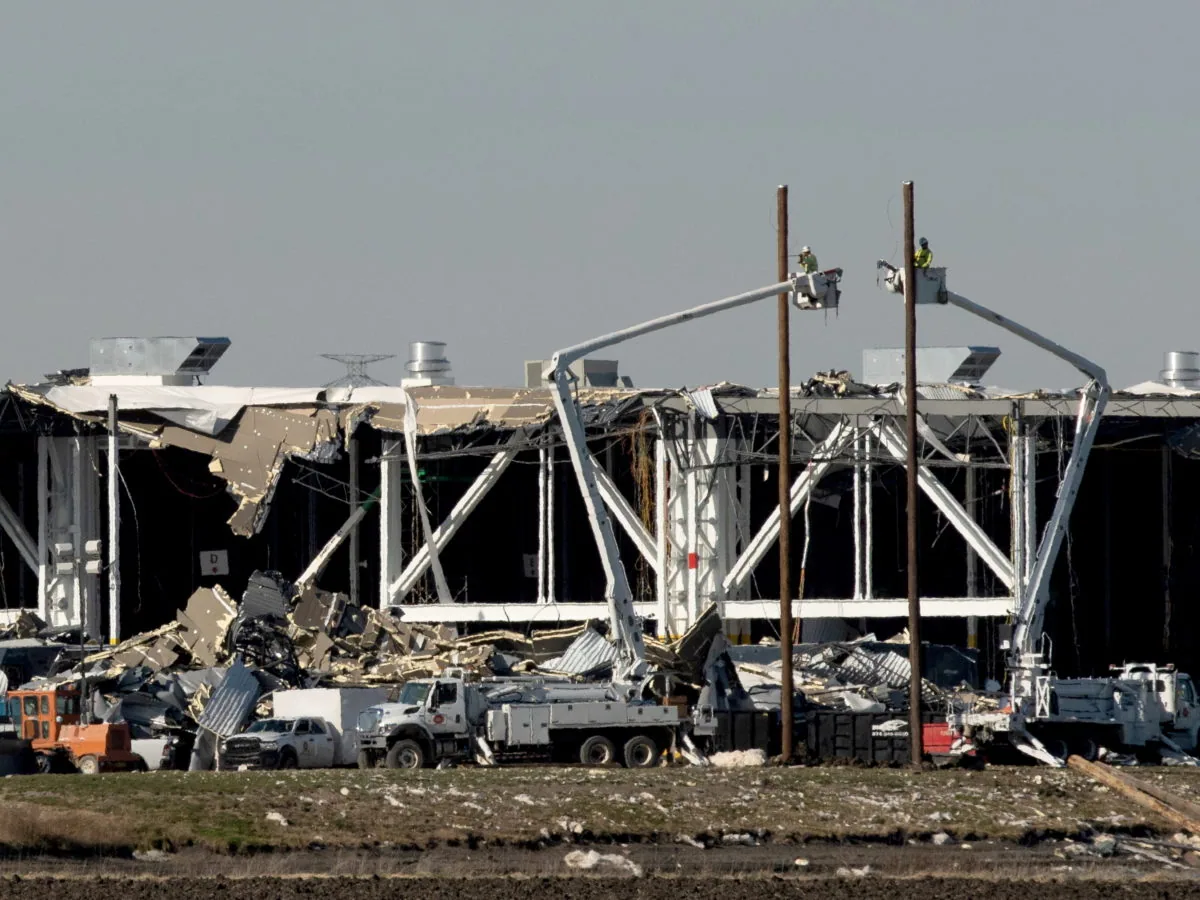
A cap that rattles may point to a loose cleat or a connection that has opened along a longer run. A membrane flap can start at a termination and extend beyond the visible tear. We check the fastener line, substrate, adjoining flashing, and nearby seam to understand whether the failure is isolated or connected. Where an edge detail is covered or unsafe to reach, the report states that limit instead of treating the area as clear.
We photograph the condition with a roof-area mark and describe the observed movement. If moisture may have entered, we identify whether a test cut or moisture survey is needed before permanent repair. An inspection with marked findings gives the owner a basis for a repair decision. If the wind event also raised questions about a broader storm loss, our tornado damage assessment distinguishes high-wind roof observations from other reported damage.
When material is actively lifting or water is entering, the first step is to stabilize the exposed area safely. We identify what can be secured without adding stress to the surrounding roof and place temporary protection when appropriate. The Diligence Notes says which area was protected, what remains exposed, and whether the measure is temporary. A temporary cover does not restore a failed termination or confirm that insulation below it is dry.
Dallas-Fort Worth summers are hot, and severe weather peaks in spring. Those conditions make a dependable close-in point important. Our emergency roof response can assess urgent exposure and reduce further entry. Once the roof is stable, we define permanent work based on the material, attachment, and damage found. The final scope may involve resetting edge metal, replacing a damaged membrane section, or rebuilding a flashing transition.
Repair materials and methods need to suit the existing assembly. On a single-ply membrane, a patch may require a clean, dry surface and a compatible welded or adhered detail. On a metal roof, the work may involve a panel seam, clip, fastener, or perimeter connection. Coated or multi-layer systems need their own preparation and tie-in. We identify the roof type and explain the repair boundary before work begins, including any testing or substrate replacement that may change the scope.
A roof section can look intact while the attachment below its edge has loosened. If the failure appears along a seam, a seam failure repair can address that condition separately from the perimeter. For a broader wind event with visible membrane displacement, a storm damage roof assessment can record the areas inspected and any further work recommended. The report keeps repair needs distinct from conditions that remain unverified.
Wind-damage work may require a lift, controlled access below the edge, or a temporary closure around falling-material risk. We confirm where the service vehicle can stage, which doors or loading areas must remain clear, and who can approve access to the roof. A property manager at Valwood or Frankford Trade Center can identify truck routes, loading windows, and staging restrictions that affect material movement. The district name does not set the schedule for a particular building; the site contact does.
Work is scheduled around wind conditions, temperature, surface moisture, and the roofing product’s installation requirements. If gusts make roof access unsafe or prevent a stable repair, we explain what can be protected and when the next inspection window makes sense. A maintenance visit can return to the perimeter after repair and record any detail that should be watched through the next weather season.
At closeout, we identify the roof area, edge or attachment repaired, material used, and whether the work is permanent or temporary. Photos show the detail before and after when access allows. If the crew found wet insulation, loose substrate, or another unaddressed condition, the report lists it as a separate next step. That gives a facility manager a way to compare a later call with the actual work rather than simply noting that the roof was serviced after a storm.
Near the transit hub, Trinity Mills Industrial Park sits north of Belt Line Road and west of Midway Road. We inspect the roof to establish whether wind moved any detail there. We confirm the address, entrance, roof access, and staging point with the property contact. The finished record describes observed conditions and completed work without treating a weather report as a roof inspection.
We inspect corners, perimeter metal, terminations, penetrations, equipment curbs, and any membrane that appears displaced. The visit also checks whether the detail allowed water beneath the visible damage.
The repair depends on how the metal is connected and whether the cleat, fasteners, substrate, or adjoining membrane failed. We inspect the attachment before choosing the repair.
Keep people away from a loose or exposed edge and report whether water is entering. Roof access and temporary protection should be handled safely; we can assess stabilization when the site is reachable.
No. A weather report gives regional context. We inspect the actual roof, mark visible conditions, and identify any area that needs further testing.
The work record names the temporary measure and any remaining exposure. A later scope identifies the material, attachment, and detail needed for permanent restoration.
RELATED WORK
CALL US
Leaks, storm damage, a failing membrane or a replacement on the calendar: tell us what is happening on the roof and we will set up a visit.
Roof Damage Repair
Share the building address, reported damage, access contact, and whether water is entering. We will inspect the roof edge and field, document the repair limit, and identify the next work step.
Call 555-555-5555 or request a roof assessment online.
