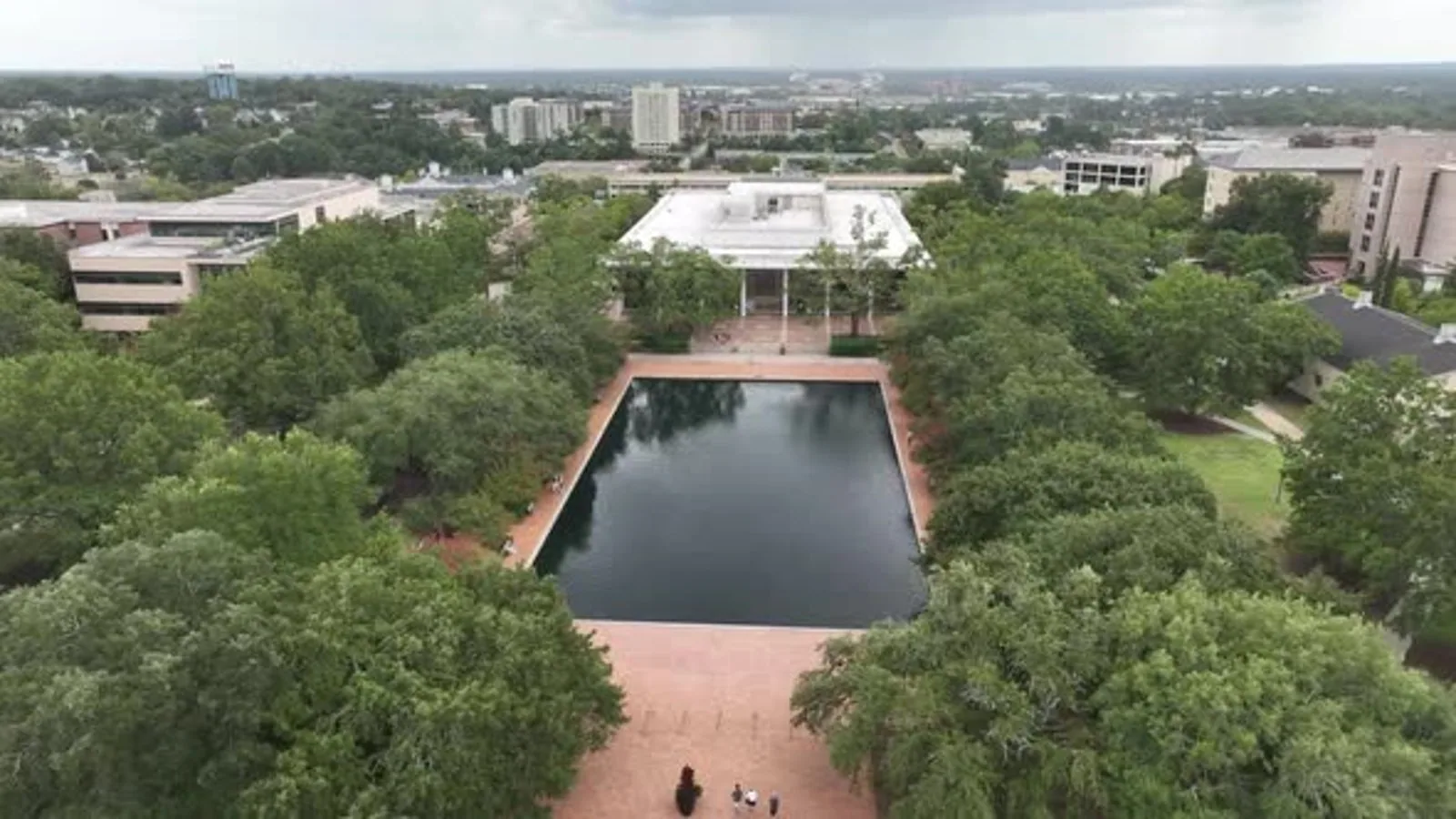
A drip near a showroom light can threaten more than the ceiling finish if it reaches displays, wiring, or customer areas. Auto dealership roofing in Carrollton, TX needs to account for the sales floor, service bays, parts storage, and vehicle movement outside. State Highway 121 and Belt Line Road connect commercial districts across Carrollton, while the Addison Airport business district mixes aviation activity with an industrial park. Those regional access patterns do not define a dealership’s site; we confirm its gates, service lanes, and roof map before work is scheduled.
Sales appointments, vehicle drop-offs, parts deliveries, and repair work can run on different clocks. We ask which entrance must stay open, when the service lane is busiest, and where customers should be routed if a section needs a barrier. A lift cannot narrow a fire lane or block the vehicle path. We agree on material staging and the contact who can approve access to a parts room or service area before the roof crew arrives.
If the showroom and shop share one roof, a leak above the office may have a different repair path from a wet area over a lift bay. We identify the building zone, map the roof feature above it, and record any interior protection needed. An occupied-building work sequence can separate the roof into work areas and identify when each entrance or bay can reopen. The manager receives a status tied to the actual work area rather than a general notice that roofing is underway.
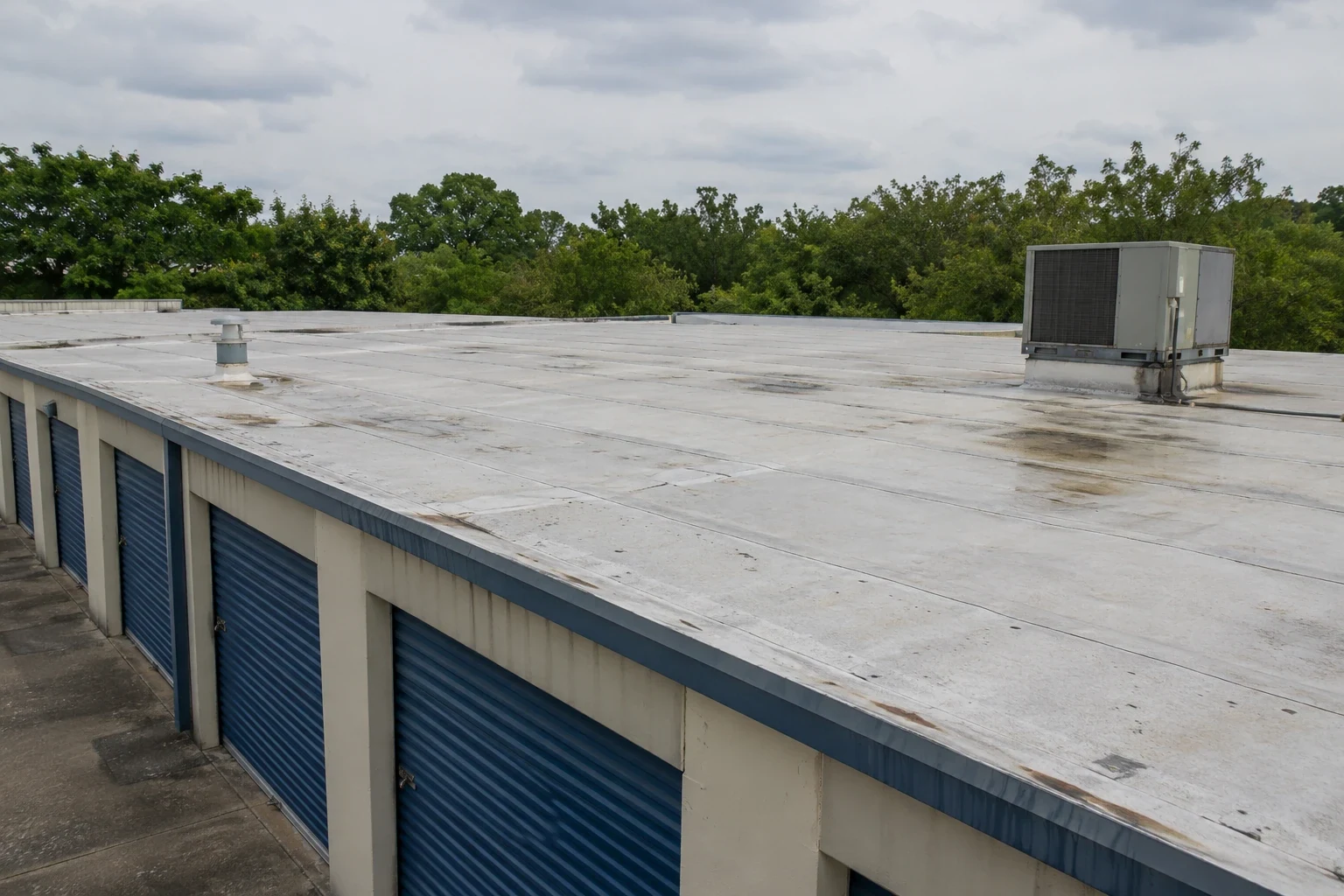
Showroom entries, drive-through service lanes, and parts doors may have canopies that meet the main wall or roof edge. Water can travel behind coping, counterflashing, or a canopy connection and show up near glass, signage, or finished interior space. We inspect the termination, fasteners, lap direction, and the wall above the visible stain. If metal panels or fascia are present, we check attachment and movement without assuming that one loose piece explains the entire leak.
A perimeter metal inspection can record cap condition, gutter joints, and the roof-to-wall transition. When water appears near a service entrance, the location alone does not establish whether the source is a canopy, a roof drain, or a rooftop unit. We compare the interior report with the roof details overhead, then mark any opening before a patch hides the evidence. A test cut is reserved for an assembly that cannot be confirmed by surface inspection.
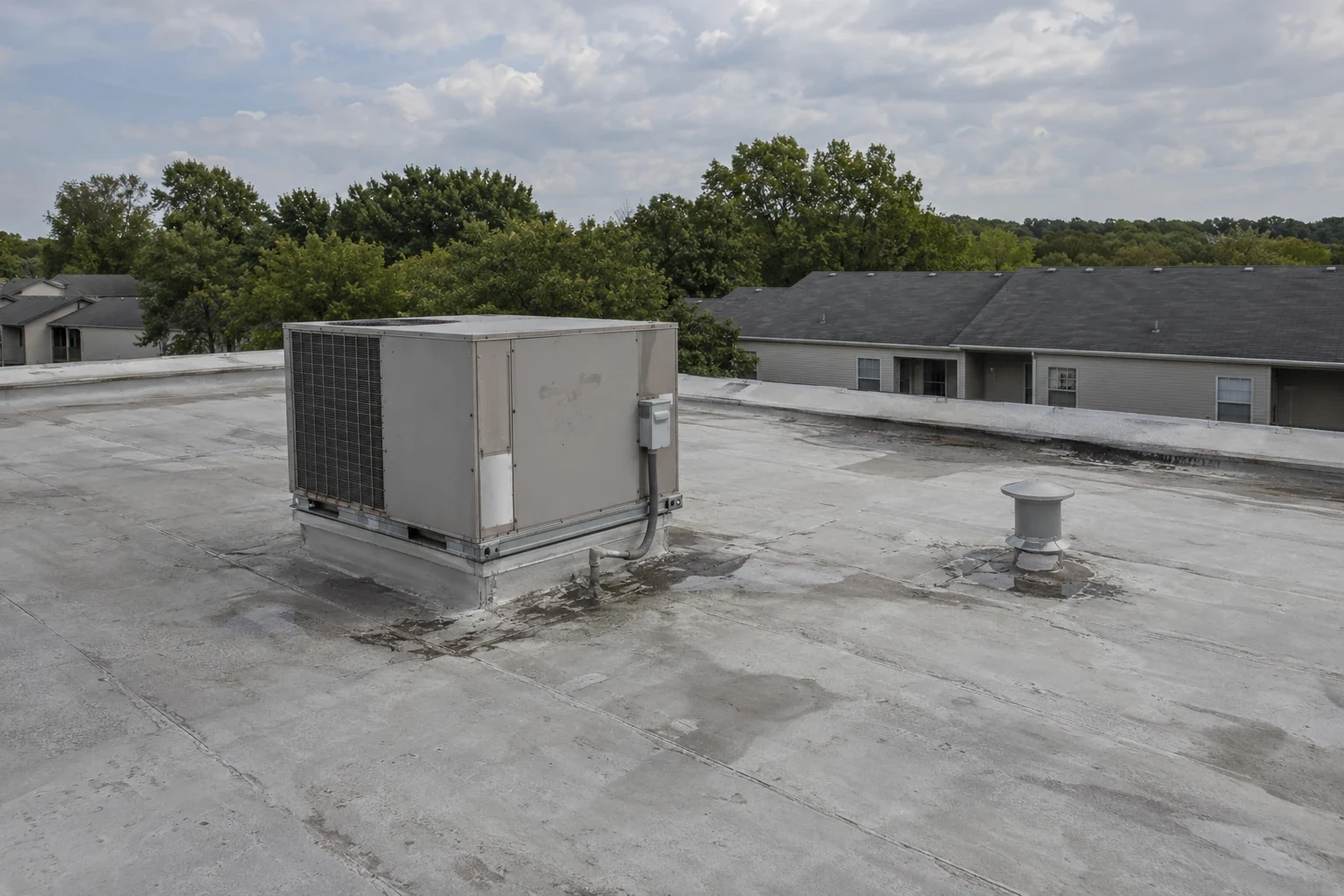
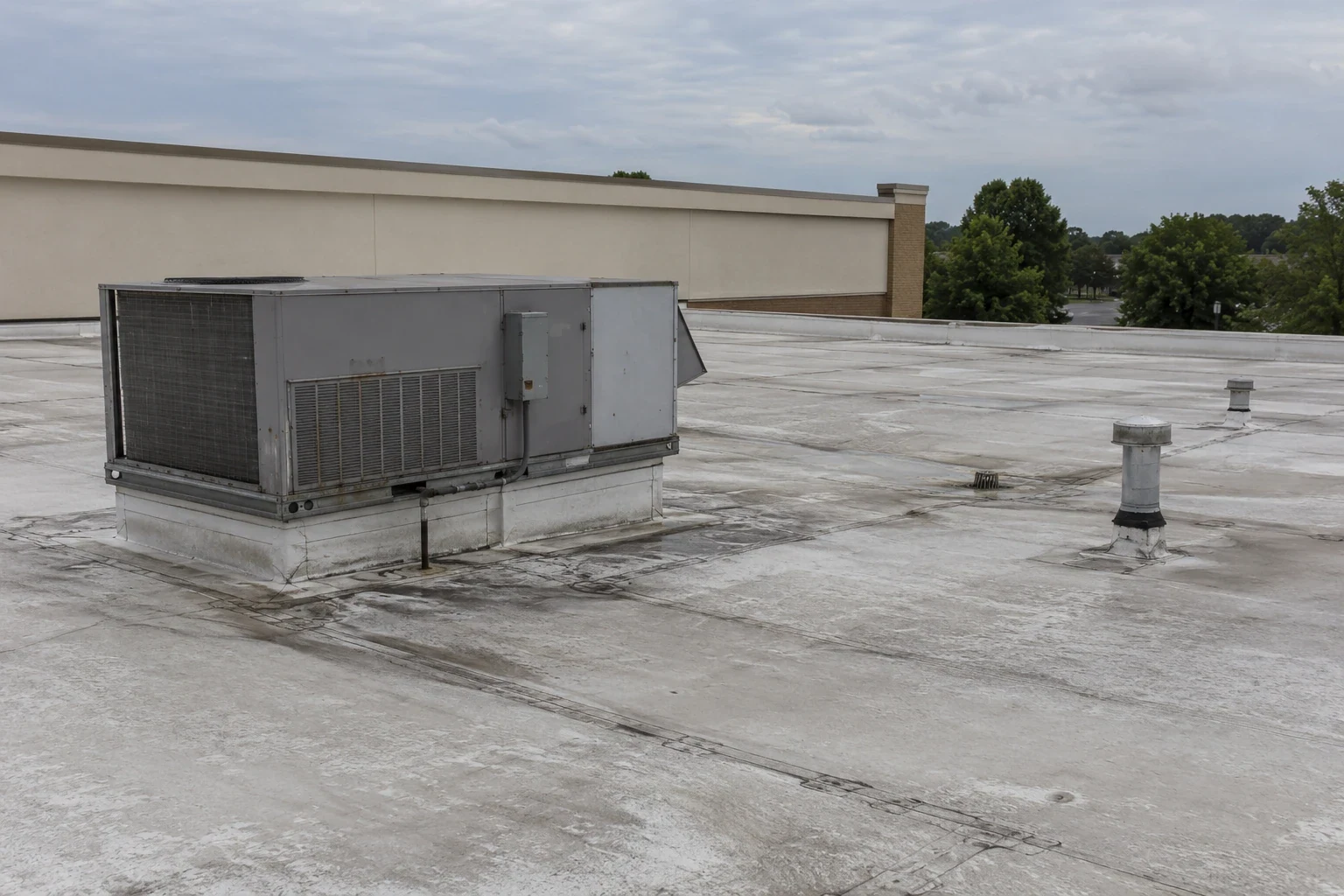
Dealership buildings may have rooftop units serving the showroom, offices, and shop, along with exhaust fans, conduit, plumbing vents, and equipment supports. Each curb or penetration interrupts the roof field. We look for split flashing, loose corners, punctures from maintenance, and sealant that has pulled away from a moving base. If a mechanical contractor has changed equipment, we confirm who handled the roof-side close-in and whether any old opening remains.
Service bays can require ventilation and comfort systems that must stay available while repairs proceed. We coordinate any shutdown with the building engineer rather than disconnecting equipment ourselves. A curb and support review can map the opening and attachment, while a roof inspection records nearby seams and previous repairs. If inventory or customer vehicles are below the work, management can identify which stalls or bays need temporary protection before the roof is opened.
Drains, scuppers, gutters, and canopy outlets direct runoff away from walls and entrances. We check the bowl, strainer, discharge, and low areas around each outlet. A drain can be clear while a depressed roof area still holds water because insulation has compressed or the deck has shifted. We note the depth and location of ponding separately from a seam or flashing failure. A drainage inspection helps identify whether the concern is blockage, slope, or a roof-layer problem.
Dallas-Fort Worth summers are hot and humid; July and August temperatures are often in the 90s and at times above 100 degrees. Heat affects work timing and the condition of exposed details. When a storm brings hail or damaging winds somewhere in the metroplex, we check the perimeter, rooftop equipment, skylight seals, and canopy transitions for changes. A dealership may also need to keep customer arrivals separate from a post-storm inspection route, so we coordinate the roof walk before vehicles are directed into a work zone.
A local patch fits when the surrounding membrane, metal, insulation, and attachment remain sound. If water has spread beneath the roof or the same detail has failed repeatedly, the repair limit may need to grow. We identify whether the roof is single-ply, built-up, metal, or coated before choosing compatible materials. A coating is only appropriate when the substrate is stable and prepared; it does not correct a loose panel or wet insulation hidden below the surface.
For a broader project, the replacement scope should account for the showroom, service bays, staging area, and vehicle routes. A large-format retail property has some similar access questions; a big-box roof plan may also need clear public entrances and delivery lanes. If the site includes repair-shop or light-industrial space, a flex-industrial roof review can address tenant and equipment transitions. The final recommendation still follows this roof’s condition and operating needs.
When hail, wind, or heavy rain is reported, we compare the roof condition with earlier repair records. We photograph the affected area, note whether the edge lifted or the membrane was punctured, and identify any opening that needs temporary protection. A claim record should not confuse vehicle damage with a roof finding. If an adjuster or facility manager needs the roof observations, the report ties each photo to a roof zone and states what was verified.
Valwood Industrial Park has a broad mix of manufacturing, distribution, and service tenants; Addison Airport’s business district supports corporate and business aviation alongside surrounding industrial uses. These are distinct commercial settings, not evidence about a named dealership. We use local road access and the actual property’s operating calendar to set the inspection route, then record the repair material, completion date, and any follow-up that waits on dry conditions.
At the end of the work, we inspect the repair, remove debris, and verify that roof hatches and ladders are secure. The closeout names the building and roof section, repair material, weather, photos, and any open item. If a service bay was restricted, the manager receives confirmation before it is returned to use. Temporary protection stays labeled as temporary until a permanent repair is complete.
A marked plan also helps the next facilities lead compare a new stain with earlier work. It can show which curb, drain, or seam was touched and which area still deserves a check. If a dealership has more than one building, each roof gets its own condition record rather than a single blended description. We note the access route used, the responsible contact, and any special weather or operating constraint that shaped the job.
Often, when the work zone, vehicle path, and customer entrance can be separated. We coordinate the daily work area and any equipment interruption with the manager before mobilizing.
We compare the interior report with roof seams, curbs, drains, wall transitions, and canopy connections above it. A marked roof map separates the visible stain from the confirmed source.
The curb, flashing, fasteners, nearby seam, and any abandoned opening should be reviewed. We coordinate with the mechanical trade to confirm which party closed the roof connection.
We inspect the membrane or panels, perimeter details, attachments, and underlying layers before choosing a repair. Broad damage or wet insulation may change the scope, while an isolated opening can remain local.
Share the vehicle and loading routes, service hours, restricted bays, and known leak locations. The manager can identify where a lift may stage and who can approve temporary access.
RELATED WORK
CALL US
Leaks, storm damage, a failing membrane or a replacement on the calendar: tell us what is happening on the roof and we will set up a visit.
Property Types We Roof
Share sales and service hours, vehicle routes, equipment restrictions, and any interior leak reports. We will inspect the roof details and return a repair plan tied to the affected building area.
Call 555-555-5555 or request a roof assessment online.