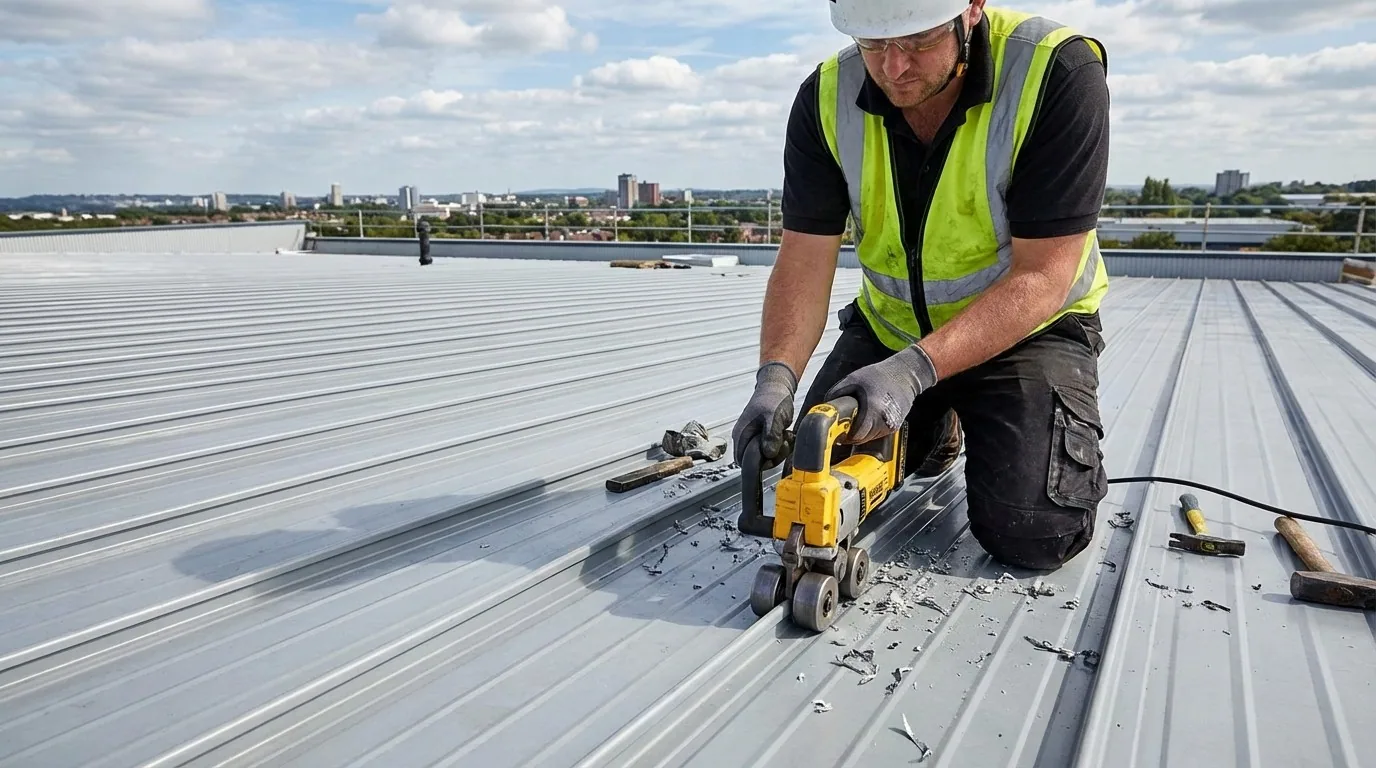
A unit curb can be sound at the top and still leak where its flashing meets the roof. We inspect the curb corners, membrane termination, equipment rail, and support points before applying repair material. On a large roof in Valwood Industrial Park, a route may pass around multiple HVAC units, conduit runs, and service walks. Each opening needs a location and a detail check. Heat moves membranes and sealants, while hail or wind can disturb exposed parts. We record what is loose, what is wet, and which trade controls the equipment before setting a repair boundary.
A curb interrupts the roof field on every side. We check the membrane flashing height, inside and outside corners, seams, counterflashing, and metal receiver. If the curb has shifted or its base flexes, a new surface bead may split again. We look for water marks at the curb, open laps, cracked sealant, and membrane that has pulled back. The repair method depends on the roof system and on whether the curb itself remains stable.
During a service visit, HVAC equipment may need to remain on. We coordinate with the building contact or mechanical contractor before moving covers, disconnecting controls, or entering a restricted work zone. Our roofing scope can repair the membrane-to-curb transition, while mechanical work remains with the responsible trade. Frankford Trade Center includes distribution and logistics tenants. Before rooftop service, we confirm the building’s lift positions and access paths with the site contact.
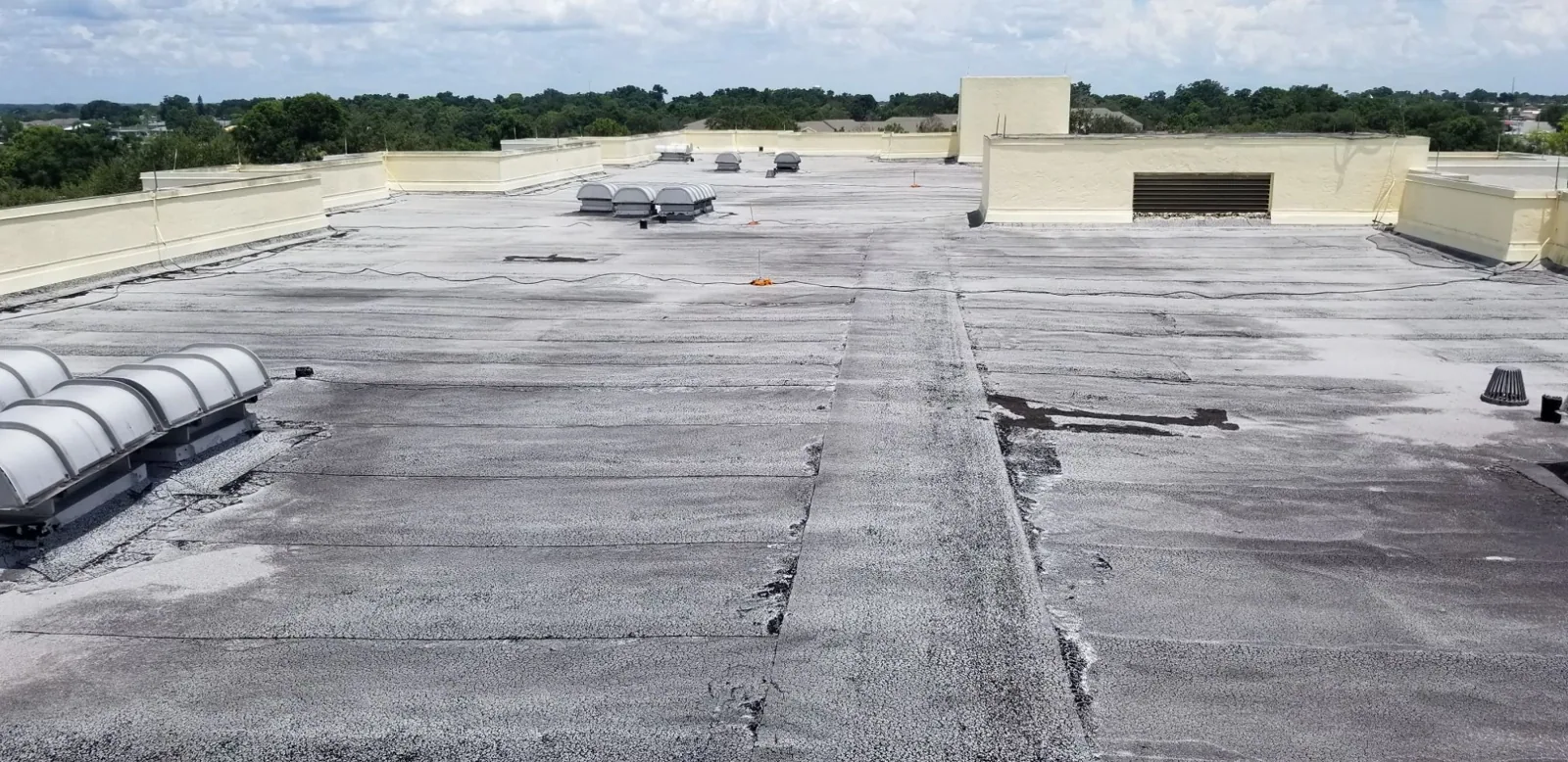
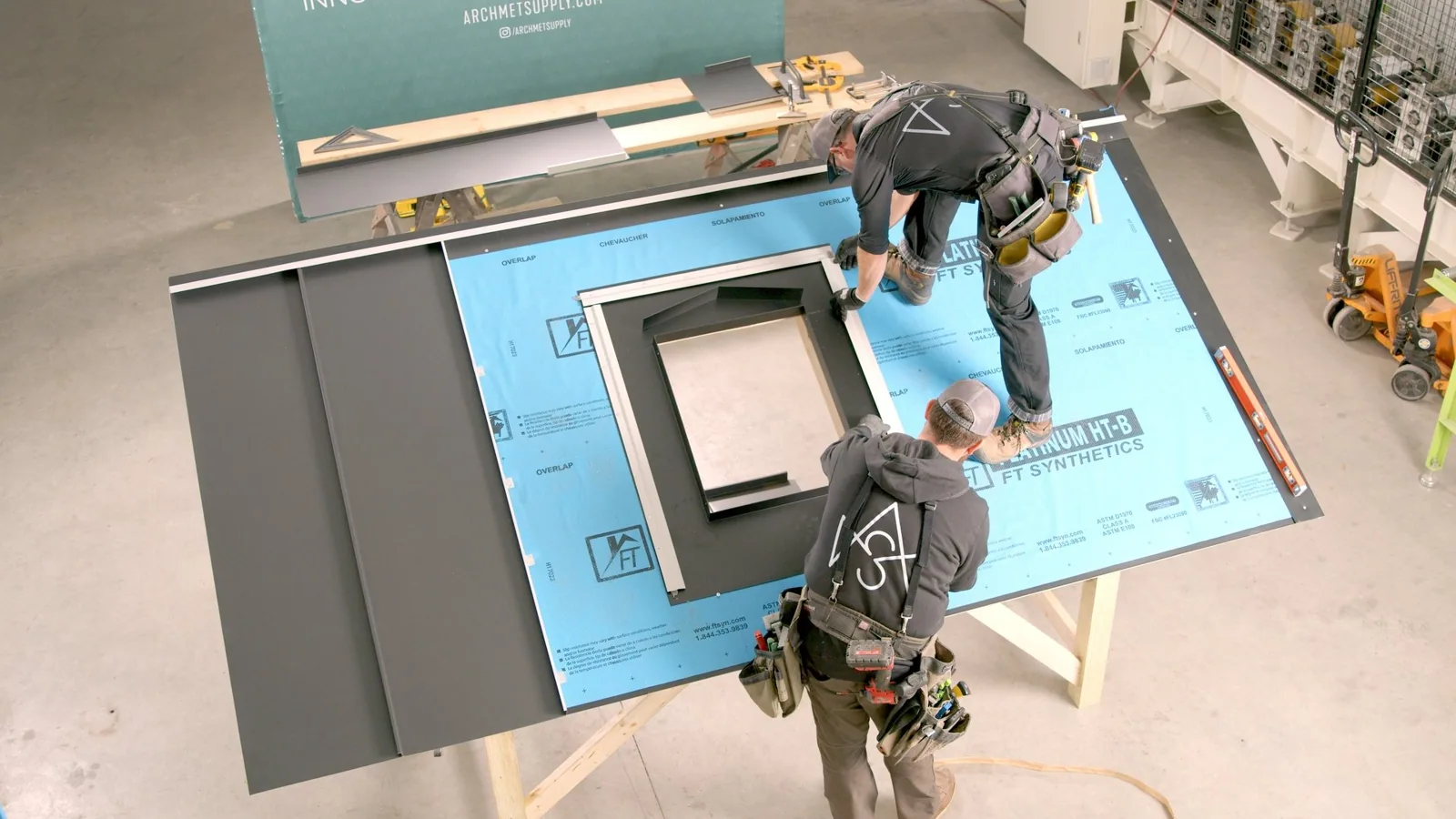
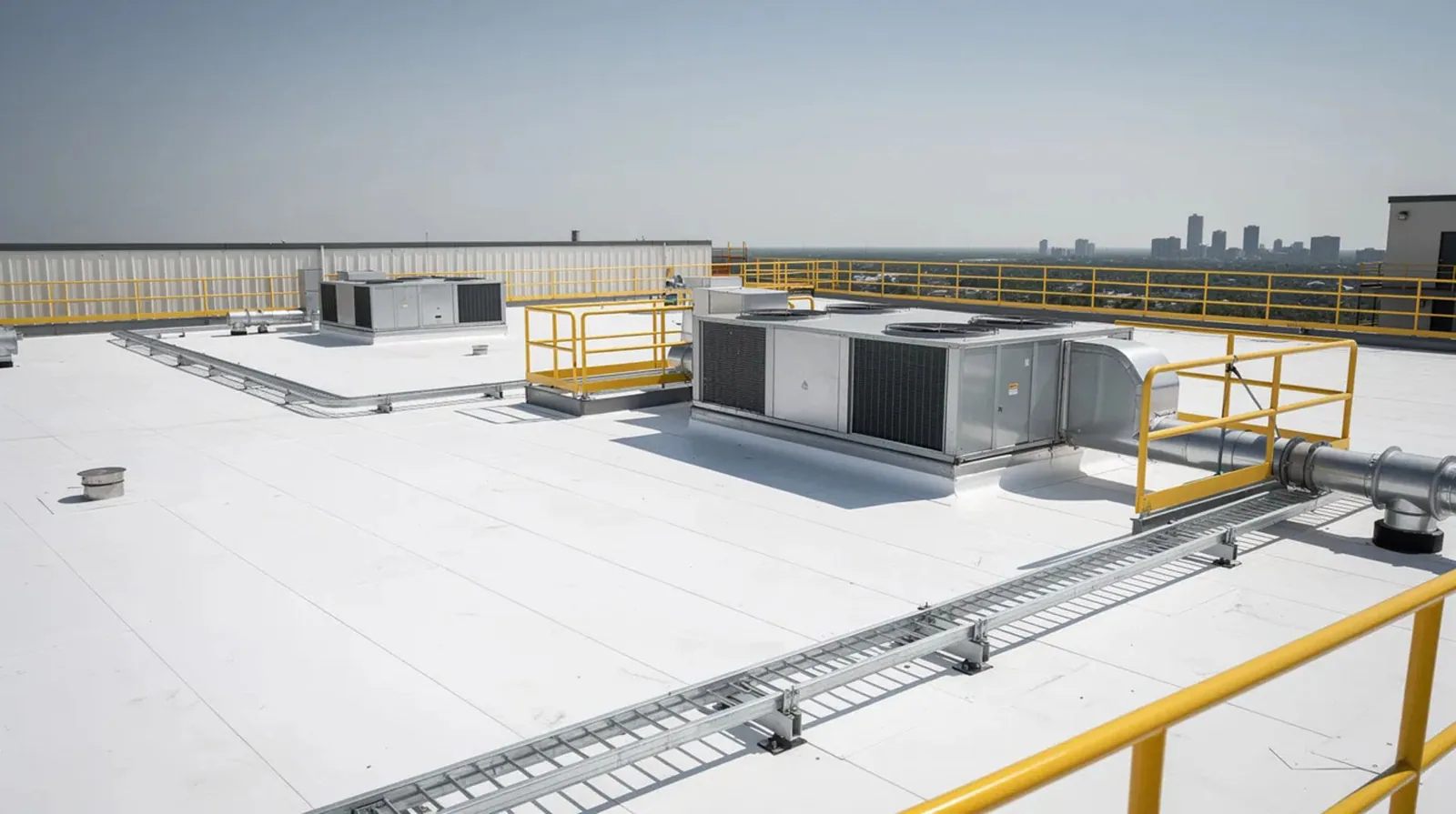
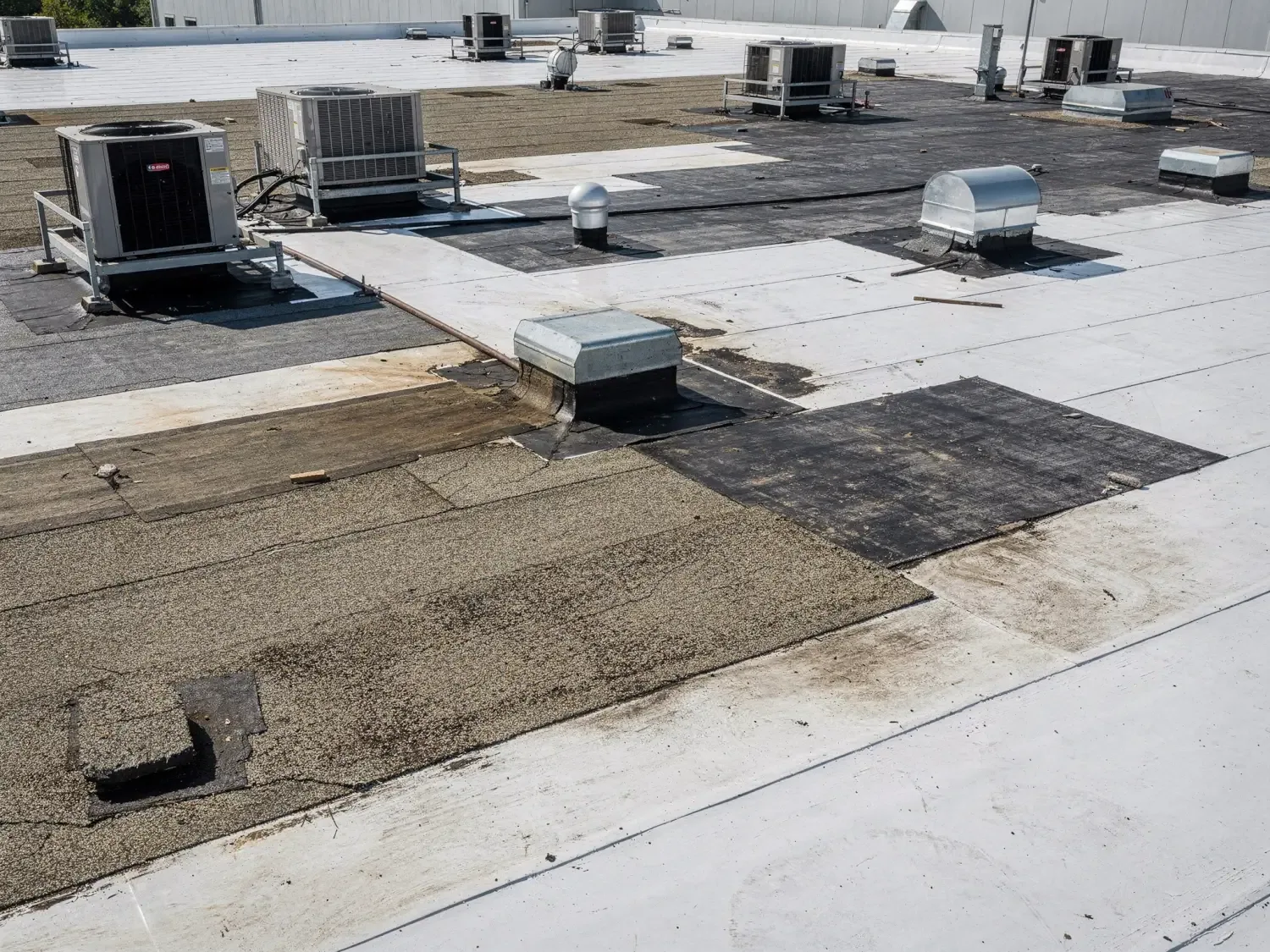
Equipment rails and pipe supports transfer load to the roof assembly. We inspect the support feet, bases, attachment points, protective pads, and membrane below them for crushing, abrasion, or displaced flashing. A moving pipe can stress a boot. A loose rail can shift equipment loads onto a narrow area. We mark the support and note whether the structure, frame, or attachment needs another trade's review before the roof connection can be repaired. If pads are brittle, missing, or pressed through the membrane, the repair needs to include the bearing area, not only the visible puncture. We photograph each base before moving equipment or debris.
We also check for abandoned supports or unused penetrations left after equipment changes. A capped pipe still needs a secure roof detail. An open mounting hole needs a repair compatible with the membrane and substrate. Where multiple units occupy one roof section, a manufacturing plant roof plan can help map each equipment group and identify access constraints without assuming all curbs are alike.
Water can collect behind a curb or rail if the roof plane is blocked. We inspect the upstream side, nearby drains, and any cricket that should carry water around the equipment. Ponding near a curb may reflect a slope issue, a clogged outlet, or a crushed insulation area. We distinguish those conditions before sealing the flashing. If a drain is restricted, clearing it may restore flow. If the roof plane still holds water, the area needs a slope assessment.
At a large Valwood roof, equipment can divide the surface into several small drainage paths. We mark the affected basin and note which drain or scupper serves it. A drainage inspection can address the bowl and outlet, while a tapered insulation review can determine whether slope needs correction. The curb repair should close the opening and preserve the water path instead of sending flow into another low area.
Before work, we confirm the equipment's operating status, roof access, protection requirements, and the area the mechanical crew may need. If the unit must be shut down or lifted, that work is coordinated with the mechanical contractor. We identify the roof opening and set a temporary close-in before any part of the assembly is exposed. Each curb or stand is repaired with compatible material, then inspected at corners, seams, and terminations.
When a storm has moved metal or damaged the membrane around a unit, we photograph the area before clearing loose material. A storm damage repair scope can separate fresh movement from older sealant wear. If wet insulation extends beyond the curb, test cuts can define the boundary before repair. For an active leak, our leak repair service traces the entry and documents temporary protection separately from the permanent work.
Equipment changes often disturb flashing, rails, and supports. A roof map should identify each unit, its curb, nearby pipe stands, and any repair that remains open. We photograph the detail before and after work, note which trade changed the equipment, and list items needing follow-up. That record helps the property manager direct later service to the same location and verify that the roof connection was restored after maintenance.
A photo-based roof condition report can keep curb repairs with the roof plan and inspection findings. The report notes what the roofing crew completed, what mechanical work remains, and any area that could not be accessed. On an industrial property in Carrollton, this distinction can keep a unit issue from being mistaken for a roof-wide failure. Arrange roof access and tell us which units must stay on, when service is scheduled, and where lift or staging work is allowed.
In many cases, the unit can remain in place if the detail is safely accessible. We coordinate the work area with the facility contact, protect the equipment, and repair the roof connection. If the curb or unit must move, that work needs coordination with the mechanical contractor.
A loose rail needs inspection at the roof attachment and membrane. If the rail itself, frame, or equipment support is unstable, the mechanical or structural trade may need to correct it before we complete the roof flashing. We identify which part belongs in the roofing scope.
Pipe movement can pull at the boot or its base and open a path for water. We check the pipe support and boot fit, then repair the roof detail after movement is addressed. A surface seal alone may not hold if the pipe continues to shift.
After equipment work is complete, we document the openings and close them with materials compatible with the roof system. The roof should be inspected after the mechanical crew has finished so abandoned penetrations, curb changes, and loose fasteners are not left beneath the new flashing.
Drainage protection starts with the roof plane, upstream side of the unit, nearby cricket, and outlet. If the curb blocks flow, a slope correction may be needed. We repair the flashing without sending water into a new low spot.
RELATED WORK
CALL US
Leaks, storm damage, a failing membrane or a replacement on the calendar: tell us what is happening on the roof and we will set up a visit.
Commercial Roofing Services
Share roof access instructions, equipment status, and any planned unit work. We will inspect curbs and supports, coordinate the roof scope, and record each repair by location.
Call 555-555-5555 or request a roof assessment online.