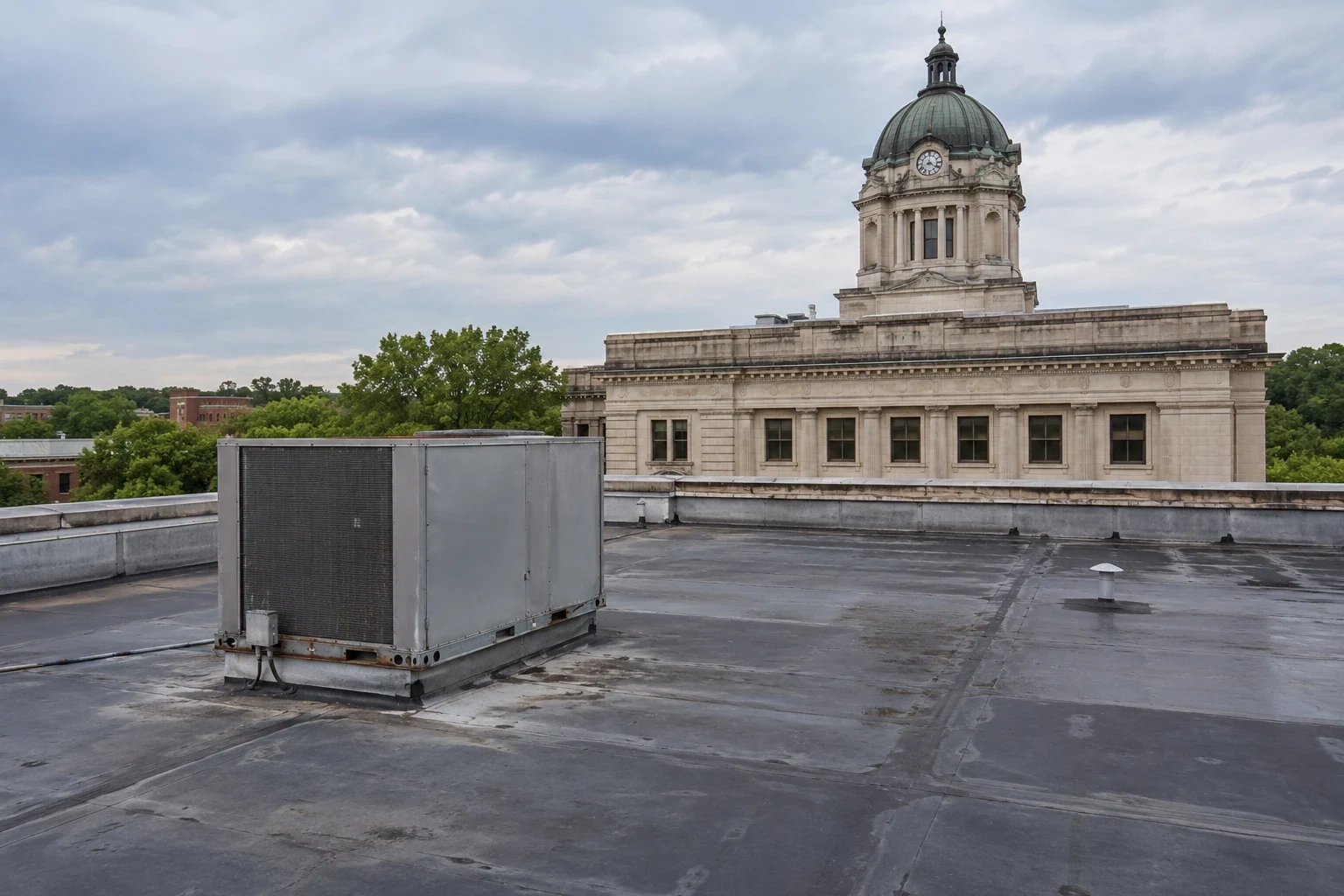
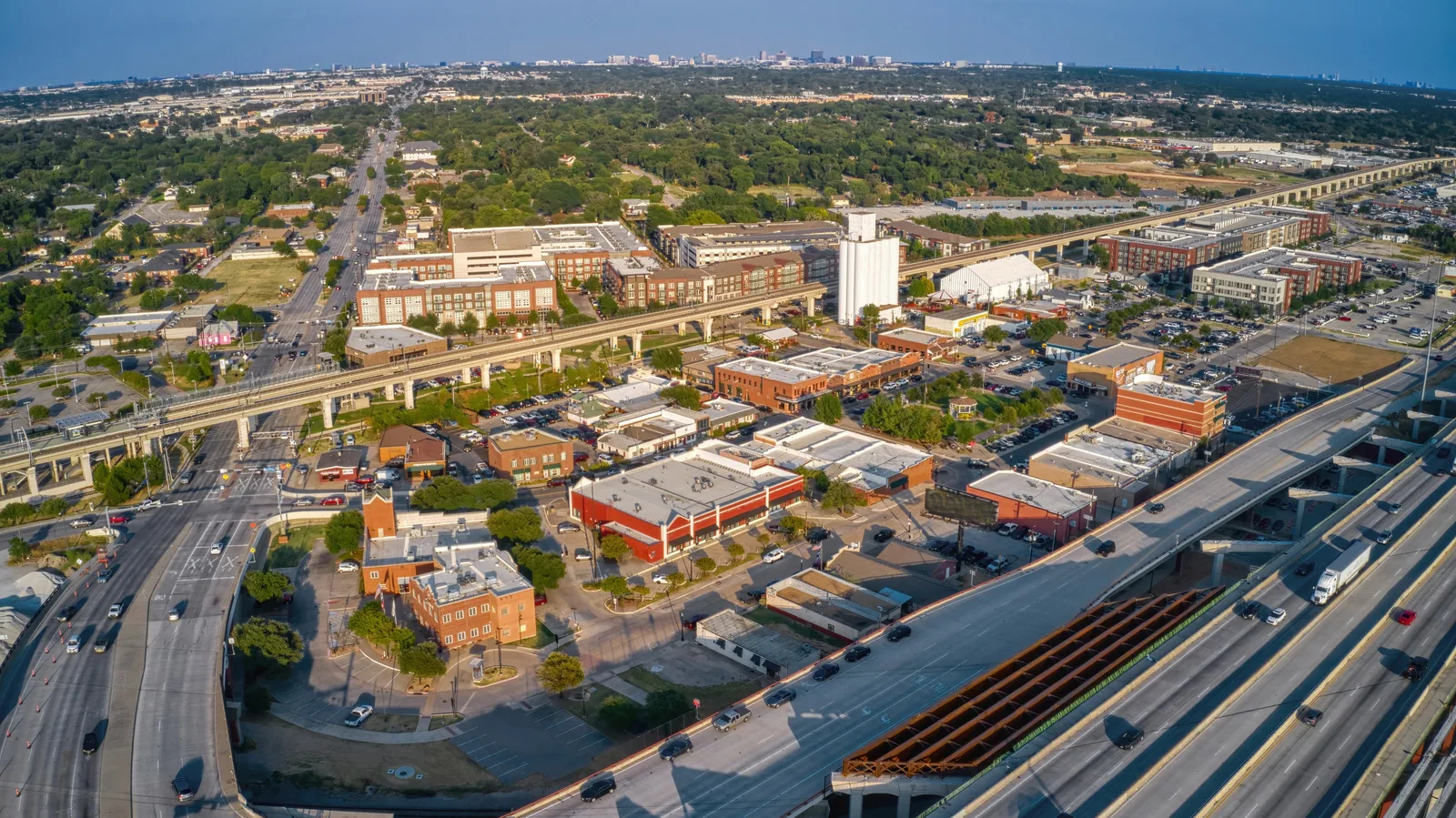
A stain above an occupied guest room can interrupt a stay before the roof source is clear. Hotel roofing in Carrollton, TX needs a plan that protects guests, service areas, and the building’s daily schedule. Addison Circle is planned with office, retail, hotel, and food uses, and the Grapevine Main Street district is served by hotel and airport shuttles. Those local details point to guest arrival and event access as practical scheduling concerns. We inspect the specific roof and coordinate work with the hotel manager before entering guest areas.
Hotel work may cross a service corridor, roof hatch, conference space, or guest-room floor. We confirm quiet hours, service-lift access, housekeeping routes, and areas where a guest notice is required. Materials move through an approved path and remain clear of the lobby, kitchen, and fire exits. If a repair requires access to a room, the manager identifies the room and approves the entry window before the crew arrives.
A hotel may have conference events, weddings, restaurant service, and airport shuttle schedules that change by day. We ask for the event calendar and identify which entrances or loading areas cannot be blocked. A phased hotel reroof plan can close work by roof zone while keeping guest areas below available. Daily close-in notes show whether a temporary barrier remains and who approved the return visit.
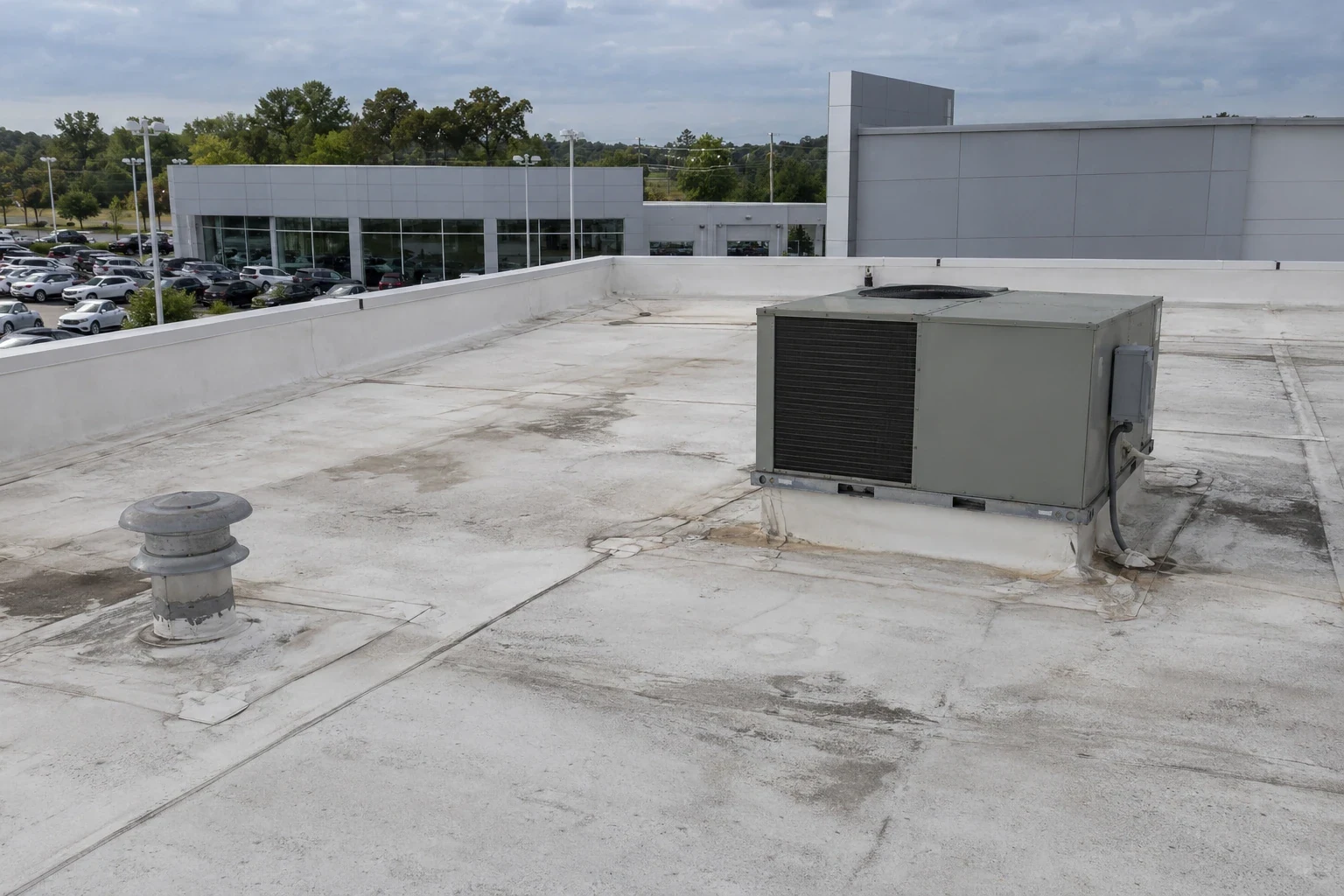
Water may travel from a roof detail along a deck, parapet, or pipe before it reaches a guest-room ceiling. We compare the room location with the roof above, then inspect curbs, seams, drains, and wall transitions along the likely path. A ceiling stain can dry while insulation remains wet. We use moisture checks or a controlled test opening if the assembly needs confirmation, then protect the room and close the roof the same day.
Reception can provide the date, weather, room status, and any earlier report. The roof map identifies the actual repair location so a room number is not confused with the source. A roof condition inspection can record the leak path and prior repairs. If water is active, we can respond around the clock, including nights, weekends, and holidays, to protect the opening and plan permanent work when the roof can be prepared.
Hotels use rooftop units for guest rooms, kitchens, meeting rooms, and back-of-house spaces. Exhaust fans, cooling equipment, pipe supports, and conduit can all create roof openings. We inspect curb corners, flashing, condensate paths, and nearby seams for movement or service damage. The engineer identifies which units must remain on and whether a shutdown window is available. We do not move equipment without the responsible trade’s direction.
When a fan or chiller is replaced, the new base may change the flashing height or leave an unused opening. We document the curb and supporting detail before a repair is applied. A curb and support review can map the connection. Where the building includes dining or retail space, a shopping center roof plan may address shared tenant routes, while an apartment roof assessment focuses on occupied residential access. Each scope remains tied to the hotel’s actual equipment map.
Drains, scuppers, and gutters carry water away from roof edges and guest-facing entries. We check the strainer, bowl, discharge, and the low areas around them. A clogged outlet can push water toward an interior wall or canopy. If the roof remains wet after nearby sections drain, we mark the low spot and check for compressed insulation or deck movement. A drainage review can document outlets separately from membrane or flashing repairs.
Once weather clears, the hotel engineer can identify room reports, blocked entrances, or equipment concerns for a targeted roof walk. We check edge details, rooftop units, skylights, and drainage, then coordinate any temporary protection with the active guest and event schedule. The hotel manager can identify which guest or event areas need temporary protection. If a ballroom or meeting space must stay open, we plan the roof work and any interior response around the event schedule and clearly mark when the area has been released.
Before closeout, we check the finished repair, clear safe-to-reach drains, and confirm the roof area is secure. The report lists the building section, room or suite reference if permitted, repair material, weather, and any return item. Photos follow hotel privacy rules and avoid guest information. A map helps engineering staff connect the repair to a roof zone without sending housekeeping or maintenance through occupied rooms to find it.
At Legacy West, the district includes offices, apartments, shopping, and hotel uses. For a hotel in the wider market, the day’s access plan still comes from its own operations. An replacement scope can be staged around occupancy, loading, kitchens, and event spaces. We note completed sections and the next tie-in so the manager can coordinate the following shift. If weather changes, temporary protection is labeled and the return inspection is scheduled separately.
For a taller property, the staging review also covers roof-hatch clearance, temporary barriers, and where tools can be secured between shifts. We identify who can authorize a room entry and who receives the end-of-day status. If a guest reports a new stain, staff can share its location and timing without assuming the nearest rooftop unit is responsible. The next inspection follows the recorded path, while guest-facing finishes remain protected and the service corridor stays usable.
Engineering can compare that record with earlier work orders, note whether the same roof zone has returned, and decide when a broader evaluation is justified. It helps the next shift distinguish a closed repair from a temporary cover awaiting follow-up.
We coordinate quiet hours, guest notices, access routes, and protection with the hotel manager. Work can often be divided by roof area, with room access limited to the approved window.
We protect the room, trace the roof source, and record any temporary containment separately. The manager can share the room status and access time so we can inspect the corresponding roof area.
The curb, flashing, condensate route, fasteners, and nearby seams should be inspected. We coordinate with the mechanical contractor and confirm who completed the roof-side close-in.
The sequence can be adjusted around events, deliveries, and occupied spaces if the roof sections can be closed safely. We use the event calendar and access rules to plan material movement and daily tie-ins.
Keep the roof zone, date, material, approved photos, and any room reference allowed by hotel policy. The report should help engineering return to the detail without exposing guest information.
RELATED WORK
CALL US
Leaks, storm damage, a failing membrane or a replacement on the calendar: tell us what is happening on the roof and we will set up a visit.
Property Types We Roof
Share quiet hours, event dates, occupancy needs, and equipment service windows. We will inspect the roof and plan repairs around guest access and weather.
Call 555-555-5555 or request a roof assessment online.