The top of a curb can dry and crack while the roof field beside it still looks sound. Commercial heat and UV roof damage repair in Carrollton, TX starts at the exposed details: seam edges, flashing, coating, fasteners, and metal transitions. We look for brittleness, loss of adhesion, open laps, or repeated patch failure, then check how far the condition extends. Surface age alone does not set the repair scope; the roof material and the observed defect do.
The Dallas-Fort Worth area has humid summers. Dallas-Fort Worth July and August daytime readings commonly sit in the 90s and can top 100 degrees. A roof absorbs that exposure across its membrane, flashings, and equipment supports. We inspect seams for separation, coatings for wear or poor adhesion, and penetrations for sealant that has lost flexibility. The field mark should identify each location so the property manager can compare it with past service records.
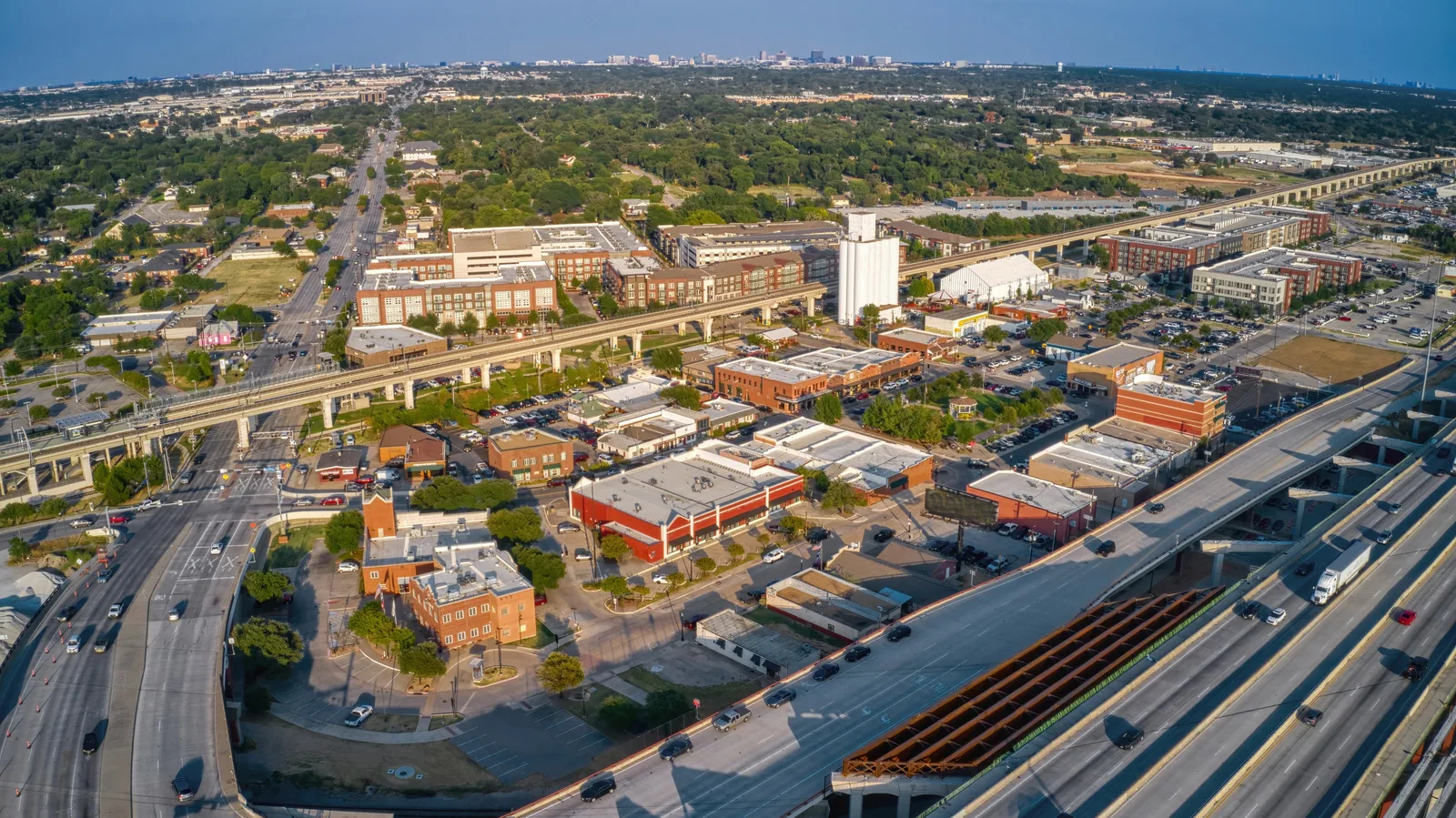
Carrollton’s industrial building stock spans Valwood, Midway South, and Trinity Mills. These districts include manufacturing and distribution uses, but their reported area or tenant mix does not establish the condition or size of any roof. A Trinity Mills roof walk begins at the actual building and its access contact. The inspection looks at exposed transitions and drainage, then records which areas need repair now and which should be watched.
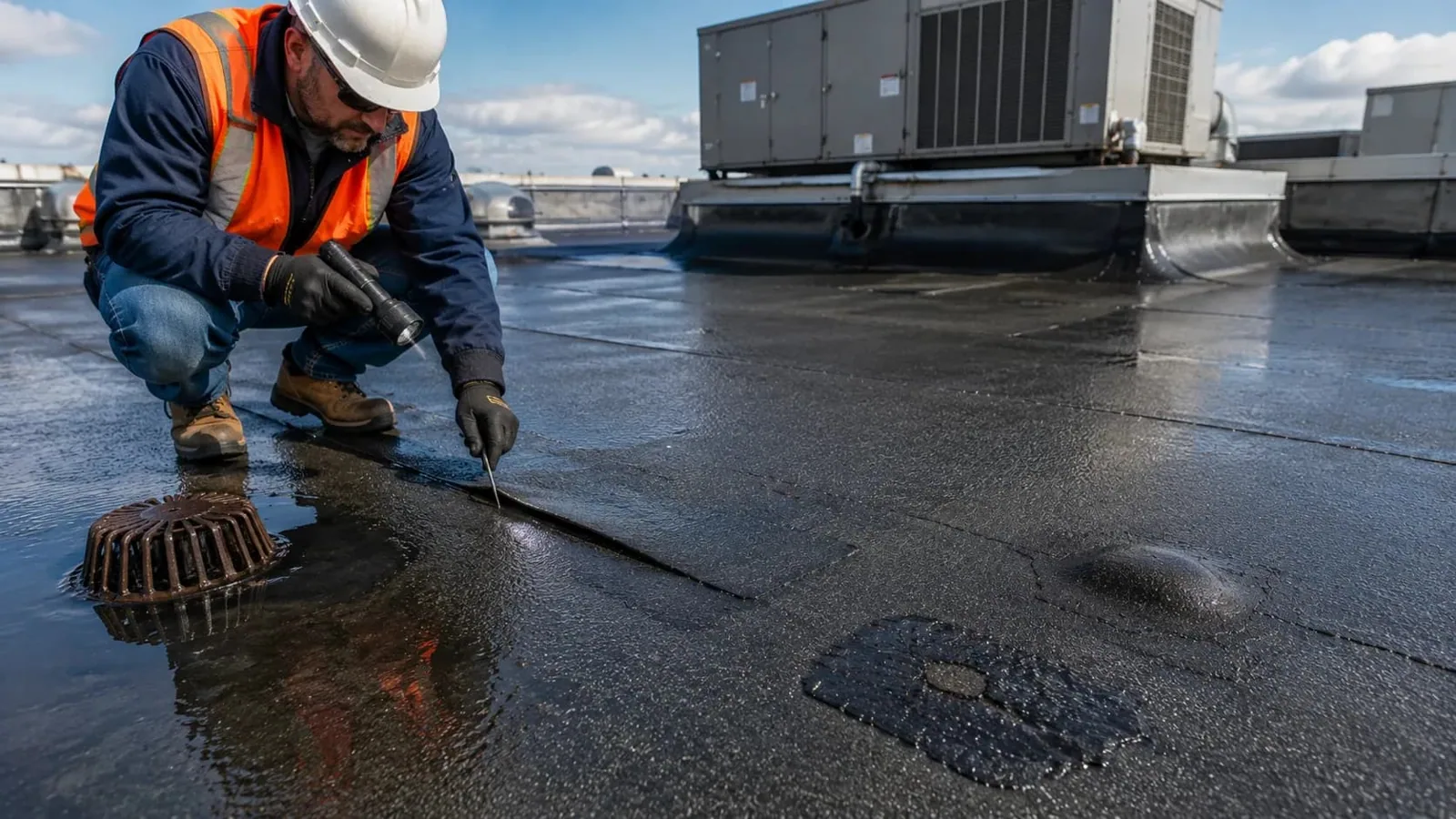
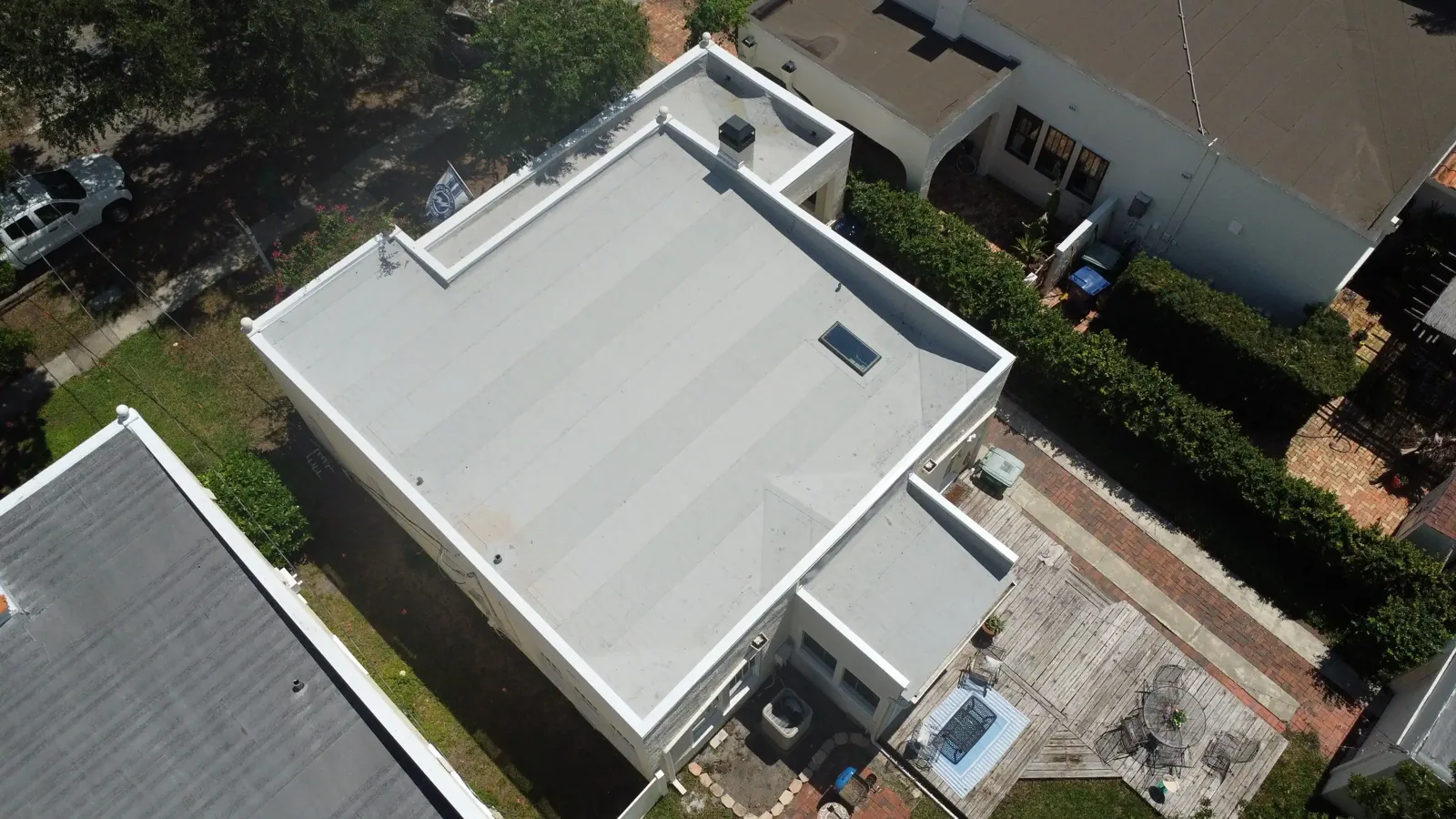
Sun exposure can age coatings and exposed membrane surfaces, but a faded or chalky appearance alone does not prove that water can pass through the assembly. We check the surface for cracks, blisters, exposed reinforcement, open seams, and weak flashing. On metal, we inspect fasteners, panel joints, and edge details for movement and water entry. A coating may be an option when the existing substrate remains suitable; it cannot correct wet insulation or a failing deck.
Water behavior matters. We note any low area where heat and repeated wetting meet a seam or penetration. A seam failure inspection can address an opening in the membrane lap, while flashing repair deals with a curb, wall, or pipe transition. The findings should distinguish a surface condition from a confirmed breach so the owner can choose the appropriate next step.
A coating system needs a sound substrate and compatible existing surface. If moisture is trapped below the membrane or insulation is wet, coating over it can leave the underlying condition unresolved. We inspect drainage, blisters, repair edges, and transitions, then identify whether moisture testing or a test cut is needed. The report names the area to test and what decision the result would support.
A roof with localized wear may need a targeted repair or restoration. Wider deterioration, wet layers, or recurring leaks may call for replacement instead. Our infrared moisture survey can help map areas for further examination when the method suits the roof. A roof coating restoration scope can set preparation, repairs, and application limits where the assembly is suitable. We explain the substrate assumptions before coating is proposed.
Roof materials expand and contract as temperatures change. A panel clip, curb flashing, or termination may move differently from the surface beside it. We check fasteners, panel joints, sealant lines, and membrane transitions for a gap that repeats along the same detail. A metal roof repair must preserve the panel’s movement path; a rigid patch across a moving joint can fail again. The repair detail should match the system’s construction.
Carrollton also experiences winter freeze-thaw exposure, even though sustained snow loading is less relevant in the metroplex than recurring temperature changes. Seasonal movement can expose a weak connection, but only the field condition establishes what needs work. For a metal roof with loose seams or clips, a standing seam system inspection can document the panel connection. For a low-slope membrane, the same roof walk checks lap edges and curb details under current conditions.
Adhesives, primers, sealants, and coatings have installation requirements that depend on surface condition and temperature. A sunlit roof can be hotter than the air, and wet surfaces or wind can change how the work proceeds. We check the product requirements and select a weather window that allows preparation and curing. If a repair area cannot be completed safely before conditions shift, the crew sets a sound close-in point rather than leaving an exposed section.
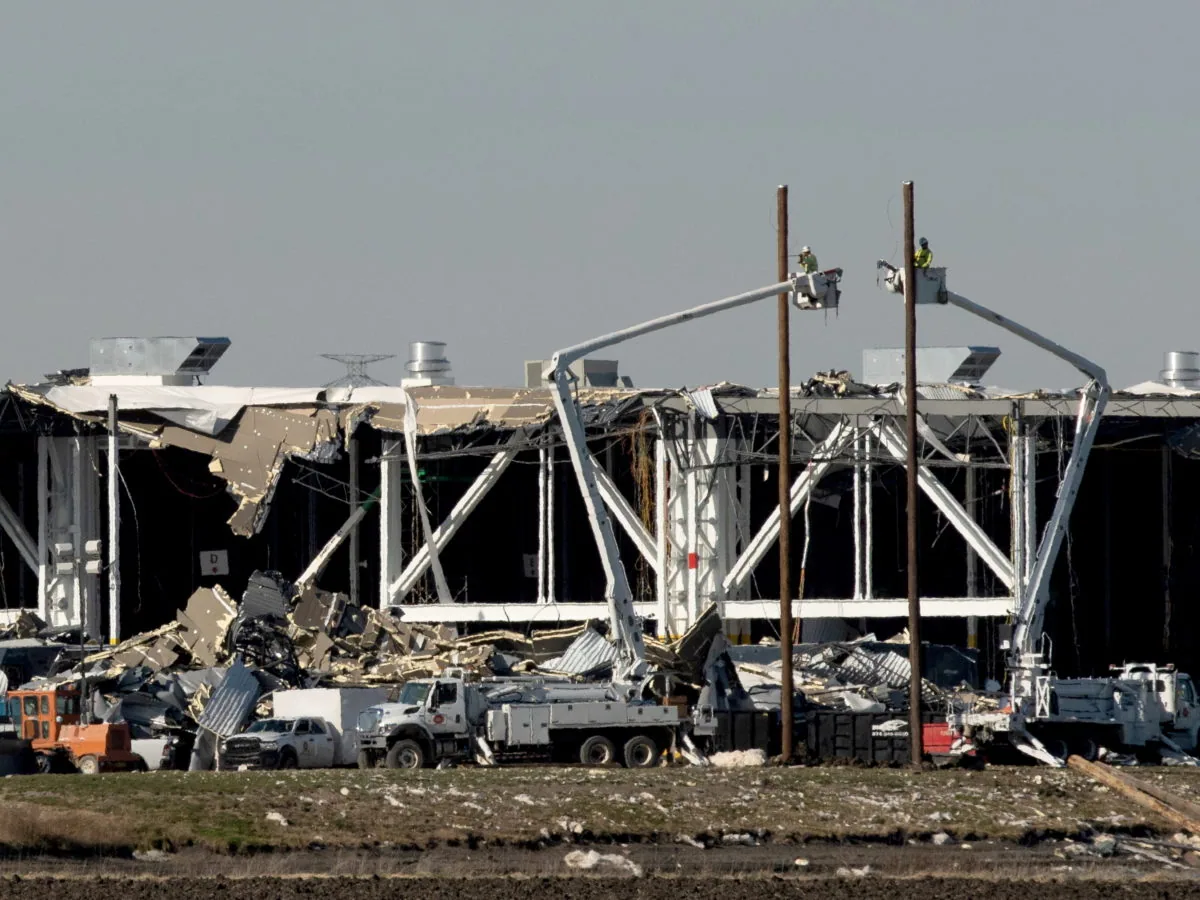
After spring storms, a roof may need both impact inspection and attention to heat-aged details. Dallas-Fort Worth severe weather can include hail, damaging wind, and heavy rain, but a storm report does not identify damage to a specific building. A storm damage roof assessment records observed conditions. If summer sun has opened the membrane at a curb or lap, we scope that repair by material and extent, not by the season alone.
A roof maintenance record can show whether a seam, coating edge, or sealant joint is changing from one inspection to the next. We date the photos, mark the roof section, and note any movement or deterioration at the same detail. Drainage and edge conditions also belong in the record because water can keep a vulnerable area exposed after a storm. If the roof is performing, the report can still identify the next useful inspection point.
The planned International Business Park includes office, industrial, and retail development in part of Carrollton. Property managers there may need to track several kinds of building, but the district plan does not identify the roof assembly on a particular property. Our preventive maintenance program can record roof conditions by property and section. For a manager handling multiple locations, portfolio-level roof records can support scheduling while each repair recommendation remains tied to its address.
We identify the damaged surface, system material when known, area repaired, and any moisture or substrate question that remains. Photos show the detail and repair boundary, and the closeout states whether the work is permanent or temporary. If coating or replacement is recommended, the report explains what observation led to that option and what needs to be confirmed before work expands.
A service visit near Downtown Carrollton or Trinity Mills can be coordinated with another property stop when access lines up. The property contact still confirms roof access, staging, and the work window for each address. We return the inspection record to that contact with the condition, repair choice, and next step stated plainly. A future roof walk can then compare the same marked details after another hot season or storm.
Not by itself. We check for cracks, exposed material, open seams, moisture, and substrate condition before recommending repair, coating, or replacement.
A coating may fit when the existing substrate is sound and compatible. Wet insulation, failing details, or a damaged deck need to be addressed before coating is considered.
Surface temperature, product requirements, and safe work conditions determine the installation window. We plan preparation and close-in around those site conditions.
Temperature movement can stress panel joints and attachments. We inspect the seam, clips, and adjoining flashing to identify the actual condition before repair.
The report should identify roof material, exposed details, visible wear, moisture concerns, photos, and the repair boundary. We also state any area that could not be reached.
RELATED WORK
CALL US
Leaks, storm damage, a failing membrane or a replacement on the calendar: tell us what is happening on the roof and we will set up a visit.
Roof Damage Repair
Share the building address, roof type, maintenance history, and any recurring leak locations. We will inspect exposed seams, transitions, and coating condition, then define a practical repair or restoration scope.
Call 555-555-5555 or request a roof assessment online.