
A split at the top of a roof curb leaves a narrow path for wind-driven rain. Commercial roof flashing failure repair in Carrollton, TX starts at that transition, where membrane meets a wall, pipe, equipment base, or roof edge. We inspect the flashing height, termination, corners, and adjacent membrane, then trace the likely water path. A bead of sealant may conceal an open lap for a short time, but the repair needs to restore the actual connection between materials.
Flashing moves where different materials meet. Temperature changes, equipment vibration, metal movement, and earlier repairs can stress a corner or termination. We look for a pulled membrane, cracked sealant, open counterflashing, loose fasteners, or a wrinkle that lets water pass behind the detail. A roof mark and close photo show whether the problem is at the curb, wall, pipe, drain, or edge, rather than grouping all findings under one general label.
Carrollton summers are hot. Dallas-Fort Worth has a spring severe-weather peak, with damaging winds and flooding somewhere in the region nearly every year. Those conditions can expose an already weak transition, but a weather event does not prove the cause at a specific building. At a logistics property in Frankford Trade Center, we confirm the building's access route and operating limits before selecting a repair. We inspect the roof system and identify the flashing detail in the field.
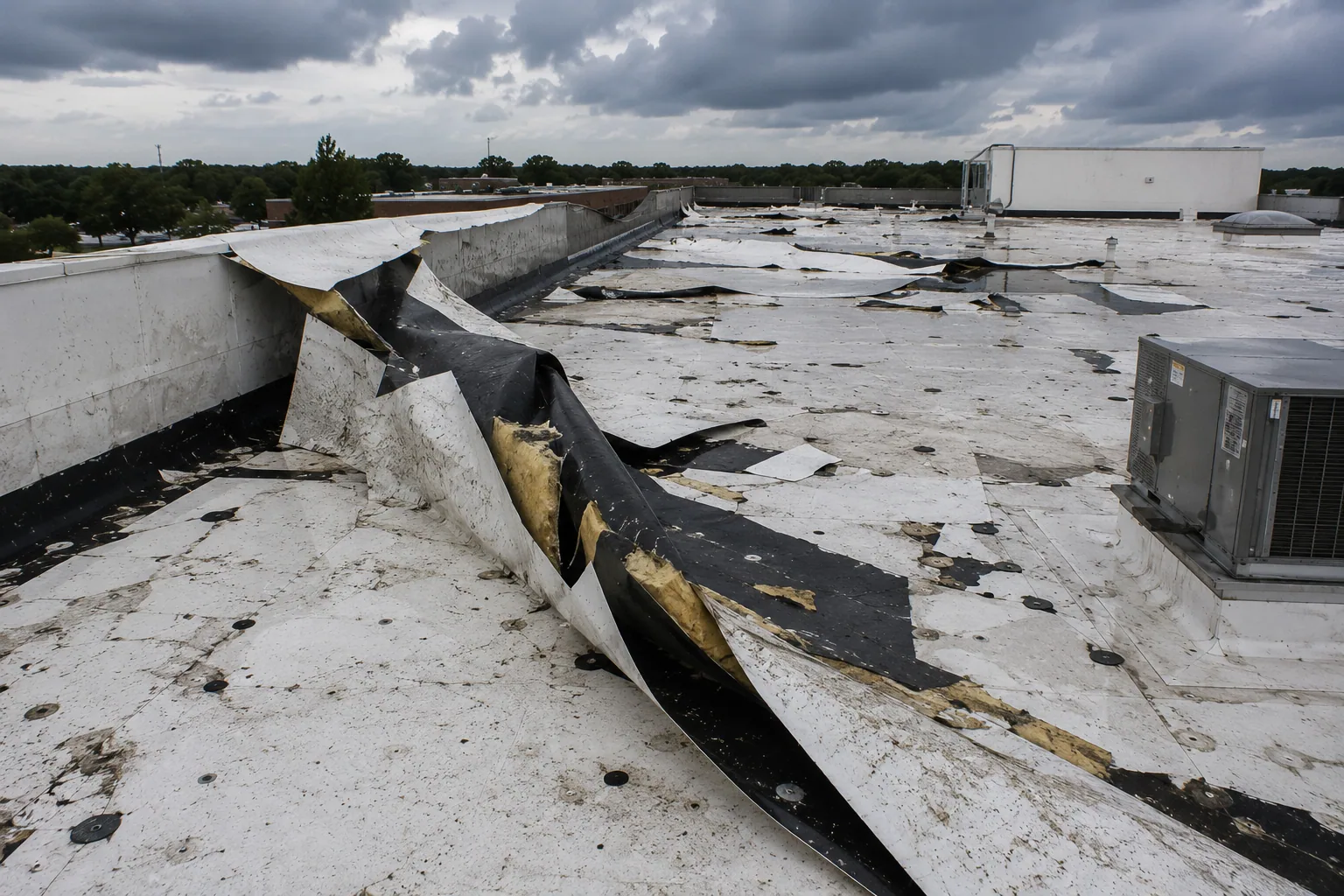
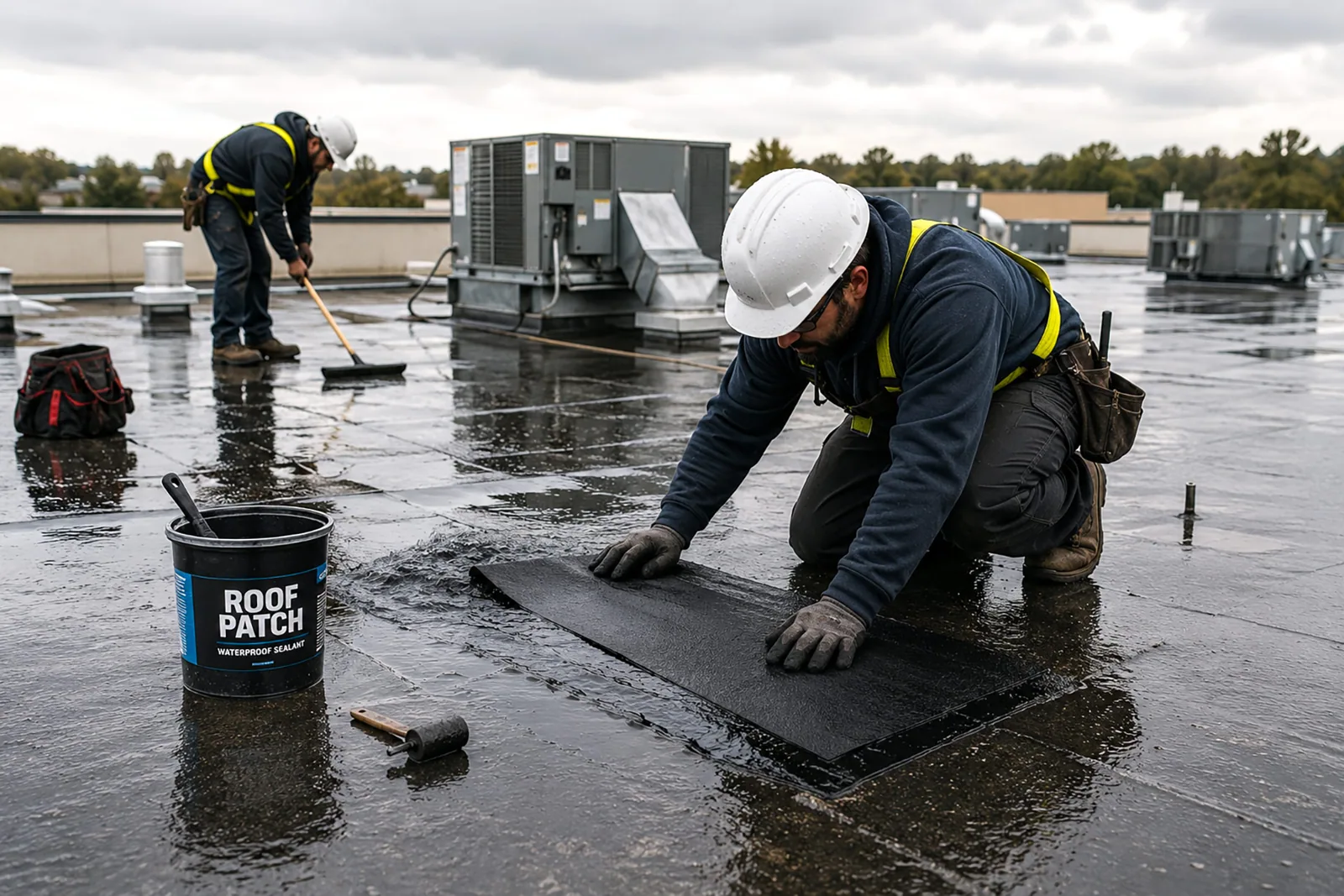
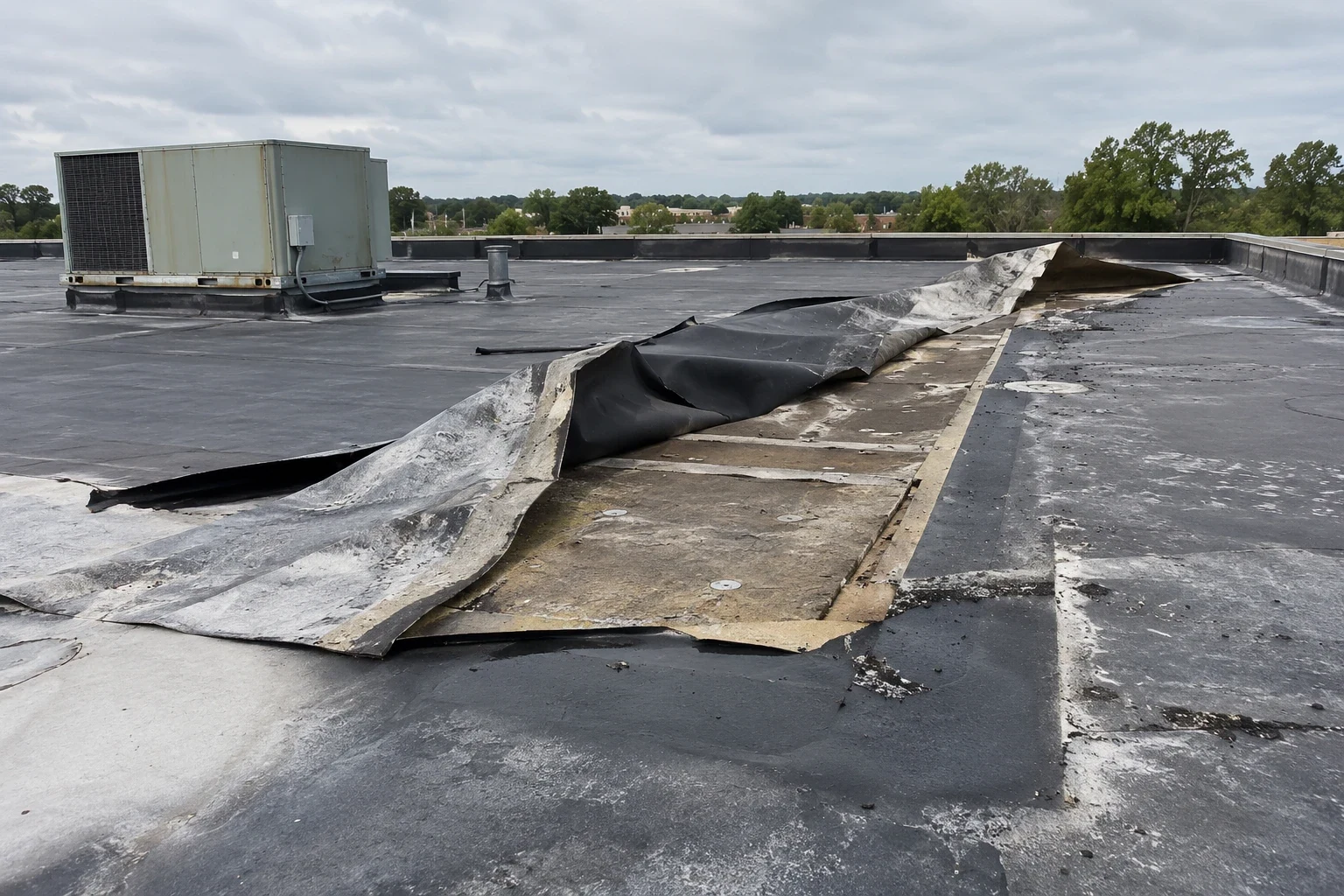
Water can travel along a curb, under a membrane lap, or across insulation before it reaches the ceiling. We compare the room report with roof details above and nearby, then inspect drains and seams that may connect to the same path. If the membrane feels soft or moisture appears to extend beyond the flashing, we identify the need for further testing instead of assuming a surface repair will solve the leak.
A test cut can show the layers at a selected location, while an infrared or other moisture survey may help map areas for closer evaluation. The choice depends on weather, roof assembly, and the question being answered. A commercial leak repair inspection can trace a reported opening. If water remains around the detail after rain, a ponding-water assessment can examine whether drainage is adding exposure to the same transition.
Repair starts by removing loose or incompatible material, preparing a sound surface, and rebuilding the flashing in a way that suits the existing roof. On a single-ply system, the patch or welded membrane must tie into clean, compatible material. Metal counterflashing may need to be reset or replaced. A pipe or curb detail may call for a new boot or a field-formed transition. We state what will be removed and what condition underneath could change the repair limit.
Coating over an open lap does not restore a termination that has separated. If the roof membrane itself has split, a seam repair may be needed beside the flashing work. On metal roofs, a failed panel transition or perimeter detail can involve a different assembly and fastener layout. Our metal roof retrofit assessment can establish what remains and where a repair can tie in. The repair description should match the roof material, not just the shape of the leak.
Roof flashing work depends on surface dryness, temperature, wind, and the installation requirements of the membrane, sealant, or metal being used. Dallas-Fort Worth heat can shorten the comfortable work period on an exposed roof, while spring storms can reduce the time available before rain. We plan the amount of material to remove, how the area will be closed in, and what protection is needed if conditions change before the repair is complete.
Addison Airport supports corporate and business aviation, and its surrounding business district includes airport-related industrial activity. Across a commercial portfolio, a site may have restricted access or equipment movement that affects the visit. A emergency roof repair can address an active opening, then a scheduled return can complete the permanent detail when conditions allow. The property contact helps confirm the access window and any roof restrictions.
A written scope identifies the flashing location, material, work boundary, and any adjoining roof layers that will be disturbed. It says whether the repair is limited to the curb or extends into a seam, membrane field, or wet insulation. If the detail is concealed, the proposal explains what will be checked when it is opened and how a changed condition will be reviewed. That gives the owner a clear basis for approving the repair and tracking anything deferred.
At Trinity Mills Industrial Park, property types sit near the transit hub and along the Midway Road and Belt Line Road area. The district's location helps orient a service visit, but the correct access point and roof assembly come from the property contact and field inspection. A roof inspection with marked photos can establish the transition condition before repair. Afterward, a maintenance walk can revisit the repaired flashing and nearby drainage points.
Closeout photos should show the repaired corner, lap, termination, or counterflashing and enough surrounding roof to locate it later. We record material used, date, repair limit, and any adjacent condition that remains open. If a temporary cover was used before permanent work, the record distinguishes the two. A future leak call can then be compared with the exact detail rather than a broad note that flashing was repaired.
When an inspection cannot reach a section or verify the substrate, that limit is stated. A report should not imply that concealed layers were confirmed when no test was made. We send the findings to the contact named for the property and list any follow-up needed after a rain or after access becomes available. The closeout keeps the repair grounded in the roof detail that was inspected and worked on.
Common signs include an open lap, pulled membrane, split sealant, loose counterflashing, or a gap at a curb or pipe. We inspect the full transition before setting the repair limit.
Sealant may be part of a repair, but it cannot replace a separated membrane termination or loose metal. We identify the failed connection and rebuild the detail to suit the roof system.
Water may travel under the roof surface or along a curb before appearing inside. We compare the interior report with nearby seams, drains, and transitions to trace the path.
Timing depends on the detail, access, roof material, moisture, and weather window. The scope identifies the work area and any condition that could extend the repair.
We look for signs of moisture and recommend a survey or test cut when the assembly needs confirmation. Any concealed condition is identified separately from the visible flashing repair.
RELATED WORK
CALL US
Leaks, storm damage, a failing membrane or a replacement on the calendar: tell us what is happening on the roof and we will set up a visit.
Roof Damage Repair
Tell us which curb, wall, pipe, or roof edge is leaking and whether water is active. We will inspect the transition, mark the repair limit, and document what the roof needs.
Call 555-555-5555 or request a roof assessment online.
