
A seam that has started to lift can look narrow from the roof walk and still have a longer weak section beneath the edge. Commercial roof seam failure repair in Carrollton, TX starts by identifying the membrane or panel system and checking the full lap, termination, and nearby drainage path. We mark where the seam is open, inspect the substrate and adjacent material, and determine whether the defect is isolated or connected to a broader repair. The patch method has to fit the existing assembly.
On a single-ply roof, seam separation can follow a missed weld, contamination, movement, or an earlier repair that no longer bonds. On modified bitumen, a lifted lap or exposed reinforcement needs a different repair approach. Metal panels can have a seam or fastener condition that responds to movement and wind. We check the length of the opening, whether edges remain sound, and whether water has entered below the visible split.
North Texas has spring storms that can bring damaging wind and heavy rain. A storm can expose an existing weak lap or create a new opening; we inspect and document the seam’s current condition. At Trinity Mills Industrial Park, a reported industrial site lies near Belt Line Road and Midway Road. The building’s roof map and access contact, not the district description, guide the inspection. We mark the location and photograph the seam before repair.
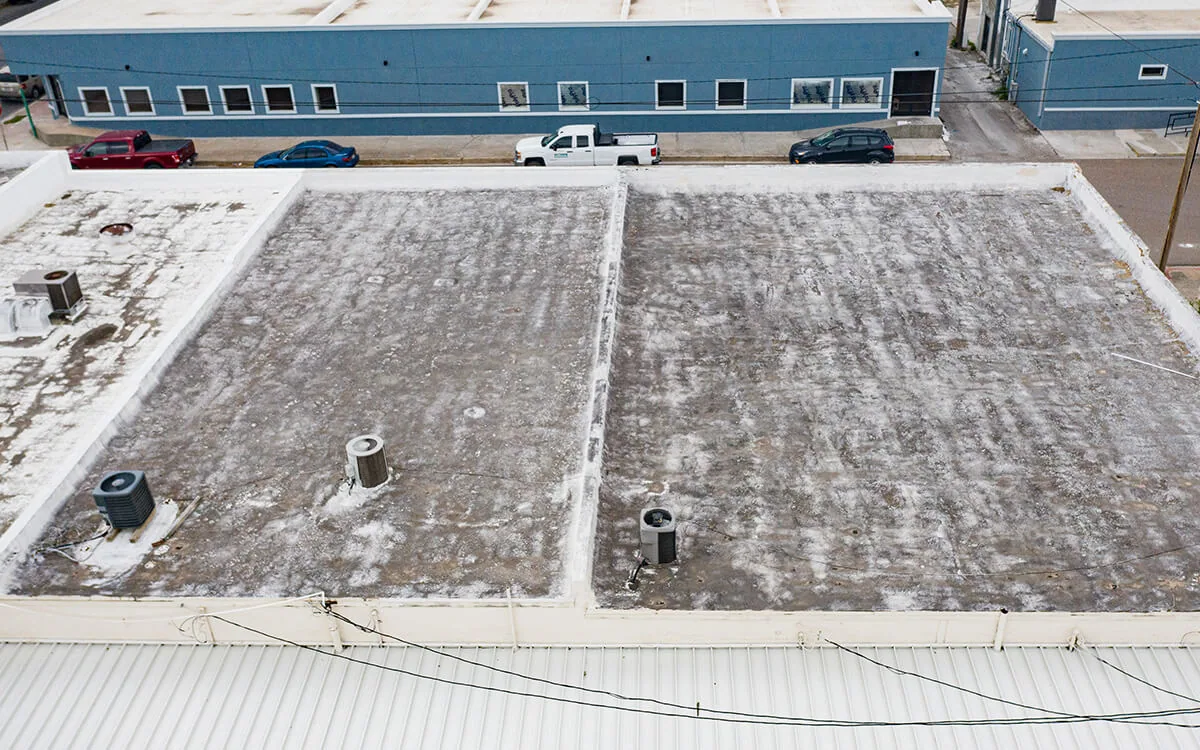
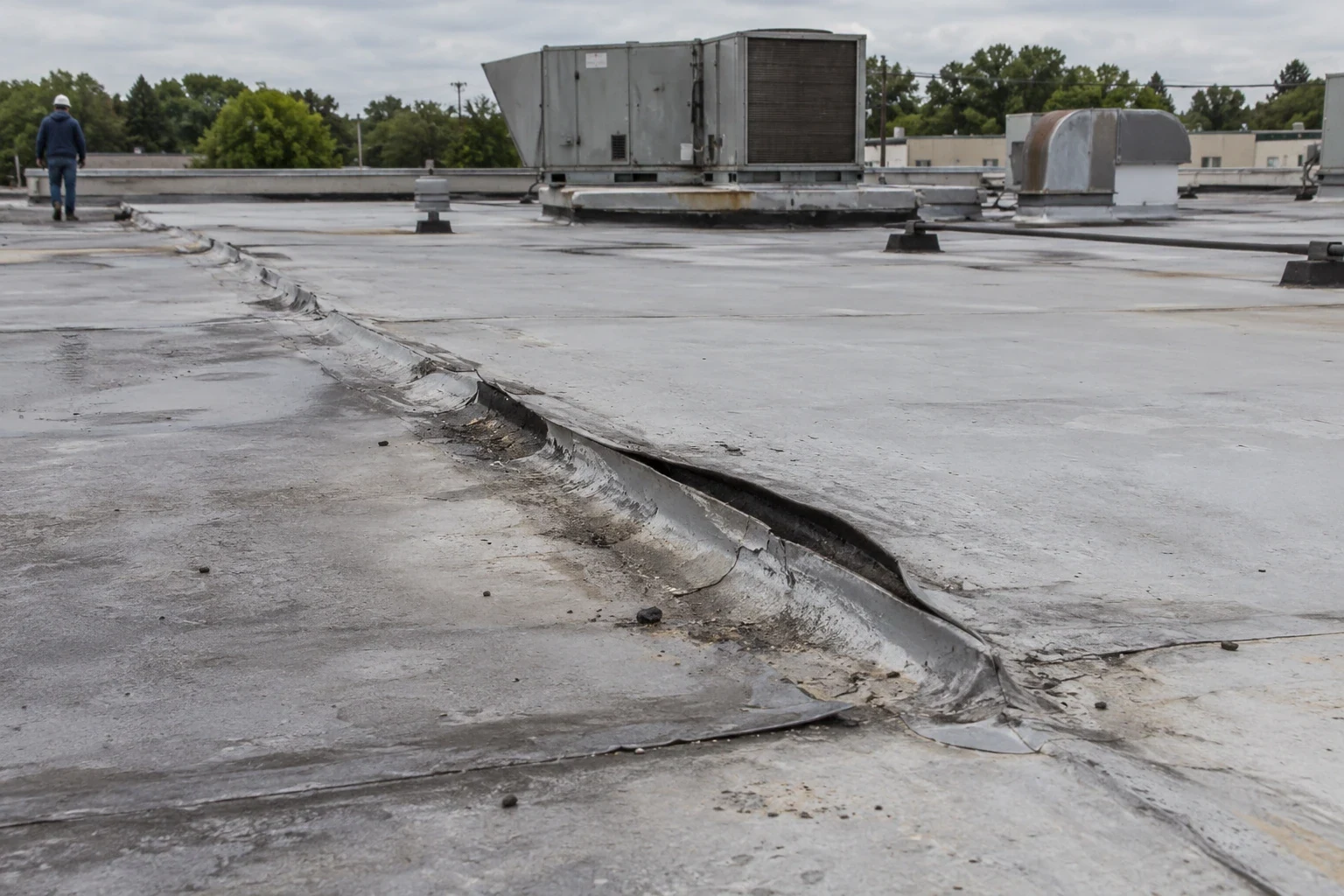
Water can travel along the seam and spread into insulation before appearing inside. We inspect the interior report, roof slope, drain route, and nearby penetrations to understand the likely path. Soft areas, staining, or a repeated ceiling mark may mean the repair needs to extend beyond the open lap. Where the condition is not visible at the surface, we may recommend a moisture survey or a test cut to confirm the layers.
A repair that closes the top of a seam over wet material can leave a concealed problem in place. The scope identifies what can be confirmed without opening the assembly and what needs authorization for testing. Our infrared moisture survey can help locate areas for follow-up. If the leak appeared at a curb or wall transition beside the seam, a flashing failure inspection addresses that separate connection.
A welded thermoplastic lap needs clean, compatible membrane and a controlled weld; a patch is not simply pressed onto a dirty or wet surface. EPDM seams rely on compatible adhesive or seam tape and careful surface preparation. Bituminous systems use their own materials and tie-in details. We identify the system before describing the repair, then remove loose material and restore the seam with enough sound overlap to form a continuous water-shedding surface.
The repair limit also depends on how far the edge has separated and whether the underlying surface is stable. A TPO seam repair follows the thermoplastic system’s installation method, while a rubber membrane repair uses a compatible EPDM detail. If a metal panel seam or clip has moved, a standing seam roof review can identify the relevant panel connection. The work should not cross into a different system without a defined transition detail.
We document the interior location and map it to the seam, but the repair boundary follows the roof material. If the split ends at sound material, a localized patch may be appropriate. If the lap is open across a long run, multiple seams are failing, or wet insulation continues beyond the opening, the scope may need a wider section. We explain the reason for the limit and identify the condition that would change it after the roof is opened.
For ongoing water entry, temporary protection can reduce exposure while the permanent detail is prepared. A leak repair visit can trace the path and record the opening. If a storm event affected several parts of the assembly, a wind damage inspection can map the visible conditions and outstanding questions. The owner receives a recommendation tied to the observed roof, not a blanket statement that every seam needs replacement.
Some seam repairs require a dry surface and a temperature range suitable for the membrane or adhesive. Wind affects safe roof access and can complicate material handling. Carrollton summers are hot, while winter precipitation and freeze-thaw conditions arrive in the metroplex each year. We plan the work around actual site conditions and product requirements, and we identify how the repair will be closed in if weather moves in before the shift ends.
Where material has been opened, the daily stop point matters. We remove only the area that can be repaired and made watertight within the available window. The property contact confirms roof access, interior protection needs, and any work-hour restrictions. If conditions prevent permanent repair, we communicate the temporary protection and the return plan rather than leaving the scope unclear.
A repaired seam should be easy to find on a later visit. We record the roof area, repair material, work date, and photographs, then note adjacent laps that may need observation. A maintenance walk can check the repaired section and the drainage route around it. If the same seam opens again, the history helps determine whether the substrate, movement, or a wider assembly problem needs investigation.
Valwood’s industrial district contains a broad mix of manufacturing and distribution buildings, while International Business Park includes planned industrial, office, and retail uses. Those local building contexts make roof access and section identification important for property staff, but they do not tell us what system is installed at a given address. Our preventive maintenance record keeps the observed condition tied to that building. The next visit can compare the seam with the prior field mark and repair note.
The closeout states the roof system when known, seam location, preparation and repair material, weather conditions, and whether the repair is permanent. Photos show the finished lap and adjoining surface. If moisture testing or a test cut was deferred, the report says why and lists the next step. The property manager can then track the repair without confusing it with a separate curb or drain issue.
A roof seam is one connection in a larger assembly. If an inspection finds edge movement or a failed flashing nearby, those conditions are recorded separately and scoped on their own merits. We return the repair note to the site contact, including any access limitation and recommended follow-up. That gives the maintenance team a clear basis for its next roof walk and avoids losing the location in a general storm file.
A failed weld, poor surface preparation, movement, weather exposure, or an aging lap can contribute. We inspect the full seam and system before identifying the cause or repair limit.
A localized repair may work when the surrounding membrane and substrate are sound. If the opening extends or moisture is widespread, we describe the larger area that needs review.
The method depends on the assembly. Thermoplastic, EPDM, bituminous, and metal systems each require compatible preparation and materials.
Water may have reached insulation or deck below the visible split. We identify whether moisture testing or a test cut is needed before closing the assembly.
A permanent repair often needs a dry surface and conditions suitable for its materials. We assess safe temporary protection if the roof cannot be repaired in the current window.
RELATED WORK
CALL US
Leaks, storm damage, a failing membrane or a replacement on the calendar: tell us what is happening on the roof and we will set up a visit.
Roof Damage Repair
Share the roof type, seam location, leak report, and site access details. We will inspect the full lap, document moisture concerns, and recommend a compatible repair.
Call 555-555-5555 or request a roof assessment online.
