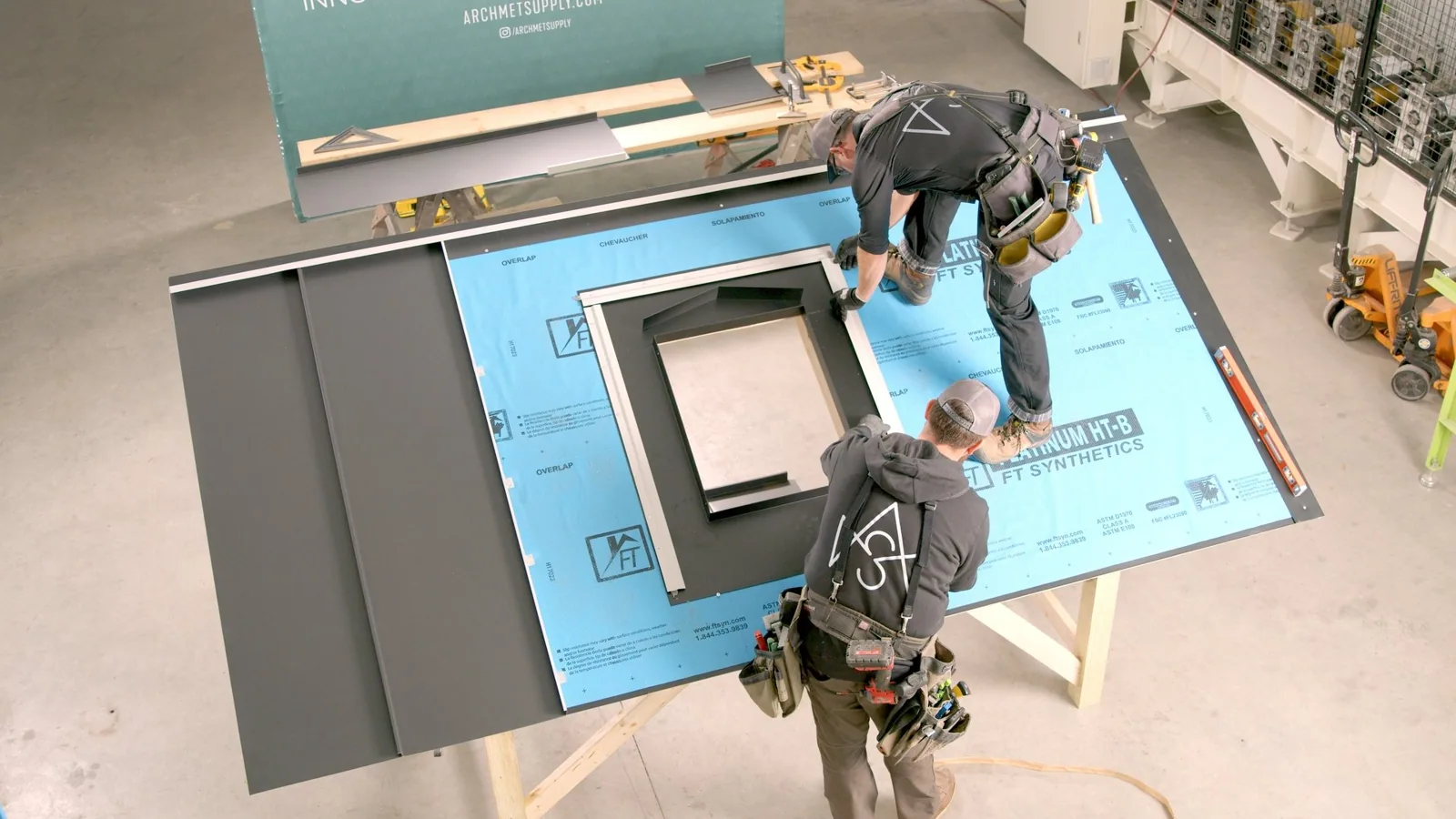
A cracked corner at a skylight curb can admit water even when the glazing above looks clear. We inspect the curb, flashing, membrane lap, fasteners, and interior shaft before deciding whether the opening needs a patch or a rebuilt transition. The same checks apply at pipe boots, conduit, equipment supports, and abandoned penetrations. Carrollton's hot summers move exposed details, while spring hail and wind can disturb the roof around them. At Valwood Industrial Park, rooftop equipment and repeated penetrations make a marked roof map useful. We document each opening and its condition, then specify repair material compatible with the existing roof system.
A skylight curb has several connections: its frame, curb sides, corners, membrane flashing, and roof field. We check for cracked sealant, loose metal, open laps, water marks, and movement where the curb meets the roof. The flashing height and attachment need to remain sound around the full perimeter. If one corner has separated, we inspect the opposite corners and the curb top for related movement before selecting the repair limit. The same checks apply at a manufacturing plant roof where ventilation or process equipment creates additional openings.
Water inside a light well may enter at the flashing, glazing gasket, or a different roof detail nearby. We compare the interior stain with the roof plan and inspect the likely path. A patch on the roof cannot address a failed glazing component, so we identify what is visible and where another trade may need to assess the skylight. Our leak tracing work connects the interior report with roof observations instead of assuming the visible stain is directly below the opening.
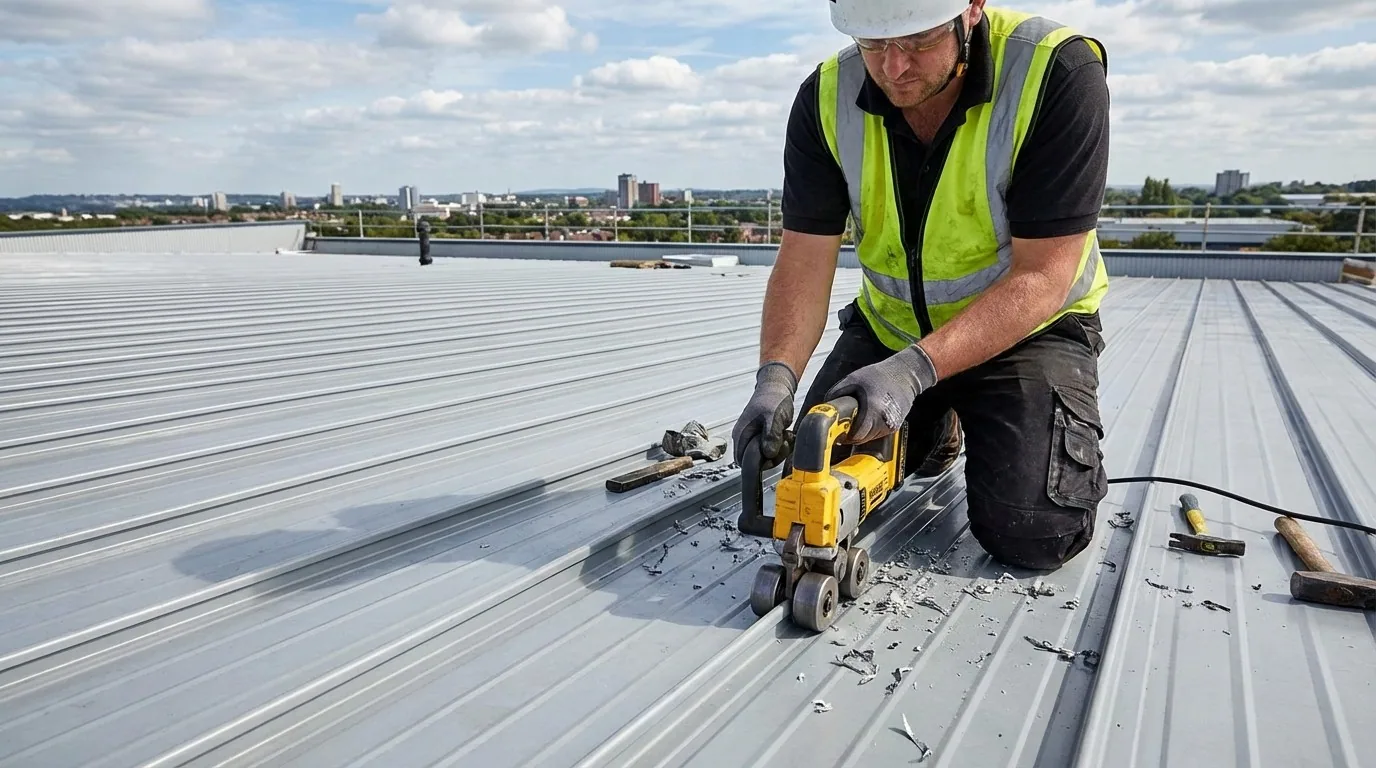
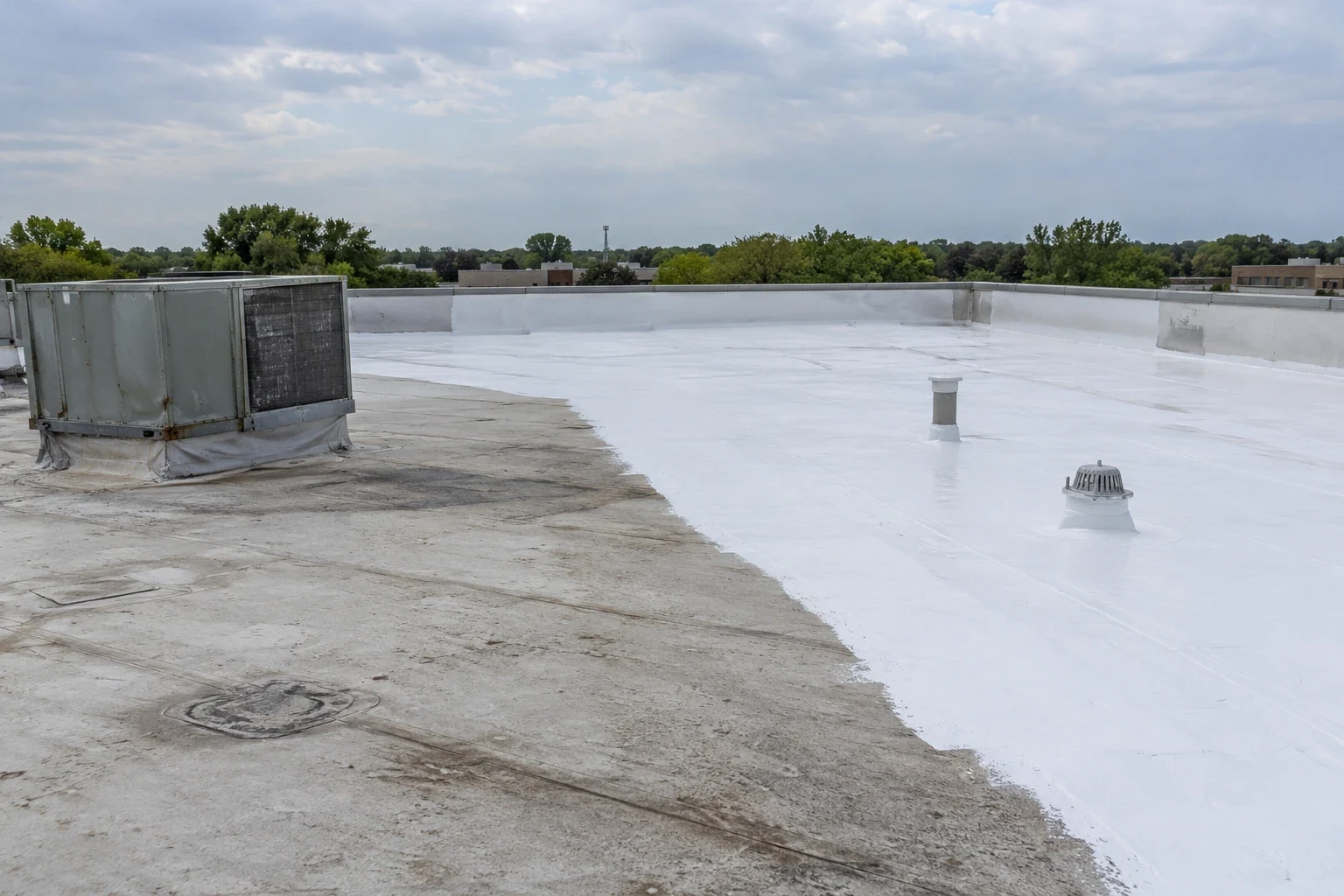
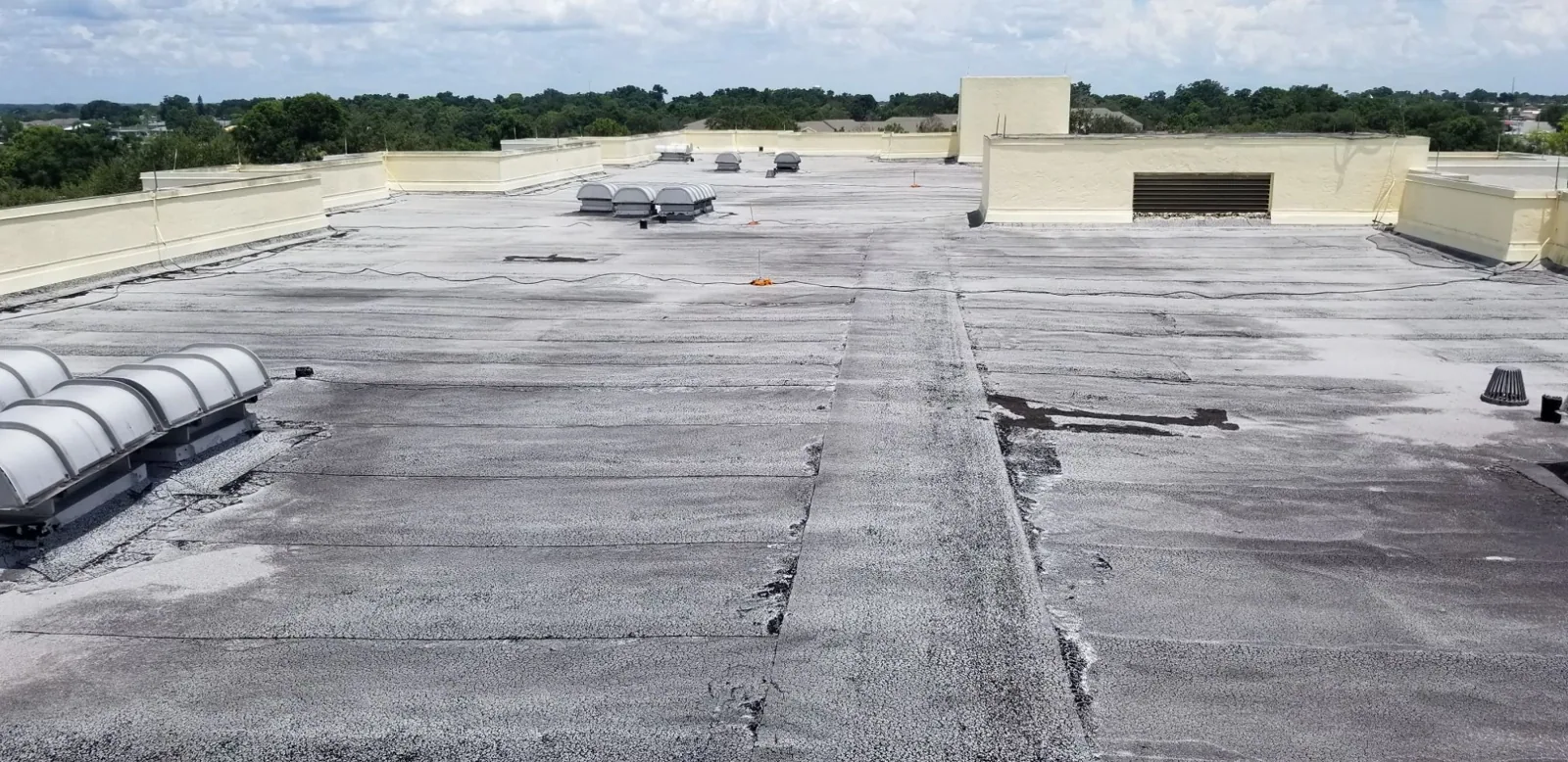
Pipe boots, conduits, cables, and equipment supports interrupt the roof field. We look for split rubber, cracked sealant, loose clamps, exposed fasteners, corrosion, and membrane that has pulled from the penetration. The boot needs to fit the pipe, while its base must connect to sound membrane. If the pipe moves or the support flexes, a new bead over the old one may fail again. We inspect the attachment and movement before rebuilding the flashing.
On a low-slope membrane, each boot or curb can become a route for water under the roof. At the Valwood or Midway South industrial parks, we locate openings by roof area and mark them on a plan. That helps distinguish a single failed boot from a wider pattern of aging details. For metal roofs, the opening requires a compatible boot or flashing that works with panel ribs and fastener lines. A rooftop curb and equipment support inspection can include openings around units, conduits, and support frames.
We prepare the surface, remove failed flashing where needed, and install a compatible transition that bonds or welds to the roof system. Corners receive formed or reinforced details that resist movement and water flow. Sealant is used where the system calls for it, not as a substitute for membrane attachment or a proper boot. After installation, we check the seam, termination, corners, and edges, then photograph the closed opening with a location reference.
If the substrate is wet, the repair may need to include removal and replacement of affected insulation before the flashing is rebuilt. We use test cuts when the assembly is unclear and note what each cut shows. Where hail has damaged several penetrations, our storm damage inspection can map the affected details and separate visible damage from older wear. A targeted roof repair scope can then include the appropriate curb, pipe, or equipment transitions.
Flashing materials need a clean, dry surface and the right temperature for installation. Heat can soften some sealants and accelerate cure; rain can prevent adhesion or trap moisture below a patch. We check the conditions before opening the detail and plan a temporary close-in if the permanent work cannot proceed. Carrollton's storm season makes it useful to limit how many openings are worked at once, especially where the roof has several penetrations or equipment curbs. If hail has damaged accessories nearby, a hail damage inspection can document those roof conditions.
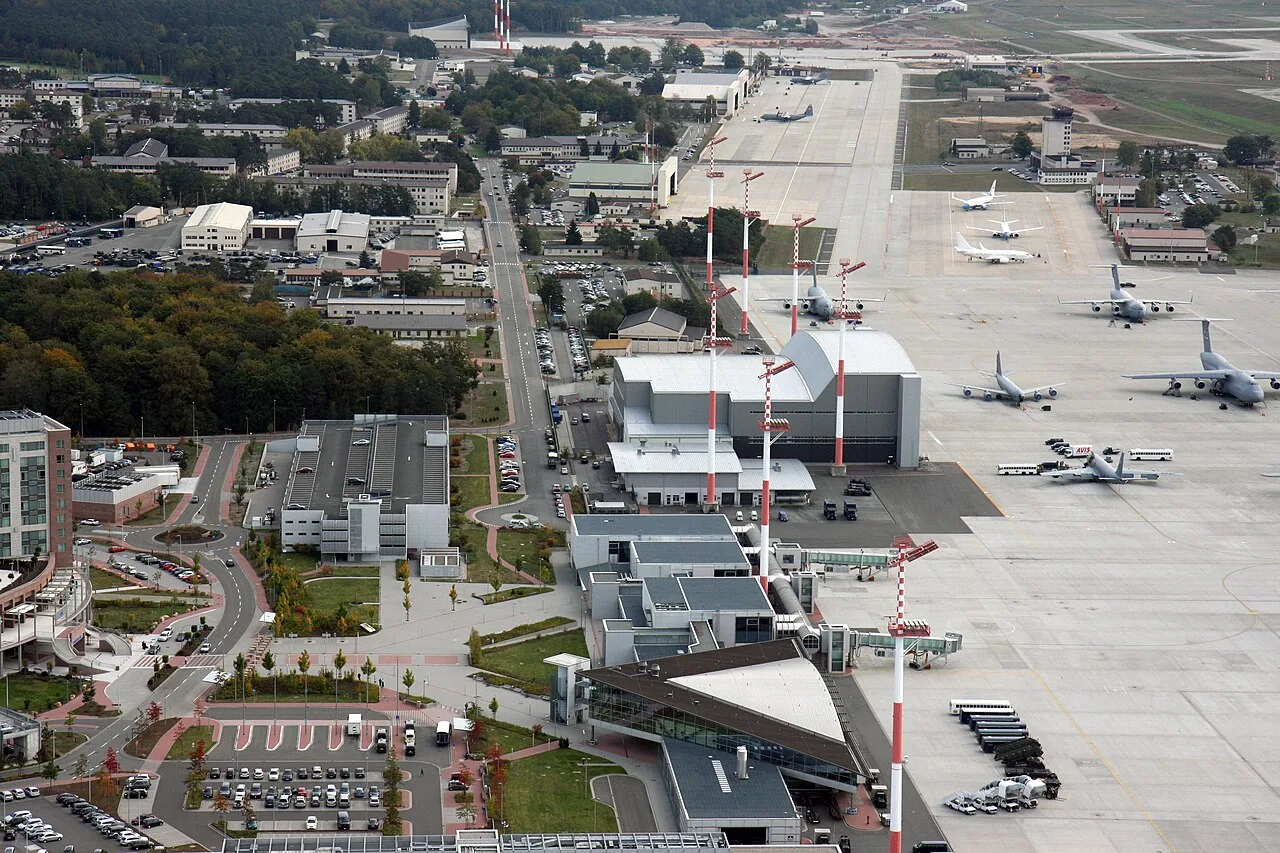
At Frankford Trade Center, large distribution operations may continue beneath the roof while service work is underway. We coordinate lift or roof access, identify equipment that needs to remain in service, and keep tools and debris out of loading routes. The crew closes each flashing detail before moving to the next opening. If a skylight cannot be safely accessed from the roof, we document the limitation and arrange a safe inspection method rather than improvising at the curb.
Penetration records are useful because small changes can be missed on a large roof. We list each curb, boot, and support by a stable location, photograph the condition, and note the material and repair date. A future roof walk can check the same termination and compare whether sealant, boot, or membrane has changed. The record also helps a property manager prepare for equipment replacement without losing track of the roof flashing that will need to be disturbed.
We separate roof work from glazing, mechanical, electrical, or plumbing work that falls outside the flashing scope. If another trade needs to move a pipe or unit, the roof membrane should be restored around the finished penetration and inspected after the work. Our commercial roof inspection can check surrounding seams and drainage at the same time. Share roof plans, known leak areas, and equipment constraints before the visit so we can map the openings and set an orderly route.
Our roof review covers the curb flashing, membrane transition, and accessible roof details. If the evidence points to glazing or frame failure, a skylight specialist may need to assess that component. We document what the roof connection shows and define the roofing work separately.
Before selecting a boot or flashing, we inspect the pipe support and movement. The detail must fit the pipe and connect to the roof without relying on surface sealant alone. If the pipe movement is excessive, that support condition needs correction before the roof detail can stay closed.
The opening, curb, and membrane need inspection before equipment work begins. If a unit or pipe is moved, the finished roof penetration needs a compatible flashing connection and a close-in inspection. We coordinate with the installing trade on access and timing.
Interior moisture is compared with the curb, roof membrane, and nearby drainage path. If water has reached the insulation, we may need a test cut to define the affected area. We record the cut location and restore the roof detail after testing.
A surface bead may not hold if the membrane or curb connection has separated. We inspect the corner and adjacent sides, remove failed material as needed, and rebuild the connection with compatible flashing. The repair ends at sound material and is photographed after close-in.
RELATED WORK
CALL US
Leaks, storm damage, a failing membrane or a replacement on the calendar: tell us what is happening on the roof and we will set up a visit.
Commercial Roofing Services
Share a roof plan, leak locations, and equipment or access limits. We will inspect skylight curbs and penetrations, mark each detail, and specify compatible flashing repairs.
Call 555-555-5555 or request a roof assessment online.