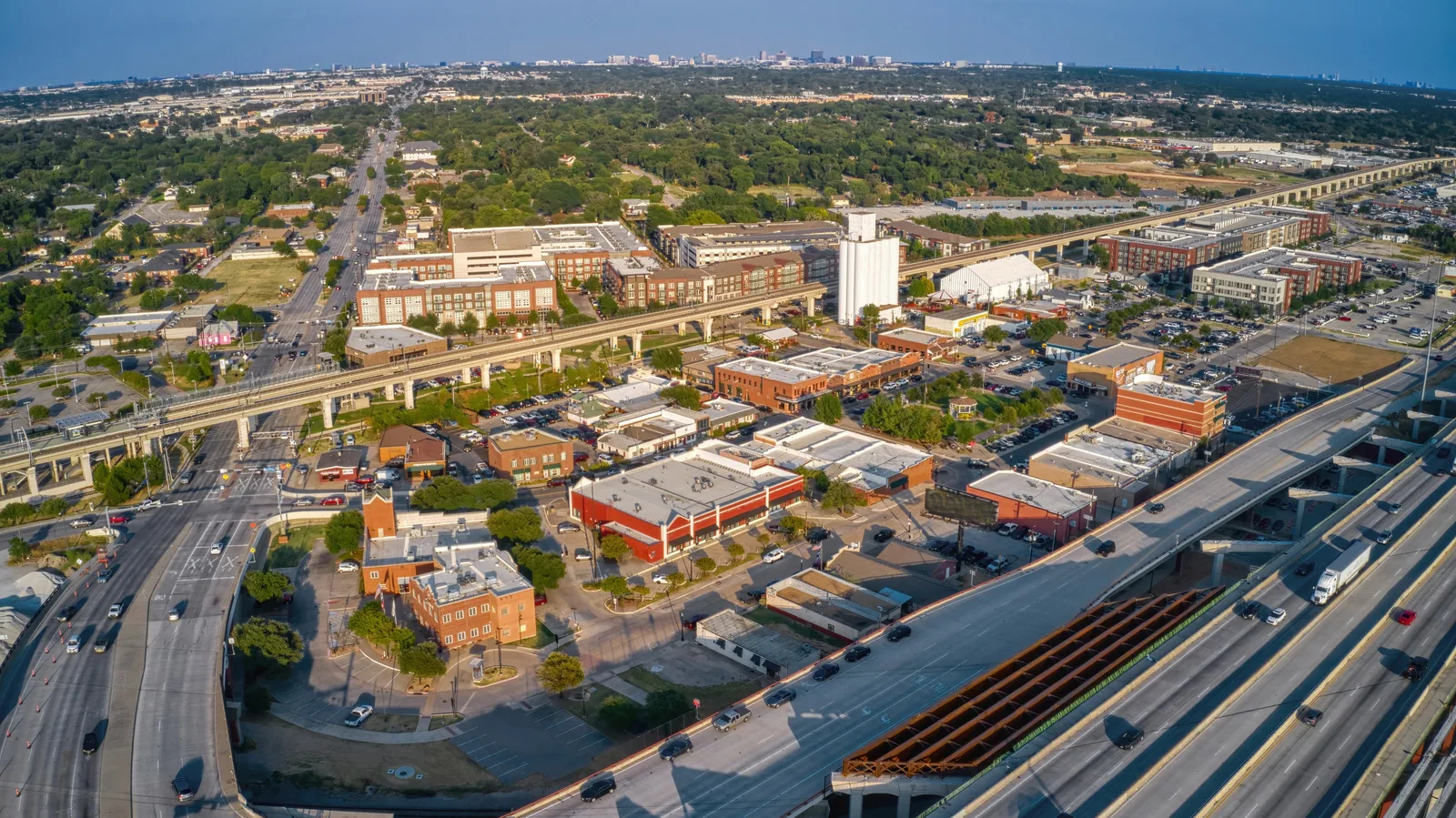
A damp ceiling tile over a classroom should be traced before the next bell sends students through the room. School roofing in Carrollton, TX means coordinating roof access with arrival, dismissal, athletics, and custodial work. Cypress Waters includes three schools within a mixed-use district, while Downtown Carrollton is planned as a pedestrian-oriented center near its DART station. A school roof has its own campus plan, but public routes and active schedules matter at each site. We inspect above the reported area and mark the repair limit before materials move.
School buildings have busy hours and quiet ones. We confirm when students are present, where buses load, which doors must remain open, and whether a gym, kitchen, or classroom can be isolated. The site contact identifies roof hatches, alarm procedures, visitor rules, and routes that cannot be blocked. We stage tools away from playgrounds, courtyards, and vehicle paths, then close each roof section before the crew leaves.
Summer break can create a longer reroof window, but it does not remove all building activity. Custodial teams, summer programs, athletic camps, and facility maintenance may still use the campus. We ask the manager which wings or equipment remain active and sequence the work accordingly. An occupied-campus reroofing sequence can divide a large roof by building or wing. It records the daily tie-in and which access route will be used the next morning. Before mobilization, we ask whether alarm sensors, skylights, and fall-protection hardware affect access. The contact identifies who can escort crews, open roof doors, approve a temporary barrier, and receive closeout photos. If work overlaps lunch or dismissal, material delivery is scheduled to keep bus movement clear. The plan names emergency exits and a weather pause point. We confirm that delivery staging leaves the school’s pedestrian entrances available.
Water can travel along a deck or joist before appearing above a classroom, corridor, or library. We compare the interior mark with roof drains, seams, curbs, skylights, and wall transitions overhead. A wet ceiling tile may be below a different roof bay than the leak itself. We check insulation and deck condition where needed, then record the test location and restore the opening. The repair map should identify the classroom area without treating the room number as the roof location. We coordinate ceiling protection with custodial staff and note any room that needs a second inspection after the roof dries.
When a leak is active, we coordinate protection for books, computers, art materials, and electrical fixtures with school staff. A roof inspection can map the source and distinguish a current opening from an old stain. If the defect is confirmed, a roof repair can close the seam, penetration, or flashing. Any temporary cover is listed separately with a return date so it is not mistaken for a permanent repair.
Leaves, sports equipment, and windblown debris can collect at roof drains and scuppers. We check the strainer, bowl, and discharge path, then note whether low areas stay wet after other sections dry. A blocked outlet can send water toward a parapet or doorway. If insulation has compressed, clearing a drain alone may not restore slope. We document the water path and identify whether the correction belongs to roof repair, drain work, or both.
A spring storm can leave a school roof with loosened perimeter metal, marked membrane, or debris around skylights and units. We inspect those details after safe access is available and record which areas need protection before students return to nearby spaces. A storm damage inspection can record fresh marks before repairs begin. A drainage review checks outlets separately from the roof field. The school receives a list of urgent protection, planned repairs, and conditions to watch during the next maintenance walk.
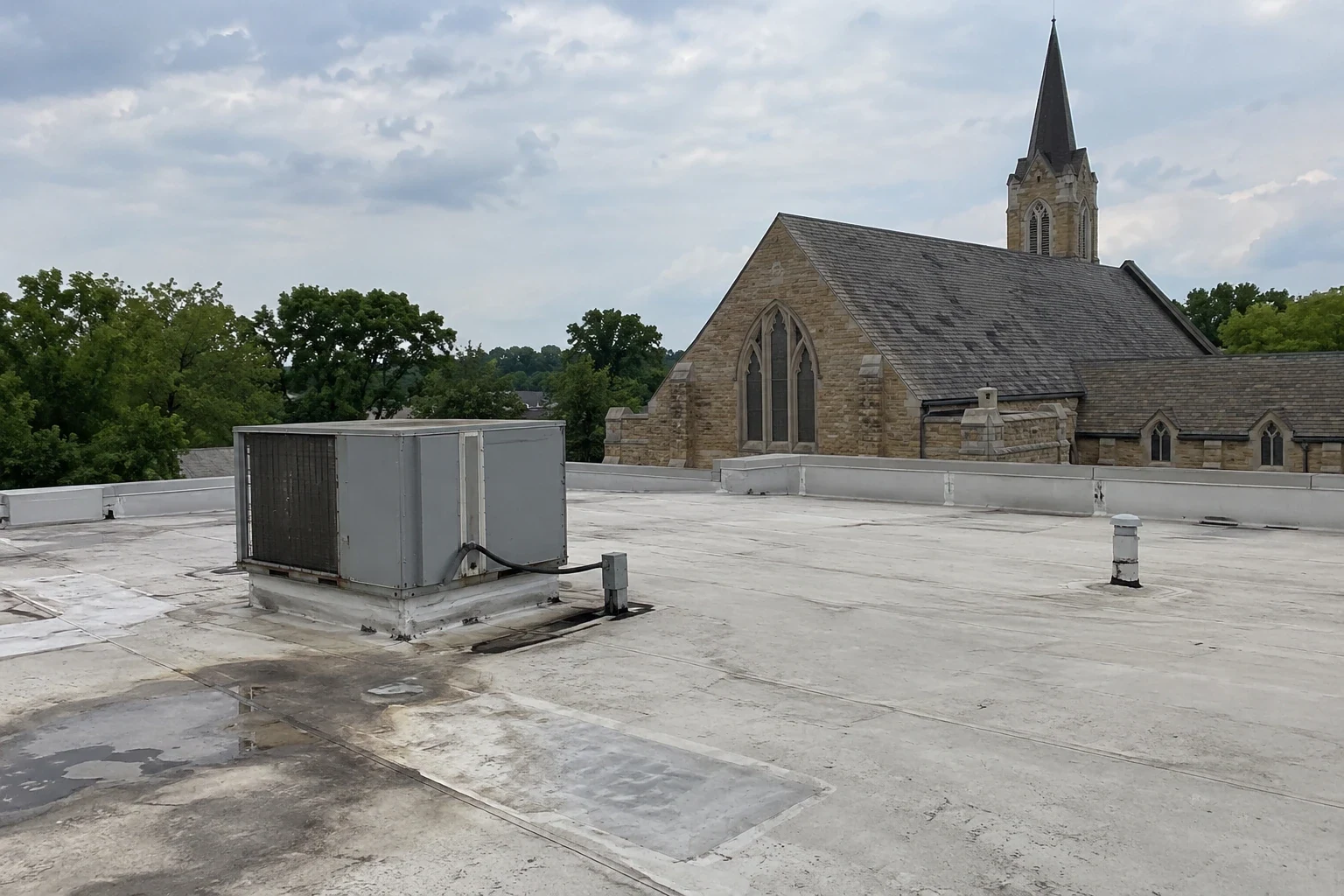
Classrooms, kitchens, gyms, and administrative offices may use separate HVAC zones. Rooftop units, exhaust fans, conduit, and pipe supports each create a detail where flashing can loosen or crack. We inspect the curb corners and membrane around service paths, then coordinate with the mechanical team if a unit needs to be isolated. A service contractor should not leave removed fasteners or an uncovered penetration at the end of the visit.
When a new curb changes roof height, insulation and flashing need to meet the updated base without blocking access to the unit. We record who controls each piece of equipment and which detail can be repaired without moving it. A curb and support inspection maps those connections. For a campus that includes student housing, an apartment roof review may cover occupied residential routes, while a college campus roof plan addresses larger academic buildings and shared services.
Before a school roof repair is closed, we inspect the finished seam or flashing, clear safe-to-reach drains, and confirm the area is secure. The closeout names the building, roof zone, material, weather, and any return item. Photos follow the school’s rules and show the detail without including students or restricted areas. A simple map helps custodians and facilities staff connect an interior report with the roof section above it.
Planned maintenance can check drains, edge metal, penetrations, and past patches before the next school term. A school roof maintenance visit can be arranged around exams, summer programs, and facility access. Weather may shorten an exposed work window, so we plan materials and daily close-in before starting. The manager receives the next action and its urgency, whether that means watching a stable seam or scheduling a repair before classes return.
We coordinate the work area, noise, material route, and protection below with the school contact. Many repairs can be staged, but a room or entrance may need a planned closure depending on the roof opening.
Protect students and equipment below, then report the room and time to facilities. We inspect the roof above and nearby details, trace the water path, and mark any temporary protection separately from the permanent repair.
Summer can provide more schedule flexibility, but camps, custodial work, and equipment service may continue. We confirm campus use and weather conditions before reserving the work window.
We check skylights, seams, drains, edge metal, and rooftop equipment for impact or displacement. A location-marked report helps the district distinguish new damage from older wear.
The report should identify each building and roof zone, describe the observed detail, show approved photos, and list the repair status and next step. It should also note access limits for future visits.
RELATED WORK
CALL US
Leaks, storm damage, a failing membrane or a replacement on the calendar: tell us what is happening on the roof and we will set up a visit.
Property Types We Roof
Share the school calendar, access rules, bus and playground routes, and any areas that must stay open. We will inspect the roof and set a repair sequence around campus use and weather.
Call 555-555-5555 or request a roof assessment online.