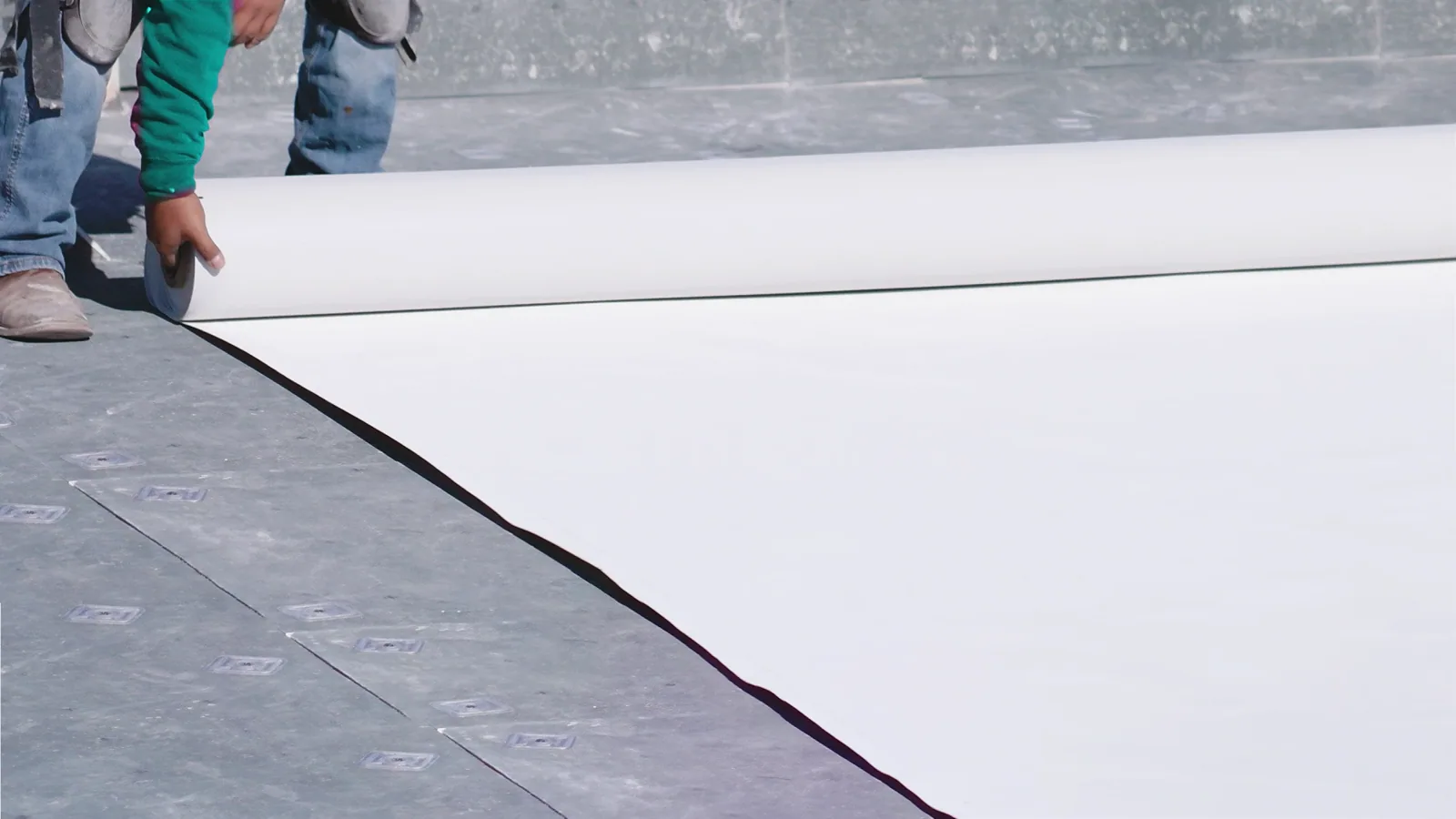
A lifted edge on a Carlisle EPDM seam needs a different check from a failed hot-air weld on TPO. Carlisle SynTec roofing in Carrollton, TX starts with identifying which system is on the building and how its field sheets, flashings, and terminations connect. We inspect the material, surface preparation, and prior patches before choosing a repair. The roof system name helps locate the right instructions, but the field condition sets the work limit.
Carlisle SynTec’s commercial line includes Sure-Weld TPO, Sure-Seal EPDM, and Sure-Flex PVC. The TPO sheet uses heat-welded seams; EPDM joints rely on compatible seam products and adhesives; PVC has its own preparation and flashing details. Attachment can vary by system and project design. We check the roof record, membrane markings where visible, and detail construction before treating a patch or curb as a known product assembly.
Carrollton’s hot summers make exposure at a seam and perimeter worth documenting, while spring storms can bring damaging wind and hail somewhere in the Dallas-Fort Worth region. Frankford Trade Center has active logistics tenants, and Valwood spans a varied industrial inventory. Those district facts do not identify a particular Carlisle assembly. A Frankford roof inspection begins with the property contact and roof details on that site. For another thermoplastic option, GAF commercial single-ply systems include TPO and PVC configurations.
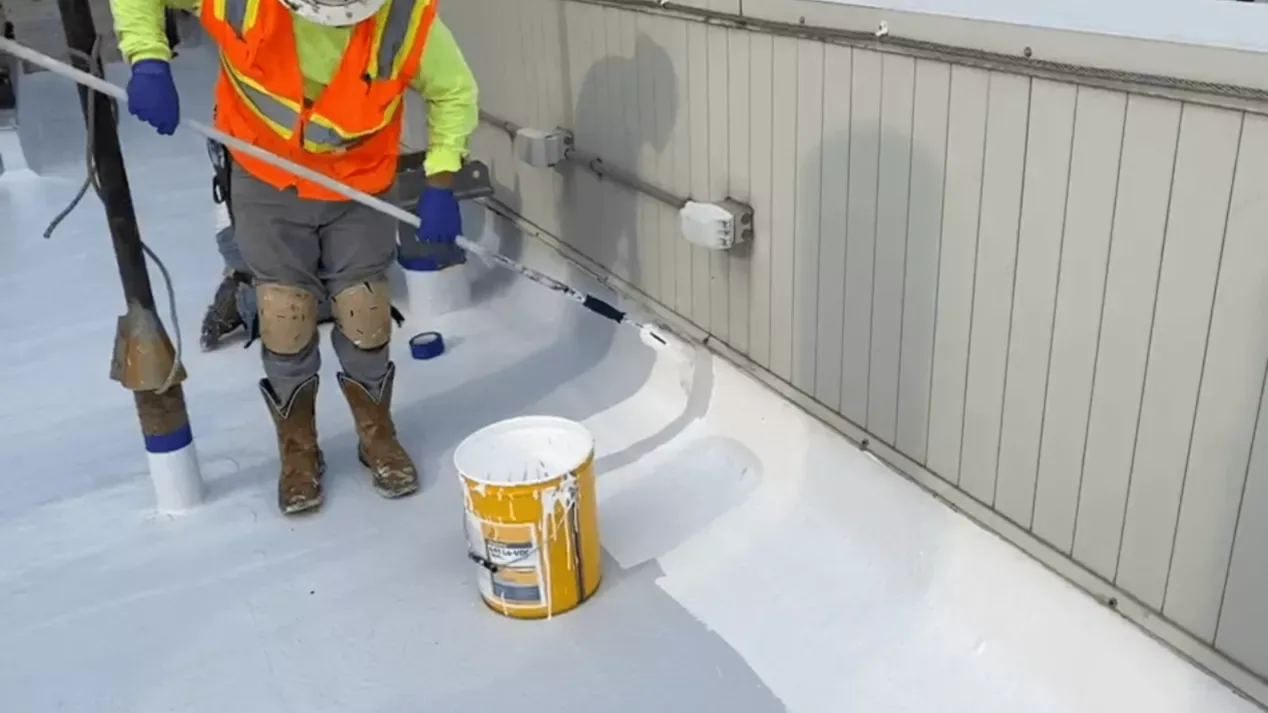
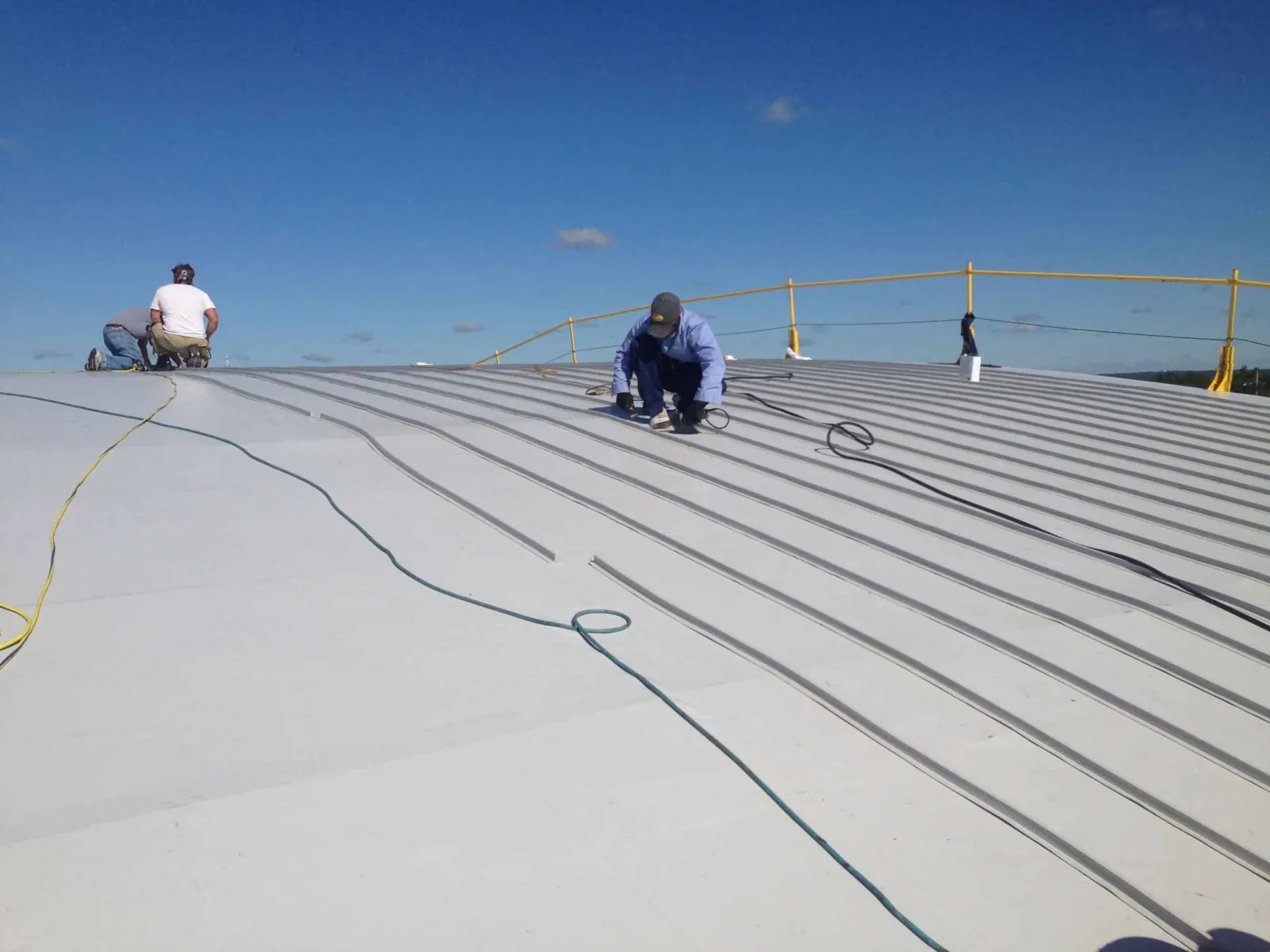

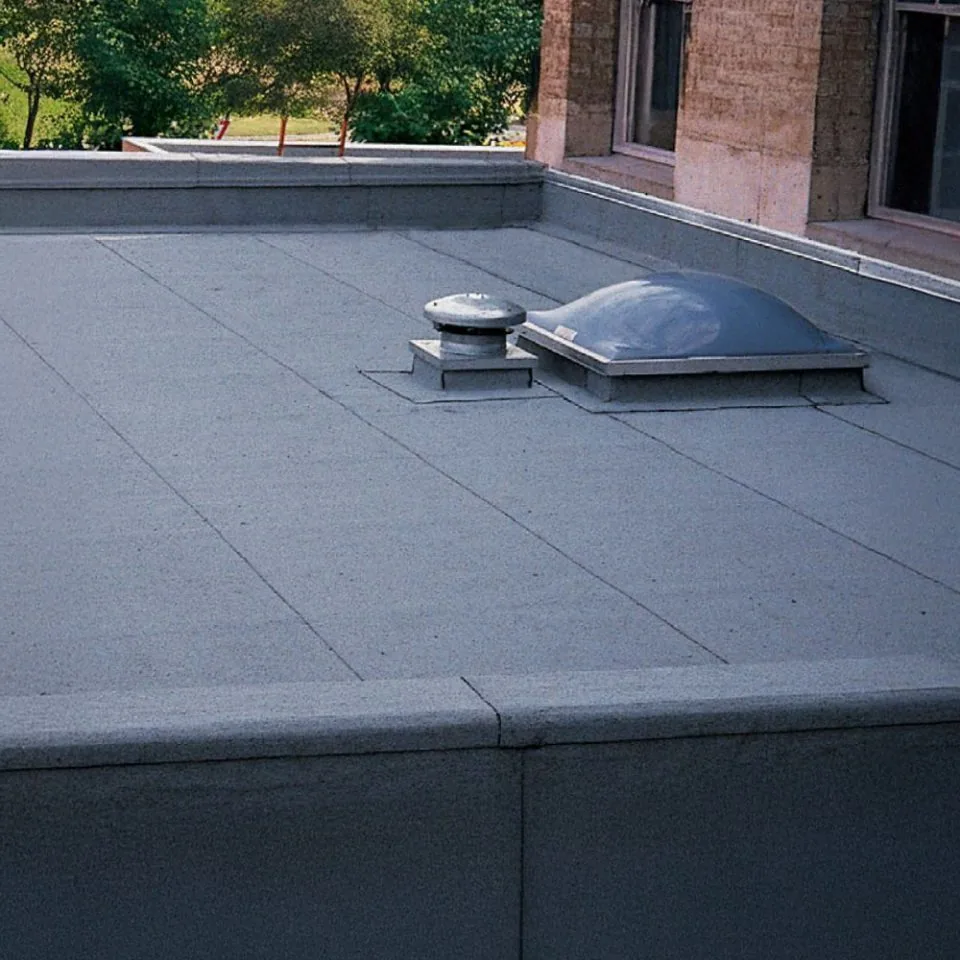
On Sure-Weld TPO, we inspect the welded lap for a continuous bond, then check corners, T-joints, and transitions where the weld changes direction. Carlisle’s Sure-Seal EPDM requires a different review of the seam tape or adhesive area, including contamination, wrinkles, and the condition of the adjoining sheet. A repair cannot bond well to material that is wet, dirty, or loose. We mark the opening and confirm that the surface around it is suitable for the system repair.
Water can migrate below a membrane and surface away from the seam that admitted it. We compare an interior leak location with the roof slope, drains, curb flashings, and previous repairs. A commercial roof inspection can document the visible condition and access limit. If moisture appears to extend below the field sheet, a moisture survey or test cut may be recommended before a wider repair is priced.
A Sure-Weld TPO patch needs compatible membrane and a prepared surface that will accept a proper weld. EPDM repair uses compatible primer, tape, or adhesive at the seam or flashing. Sure-Flex PVC requires PVC-compatible materials and its own hot-air-welded detail. We do not substitute between these systems because they share a color or a similar surface. The scope identifies the membrane, preparation, patch boundary, and any area that should be opened to verify the substrate.
At a curb or parapet, the repair may extend beyond the field sheet to include flashing and termination. If an edge has lifted during a wind event, a wind damage roof review can document attachment separately. For a split lap, a seam failure inspection can establish whether the defect is local or part of a longer run. Each observation gets its own roof mark so the final scope stays precise.
Before a new Carlisle membrane is installed over an existing roof, we inspect moisture, substrate stability, drainage, attachment, and compatibility. Wet insulation, soft cover board, or a poor drainage plane can rule out a simple overlay. If testing is needed, the report names the roof location and the question the test will answer. The project scope also identifies whether the new assembly is adhered, mechanically attached, or uses another approved attachment design.
Trinity Mills Industrial Park lies near the transit hub. The separate station district has delivered residential and retail space, with additional office, retail, residential, and hotel uses planned nearby. The district context may help schedule access, but each roof needs its own recover review. A roof recover assessment can compare overlay conditions with tear-off assumptions. The installation plan should account for roof edges, penetrations, drains, and any equipment that remains in service.
Maintenance records should show the Carlisle system type when known, roof section, inspection date, seam or flashing repaired, and photo of the completed detail. We also list any temporary cover or deferred area. After a new equipment installation or roof access by another trade, the next inspection can check the affected curb or walkway. A dated record helps the owner identify whether a later leak returns to the same detail or comes from a different part of the roof.
North Texas summers are hot, and winter freeze-thaw exposure can affect sealants and transitions. A preventive roof visit can check drains, seams, edges, and past repairs at a useful interval for the assembly. When another roof in the portfolio uses a Johns Manville membrane, keep its product and repair record with that building rather than the Carlisle roof file.
A repair proposal identifies material, labor area, access, roof preparation, and the close-in point for each workday. A replacement scope adds tear-off, substrate review, insulation, edge metal, and rooftop equipment coordination. If hidden moisture or damaged decking could expand the job, we say how that condition will be documented and reviewed before proceeding. This keeps a product name from standing in for a complete scope.
The Dallas-Fort Worth area has severe weather peaking in spring, with hail and damaging wind possible. We choose a work window based on the forecast, surface condition, and the current installation guidance for the Carlisle materials specified. If the site has active loading or tenant access, the property contact confirms staging and work hours. We return the field findings and completed work to that contact with photos tied to the roof location.
We review available roof records and inspect visible membrane and seam details. If the product cannot be identified confidently, the report says so rather than assuming from color alone.
No. EPDM and TPO use different membrane and seam materials. We identify the installed system and use compatible repair components.
The weld, adjoining sheet, surface cleanliness, corners, and any moisture below the membrane all affect the repair. We mark the area and define whether testing is needed.
A recover may be considered after moisture, substrate, drainage, and compatibility checks. Any area needing removal or testing is identified before the work is scoped.
Keep system documents, inspection photos, repairs, access limits, and maintenance dates together by building and roof section. We return the Diligence Notes for the owner’s file.
RELATED WORK
CALL US
Leaks, storm damage, a failing membrane or a replacement on the calendar: tell us what is happening on the roof and we will set up a visit.
Roofing Manufacturers
Send the building address, Carlisle product records, leak history, and access contact. We will identify the assembly, inspect seams and flashings, and scope the work found on the roof.
Call 555-555-5555 or request a roof assessment online.