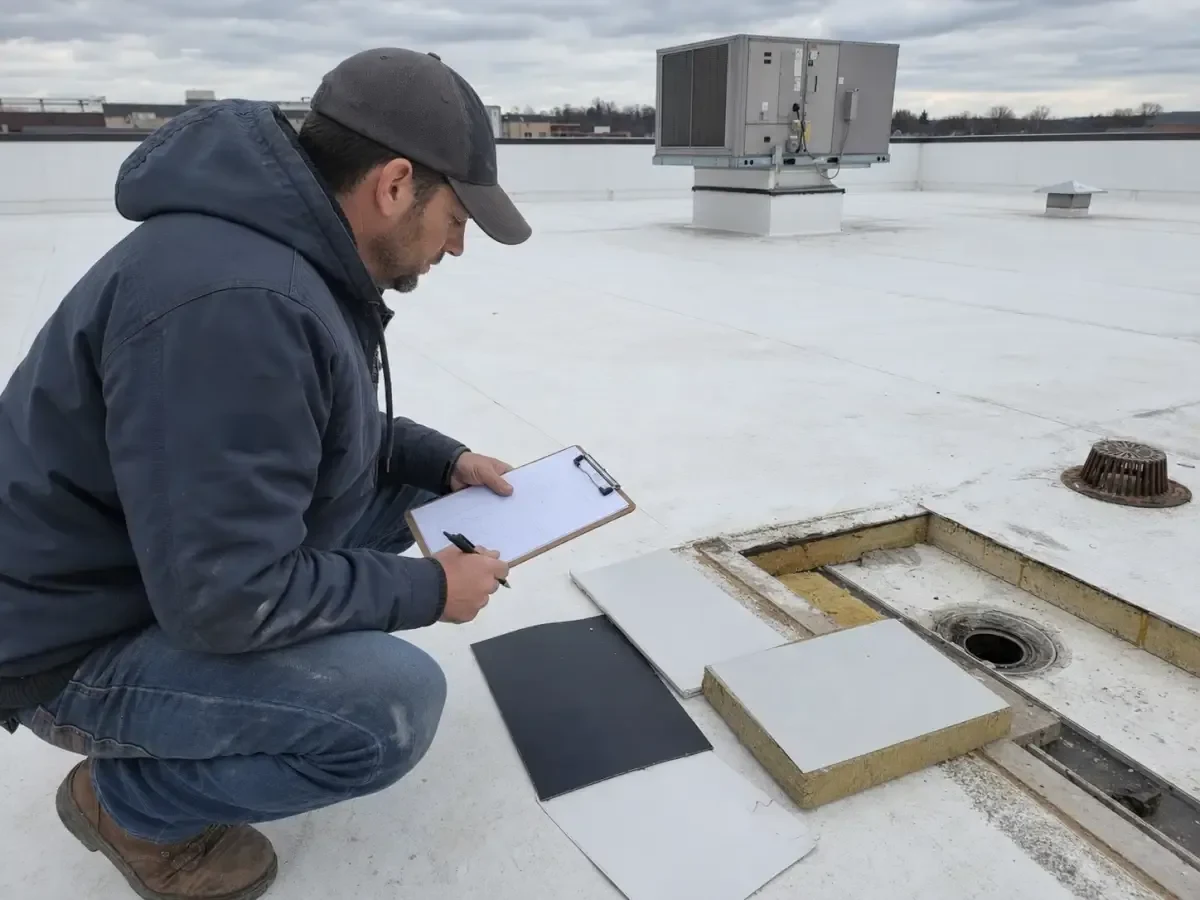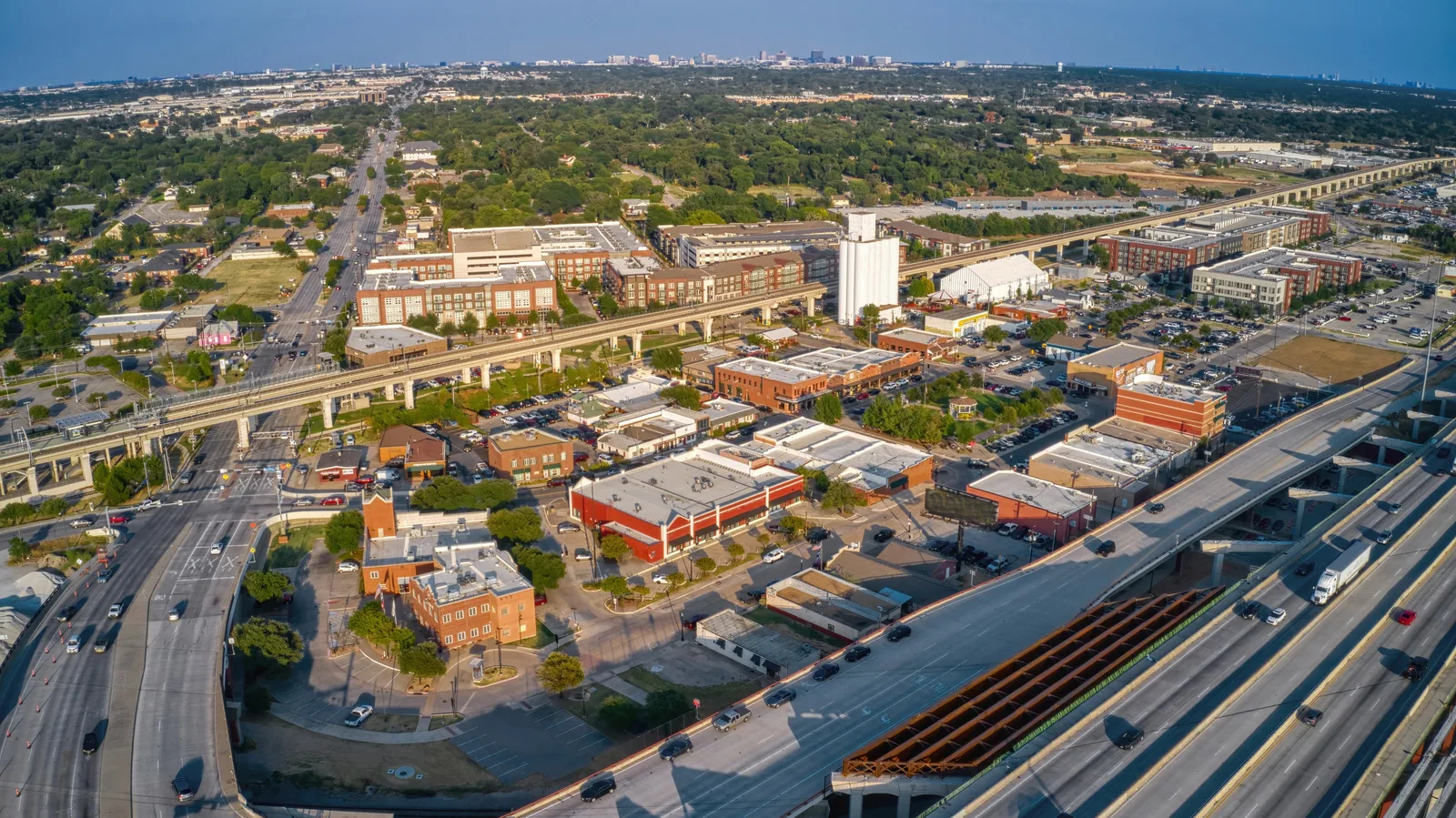
A worn coating can leave spray polyurethane foam exposed to sunlight and water. The foam below may still be dry, or it may have absorbed moisture through a cut or failed edge. For a foam roof in Carrollton, TX, we inspect the protective layer, foam profile, drains, and terminations before choosing a repair. Valwood Industrial Park contains a large mix of manufacturing and distribution properties, where roof access can compete with equipment and loading schedules. We mark the repair area and check what the coating is protecting.
SPF is sprayed as a liquid that expands and cures into a rigid layer. The finished roof depends on surface preparation, consistent application, drainage design, and a protective topcoat. We inspect for exposed foam, cracks, soft spots, pinholes, blisters, and areas where the coating has worn thin. A roof can have a sound field and still leak at a drain or wall transition. We mark each visible condition and check whether water can reach the foam from a nearby detail.
Dallas-Fort Worth has hot, humid summers, and midday heat can affect application and cure conditions. Across Dallas-Fort Worth, July and August daytime temperatures are often in the 90s or above 100 degrees; the roof surface still needs a check at work time. Dust, dew, wind, and unexpected rain can affect spray quality or coating cure. We test the substrate for moisture and confirm the surface can accept the selected material before staging a recoat. A roof inspection records the coating condition, low areas, equipment paths, and locations where test cuts may be useful.
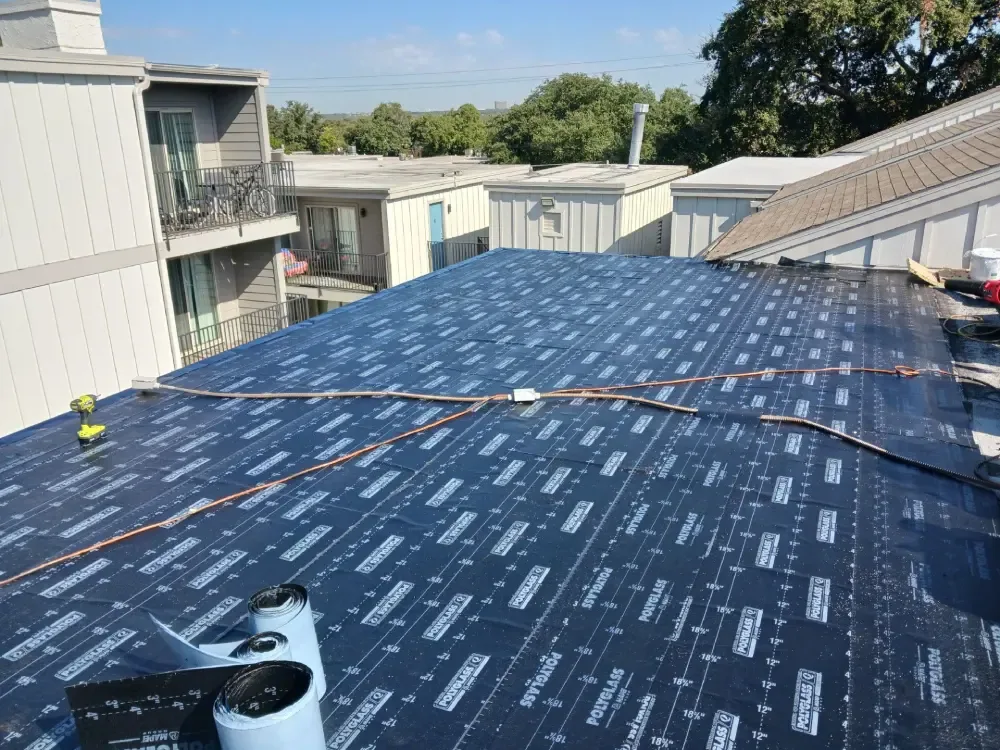
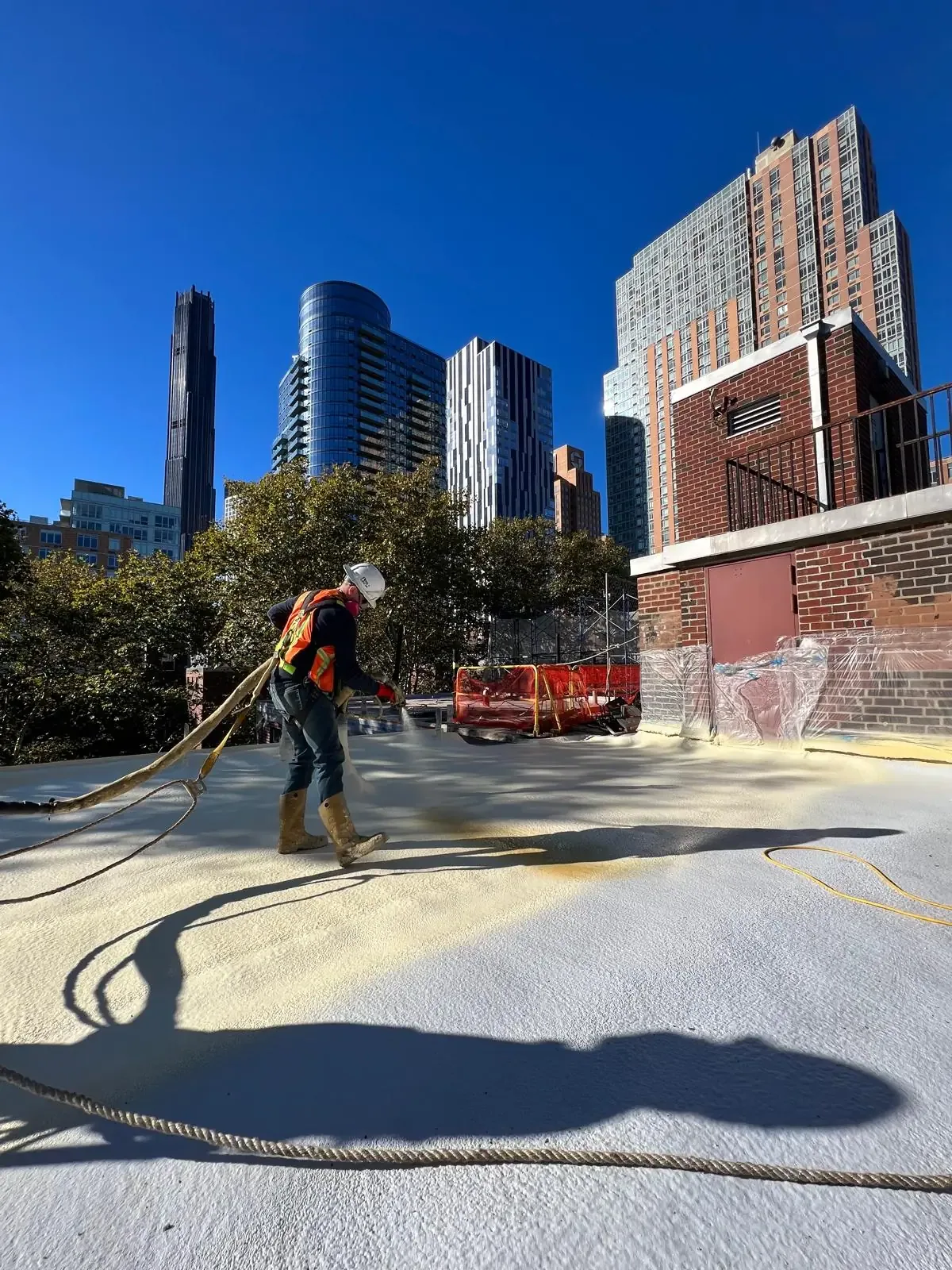
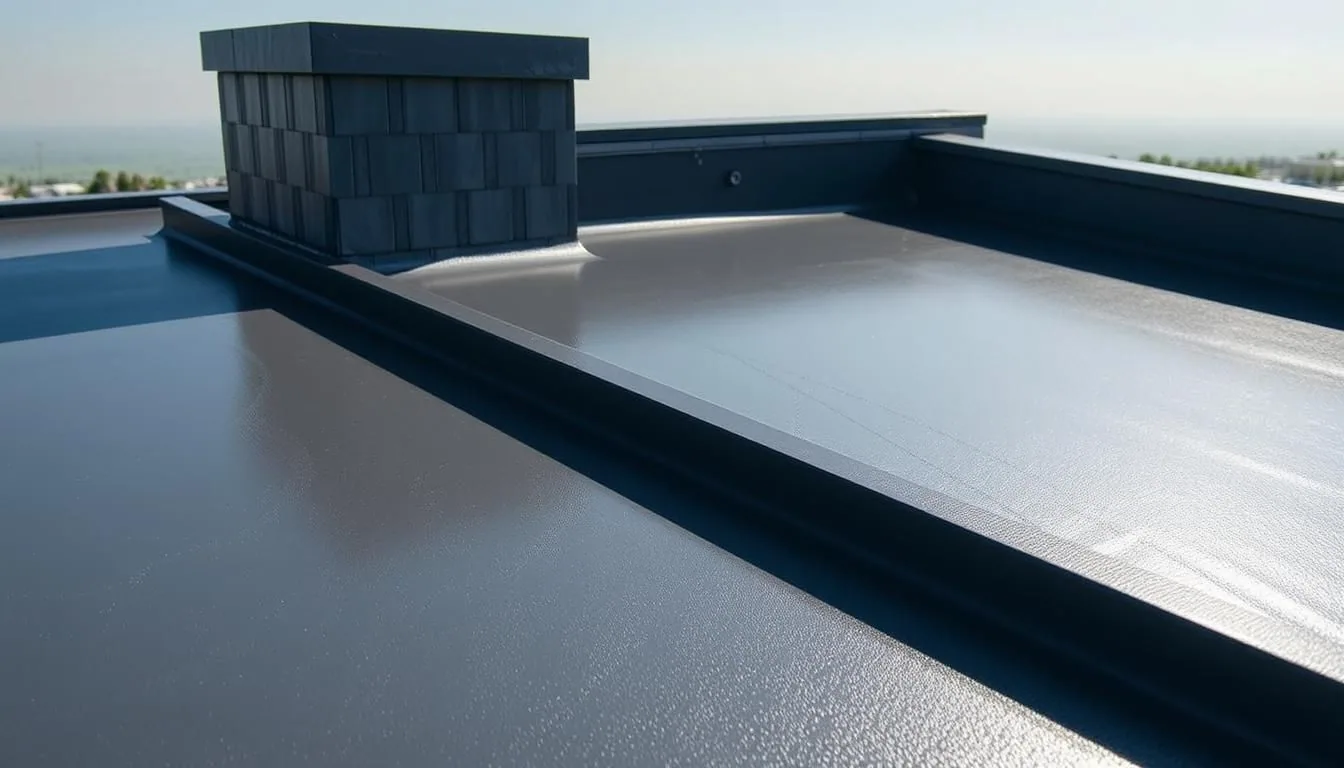
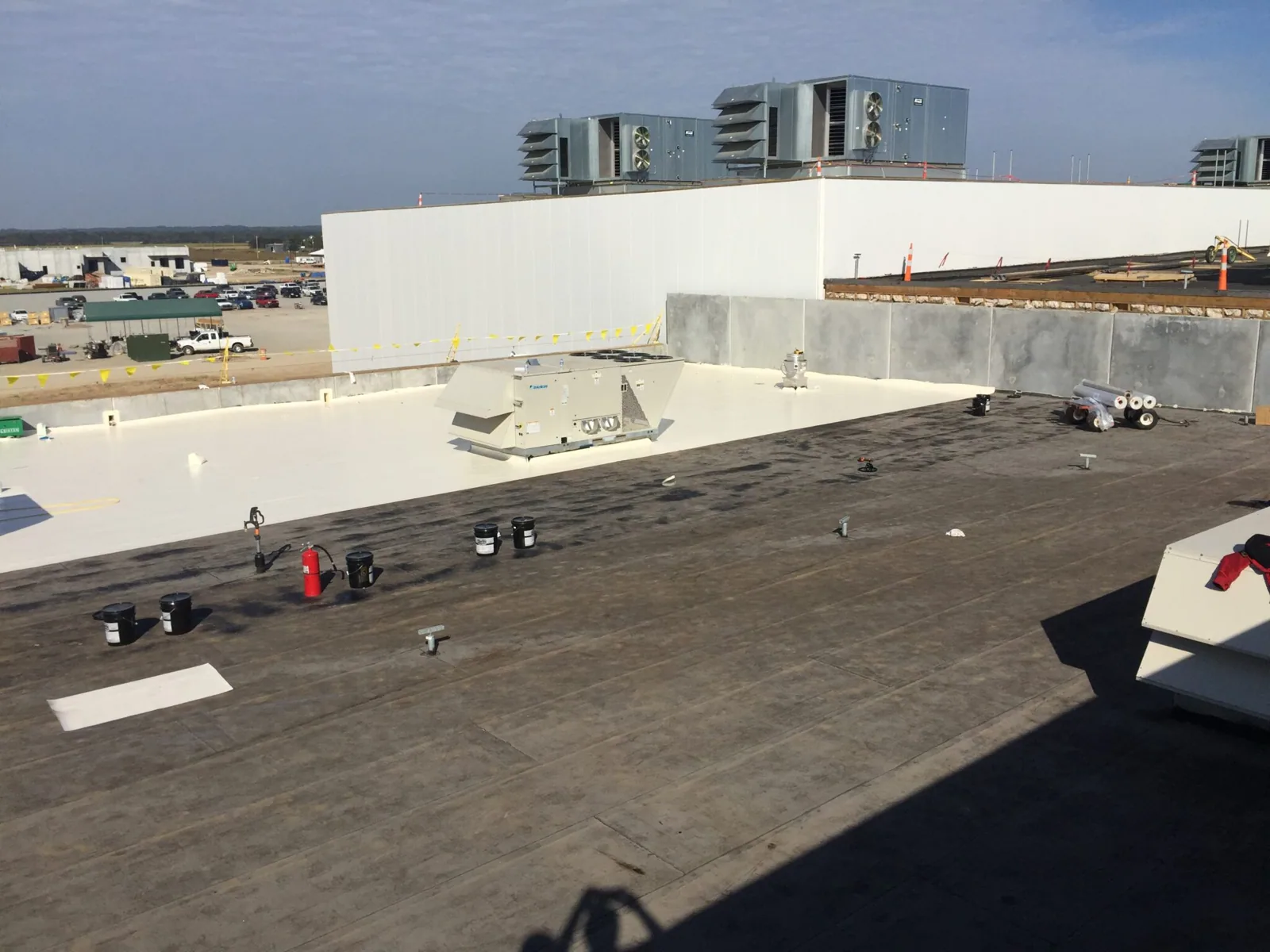
Foam can create slope where the roof needs to move water, but the finished profile must lead to drains or scuppers without leaving deep pockets. We inspect changes in thickness, soft depressions, ponding, and areas where the coating has bridged a crack. A low spot may come from the deck or earlier foam application. Adding more material without locating the outlet can change the roof shape without correcting the flow. We also check that the spray pattern has not left a thin ridge at a transition. We compare the surface with the drain locations and note whether the water path stays open.
At Frankford Trade Center, logistics uses and large commercial buildings make drainage and service access important considerations for a roof plan. We do not infer conditions from a building’s size; we inspect the individual roof, curb layout, and outlets. A drainage survey can record bowls, scuppers, and discharge paths separately from foam repair. Where rooftop units interrupt the surface, we check whether condensate or repeated foot traffic has worn the coating near the service path.
The topcoat shields foam from ultraviolet exposure and weather. We check whether the coating is chalked, thin, cracked, or detached, then verify the existing chemistry before applying new material. A recoating scope may include washing, repairs, primer, and a defined film build. If the foam is wet, crumbling, or separated from the deck, a new coat will not make that section sound. We mark areas for removal or repair and keep the boundary visible through the work.
Silicone and acrylic coatings have different limits, cure conditions, and performance in ponding water. We select a system for the roof condition and project requirements, not by habit. A silicone coating or acrylic coating may be evaluated after adhesion and compatibility checks. Granule surfacing may be used where the design calls for extra protection. The scope should state the preparation, reinforcement at cracks and penetrations, and how the completed layer will be inspected.
Spring storms can bring hail and damaging winds somewhere in the Dallas-Fort Worth Metroplex nearly every year. On an SPF roof, impact may fracture the coating or bruise the foam, while wind can lift metal edge details. We inspect a suspected impact with the surrounding surface and check for a cut through the protective layer. Photographs should identify the roof area and scale of the mark. A small dent does not automatically require replacing a whole roof section, and a broad crack should not be dismissed as coating wear without checking the foam.
Freeze-thaw cycles can also work on a wet opening during winter. The region receives winter precipitation each year, though sustained snow load is not the primary roof concern. We trace cracks at drains, curbs, and terminations, then determine whether moisture has entered the foam. For an active leak, a roof repair can protect the opening while the substrate dries and the permanent system is specified. The record distinguishes temporary material from a completed restoration and lists any area that needs another inspection.
Recoat can extend the service of an SPF assembly when the foam is dry, adhered, and repairable, and the coating can bond to the prepared surface. We check adhesion in representative locations and look for sections that need to be removed. If moisture or delamination extends through the foam, a replacement scope may be necessary. A reroof plan should also review insulation, curb heights, edge metal, drains, and how the roof joins adjacent systems.
For a low-slope area that no longer supports a coating repair, a TPO assembly or built-up roof may be compared under the project specification. We explain differences in seams, protective layers, and future maintenance. A coating restoration scope identifies preparation separately from application, while roof replacement accounts for removal and the full assembly. The owner can compare those paths against documented condition instead of choosing from a surface appearance alone.
Yes, when the foam is dry, attached, and able to accept the selected coating after preparation. We inspect the surface, test adhesion where needed, and repair damaged foam before recoat.
We trace water from the interior mark to roof details, then inspect coating cracks, foam cuts, drains, and terminations. Moisture testing or a controlled opening may be needed to confirm how far it traveled.
Only if the scope changes the profile and gives water a clear outlet. We map low areas and drains first. Adding coating without checking slope can leave the same water path in place.
Impact can crack the protective layer or damage foam underneath. We inspect the mark, check for moisture or fractured material, and record the location before assigning a repair.
A roof walk after severe weather and during planned maintenance can identify thin coating, cuts, or open details. The schedule should reflect the roof’s exposure, traffic, and the coating manufacturer’s requirements.
RELATED WORK
CALL US
Leaks, storm damage, a failing membrane or a replacement on the calendar: tell us what is happening on the roof and we will set up a visit.
Roof Systems
Share the leak or coating concern, roof access hours, and equipment limits. We will inspect the foam, drainage, and terminations and document whether repair, recoat, or replacement fits the roof.
Call 555-555-5555 or request a roof assessment online.