A fire can leave a roof surface blistered, punctured, or covered by residue even after flames are out. Commercial fire damage roof repair in Carrollton, TX begins with a safe access decision and a clear account of which areas were exposed to heat, smoke, water, or debris. We inspect accessible roof details, document visible conditions, and separate immediate protection from permanent repair. The building owner or fire authority determines when the roof is safe to enter; our assessment follows that access direction.
Fire can affect the roof deck and supports in ways that are not visible from above. Before a roof walk, the owner should confirm that the area is released for access and identify any hazard restrictions. We ask for the affected building zones, utilities or equipment that remain isolated, and the contact who can authorize entry. If a section is unsafe, blocked, or not cleared, the report notes that it was not inspected rather than describing it as undamaged.
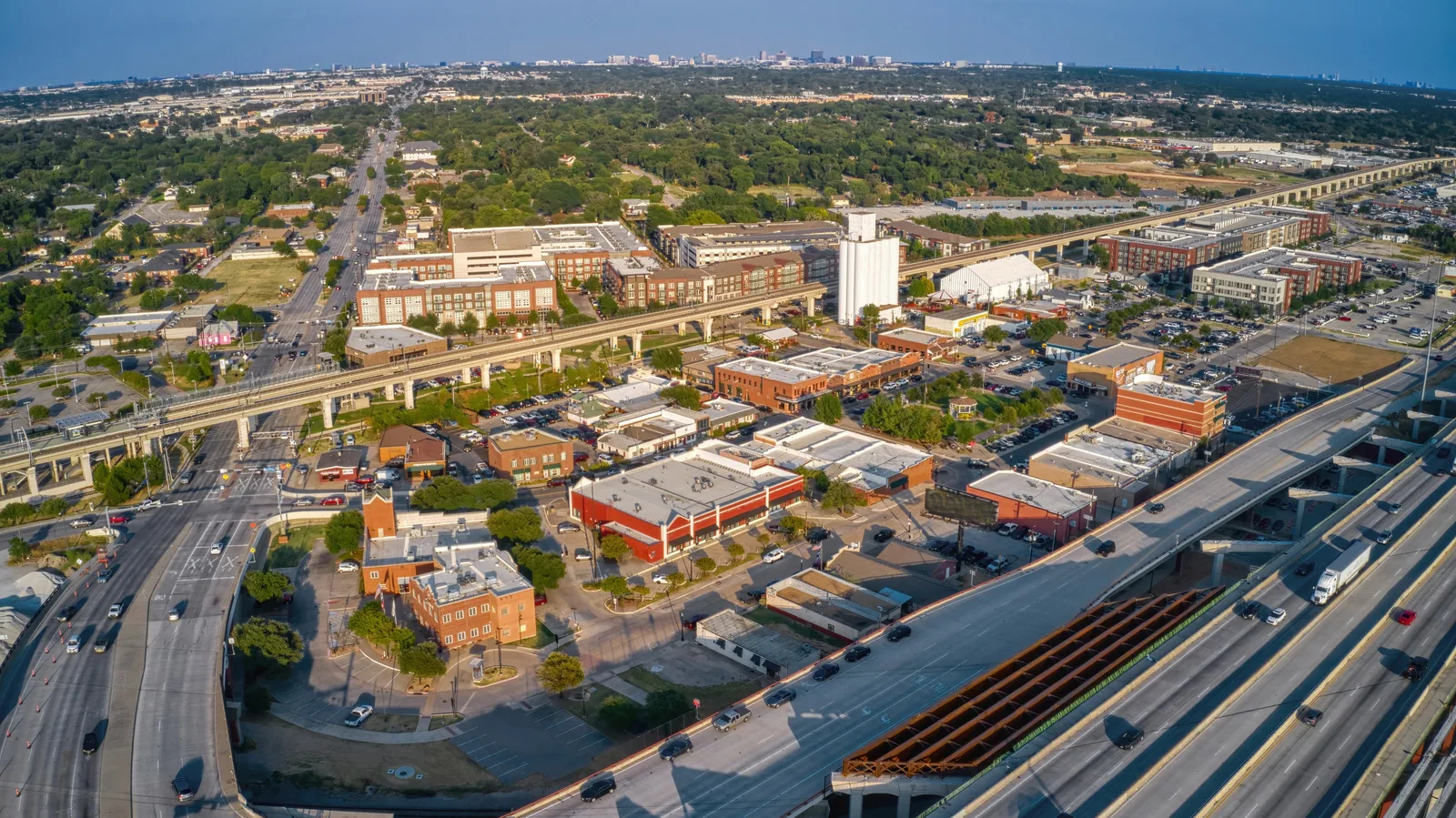
Carrollton’s industrial inventory includes large manufacturing and distribution areas such as Valwood and Midway South. Each facility has its own roof equipment, contents, and access route. We begin with the affected building's event details and the areas released for inspection. A Midway South roof assessment begins with that facility’s access release and event details. We document what we can see and leave structural conclusions to the qualified professional responsible for that evaluation.
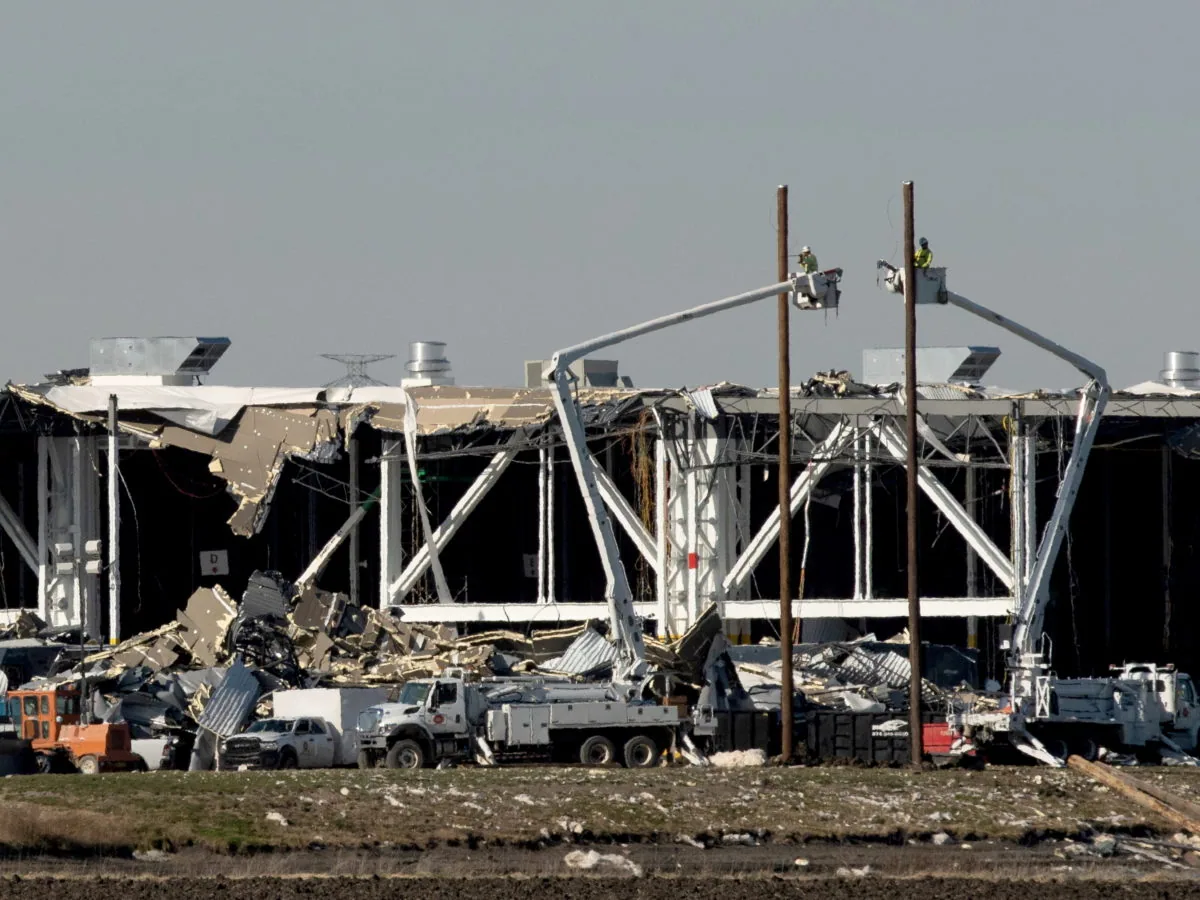
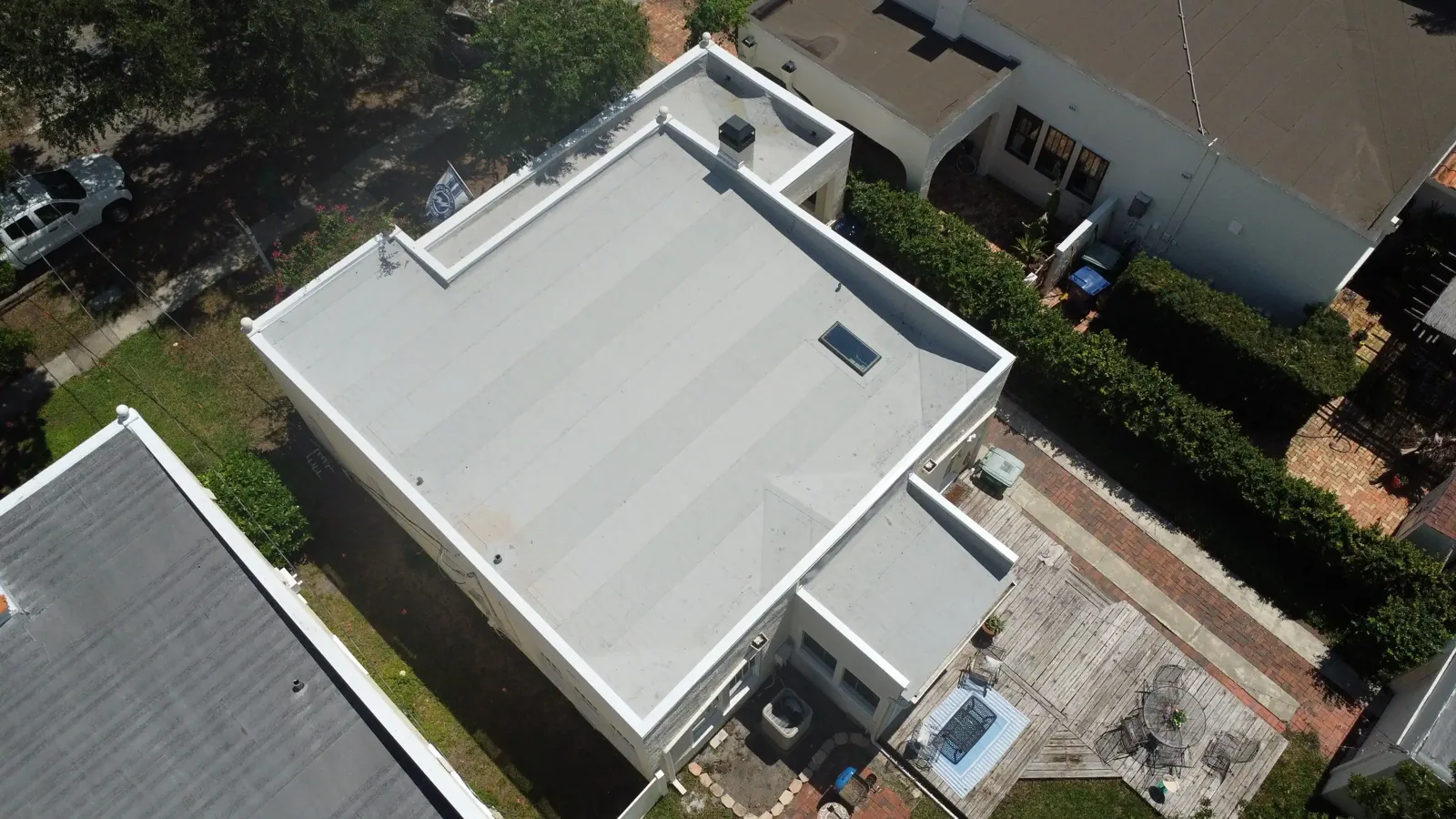
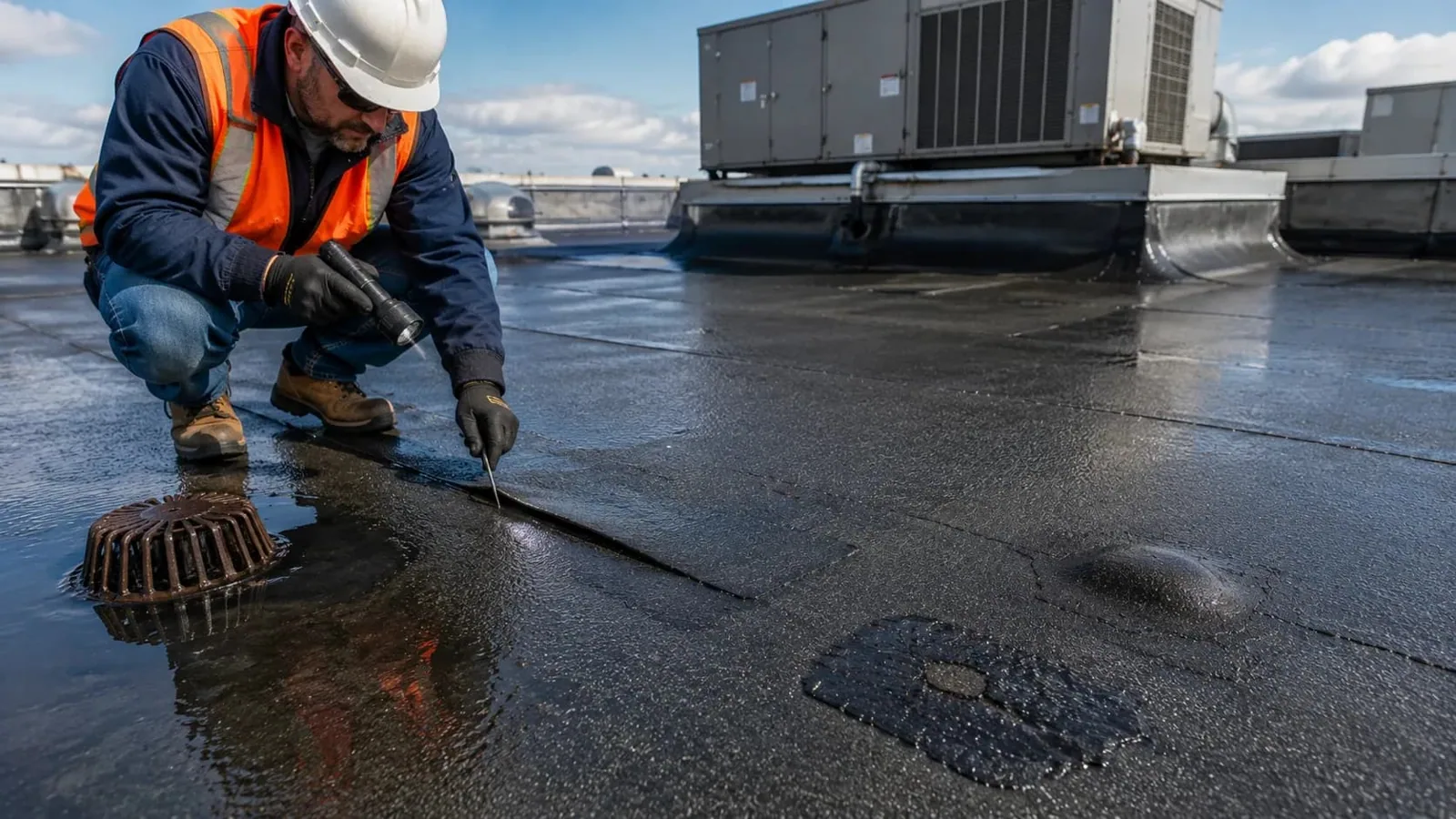
Fire exposure can affect more than the visibly charred area. Heat may soften or distort a membrane, damage flashing, or alter material around a penetration. Smoke and residue can coat surfaces, while suppression water may travel to low spots or enter through an opening. We mark each observed condition by roof zone and record where the damage changes, rather than treating the entire roof as one uniform area.
Photos should show the detail and enough surrounding context to locate it later. If a test opening is needed to evaluate insulation or deck, we identify its location and purpose before opening the assembly. A commercial roof inspection can document accessible roof conditions. If the event also involved a puncture or opening, a membrane puncture repair review can identify that specific breach while keeping smoke or heat effects separately described.
Once access is approved, an exposed roof opening may need temporary protection to limit additional water entry. We confirm the area that can be safely covered and how the material will be secured without loading a weakened section. The temporary work note states what was covered, what remains open, and whether follow-up is required. If there is no safe attachment point or the weather is unsuitable, the property contact receives that limitation before work proceeds.
North Texas can see severe spring weather, including heavy rain and damaging wind. A damaged roof exposed after a fire may need attention before the next weather window, but the repair sequence depends on site safety and the condition of the assembly. Our emergency roof service can assess urgent protection needs after access is cleared. Permanent repair follows once the affected materials, moisture, and work boundary can be evaluated.
The repair scope depends on the roof system and the extent of heat or water exposure. A localized membrane section may be replaced where adjacent material remains sound. Flashing, edge metal, insulation, cover board, or deck may need separate repair after inspection. We describe the observed damage and the materials proposed, along with any hidden condition that could change the scope when the roof is opened.
Valwood has a mix of industrial and service tenants, while Frankford Trade Center serves logistics and distribution uses. Active operations can affect roof access and staging. We inspect the layers, moisture, and repair boundaries before recommending restoration or replacement. A roof replacement scope can set the sequence where broad areas are damaged. If wind or water also opened a seam, a seam repair assessment can address that roof condition on its own evidence.
A useful report separates the roof observations from the cause, coverage, and interior restoration decisions. We identify the date of inspection, areas reached, photos, materials that appear affected, temporary work, and any test or access limit. If the owner or adjuster supplies event information, we can include it as context without converting it into a technical finding. A changed condition discovered during repair is documented and reviewed before the work boundary expands.
If a fire involved water intrusion, the report should identify the roof opening and any areas that may need a separate moisture check. An infrared moisture survey can map areas for further evaluation, while a restoration work record can preserve photos and scope details for the owner’s file. The carrier and policyholder determine claim handling and coverage; the roofing scope describes the work supported by the roof inspection.
The closeout lists the roof zone, repaired materials, work date, photographs, and any area that remains temporary or inaccessible. If cleaning or additional testing is outside the roof repair scope, it is identified as a separate need. This helps the property manager coordinate roofing, structural review, and interior restoration without mixing their findings. We also note any roof area that should be revisited after the building has returned to normal operation.
Valwood and Frankford Trade Center are local industrial districts with active operations. For a fire-damaged property in either area, the site contact provides the cleared roof route and staging point after access is released. We deliver the written roof findings to the designated property representative and identify the next roofing action. No repair report can substitute for the site’s safety release or a separate structural assessment when one is required.
We first need the property or fire authority to confirm that roof access is safe and permitted. Any restricted or uncleared area is excluded from the inspected findings.
Smoke and residue can affect roof surfaces and equipment. We document what is visible and identify any cleaning or material evaluation that falls outside the roofing repair scope.
Not necessarily. The scope depends on the roof system, extent of heat and water exposure, and condition of adjacent materials. We inspect and define the supported repair boundary.
Temporary protection may be possible after the area is cleared and a safe method is confirmed. The work note identifies what was covered and any remaining exposure.
No. Our report describes roof conditions and recommended roofing work. Fire origin and coverage decisions belong to the qualified authorities and policy participants.
RELATED WORK
CALL US
Leaks, storm damage, a failing membrane or a replacement on the calendar: tell us what is happening on the roof and we will set up a visit.
Roof Damage Repair
Once the site is released for access, send the affected areas, property contact, and any active opening details. We will inspect the roof and return a documented repair scope.
Call 555-555-5555 or request a roof assessment online.